
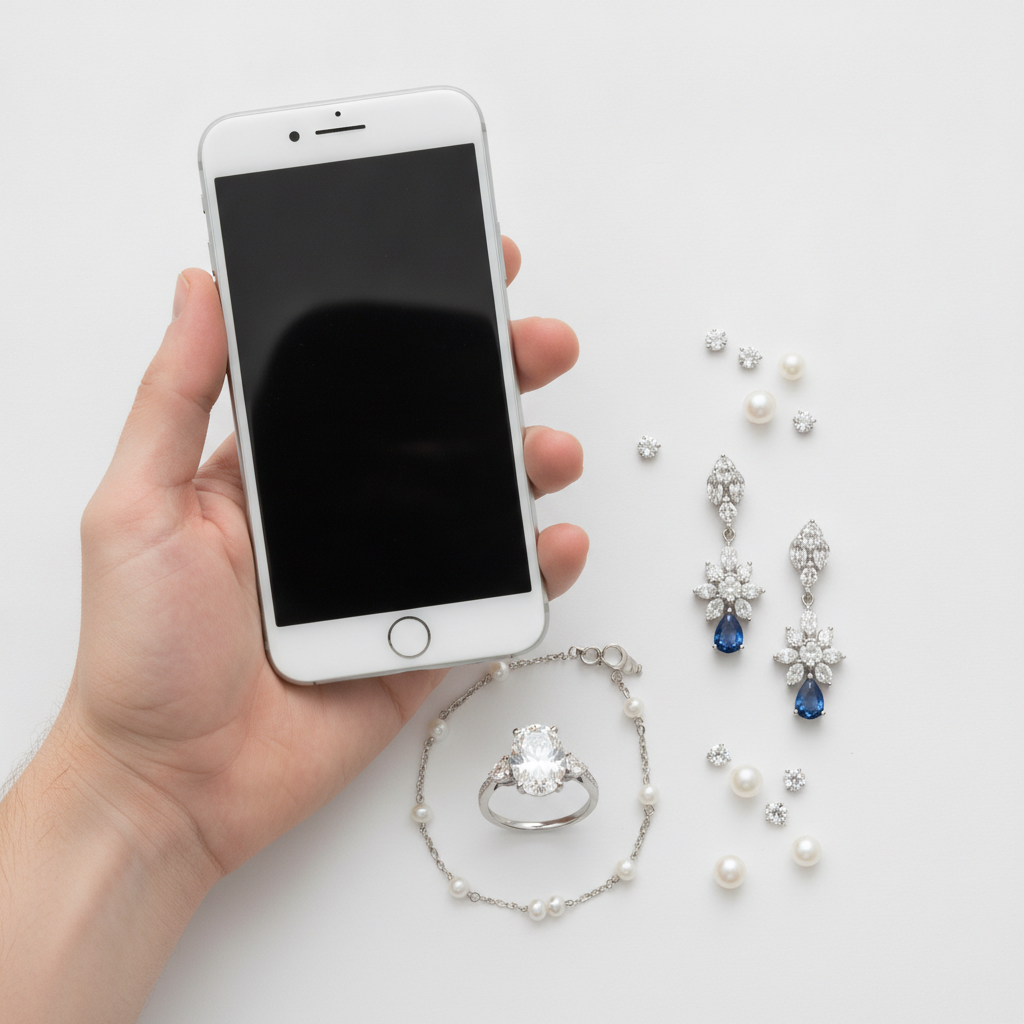
Identifying jewelry by photo has become one of the most practical skills for collectors, resellers, and everyday owners. With AI-powered tools like Jewelry Identifier: JewelValue, a well-composed photograph can reveal gemstone species, metal types, jewelry era, and estimated value within seconds. But the quality of your photo directly determines the quality of your identification. This guide teaches you the photography techniques, preparation steps, and analysis workflows that produce accurate jewelry identification from images alone.
The ability to identify jewelry from photographs matters more than ever. Online marketplaces list millions of jewelry items where buyers must evaluate pieces they cannot physically examine. Estate sale photos are often rushed and poorly lit. Inherited jewelry arrives without documentation, and the only record may be a smartphone snapshot. Insurance claims require photographic documentation. In each scenario, the photograph becomes the primary evidence for identification, making photography skill a genuine asset.
Professional gemologists have always relied on visual examination, and many of their techniques translate directly to photography. They evaluate color under standardized lighting, examine facet patterns and cut quality, inspect surface characteristics and inclusions, and read hallmarks and maker's marks. JewelValue automates this visual analysis at scale, but it can only analyze what your camera captures. Learning to photograph jewelry effectively multiplies the app's accuracy and builds your own identification skills in the process.
Why Photo-Based Jewelry Identification Works
Photo-based jewelry identification works because gemstones and metals exhibit consistent visual characteristics that trained systems recognize. Every gemstone species has a characteristic color range, refractive index that affects how light behaves within the stone, typical inclusion patterns, and standard cutting styles. Gold displays a distinctive warm yellow tone distinct from gold-plated brass. Platinum's white-gray luster differs from rhodium-plated silver. These visual signatures are photographable and analyzable.
Modern AI models have been trained on hundreds of thousands of jewelry photographs paired with verified identifications. This training enables pattern recognition that often matches or exceeds casual human assessment. When you photograph a round brilliant-cut colorless stone in a white gold setting, the model evaluates facet geometry, fire and brilliance patterns, and setting style to distinguish diamond from cubic zirconia or moissanite. The more complete and clear your photograph, the more data points the model has for accurate classification.
Photo identification has inherent limitations that honest guides acknowledge. A photograph cannot measure precise carat weight, determine exact metal purity without visible hallmarks, or detect internal treatments invisible to the camera. Surface-reaching fractures, color zoning visible only through the pavilion, and synthetic growth patterns requiring microscopic examination remain beyond photographic analysis. JewelValue provides excellent preliminary identification while clearly indicating when professional laboratory testing is recommended.
The practical advantage is accessibility. You can identify jewelry by photo anywhere, anytime, without specialized equipment beyond a smartphone. This democratizes gemological knowledge that was previously available only to trained professionals with expensive instruments. For the vast majority of everyday identification needs, from sorting inherited collections to verifying online purchases, photo-based identification through JewelValue delivers reliable, actionable results.
Essential Photography Equipment and Setup
Your smartphone camera is sufficient for most jewelry photo identification tasks. Modern phone cameras capture enough resolution and color accuracy for AI analysis when used correctly. However, a few inexpensive accessories significantly improve results. A clip-on macro lens ($15-30) enables sharp close-ups of small stones, hallmarks, and construction details that your phone's standard lens cannot resolve. A small tripod or phone stand eliminates hand-shake blur during macro photography.
Lighting is the single most important factor in jewelry photography. Natural daylight provides the most accurate color rendering for gemstone identification. Position your shooting area near a large window, ideally on an overcast day when clouds diffuse sunlight into soft, even illumination. Direct sunlight creates harsh shadows, blown highlights, and color distortion that confuse both AI and human analysis.
For indoor photography, invest in a daylight-balanced LED light source (5000-6500K color temperature). Avoid warm incandescent bulbs that make stones appear more yellow than reality and cool fluorescent tubes that cast green tones. A simple light box designed for product photography ($25-50) provides consistent, diffused lighting that eliminates shadows and reflections.
Background choice affects identification accuracy. Use neutral, matte backgrounds in white, gray, or black. Reflective surfaces like glass tables create mirror images that confuse analysis. Textured fabrics can cast color onto the jewelry. A plain sheet of white printer paper works adequately for most purposes. Some photographers use a gray card for color calibration, placing it beside the jewelry in one frame to help the AI correct for lighting color casts.
Keep cleaning supplies nearby. A microfiber cloth, soft brush, and mild soap solution for durable pieces ensure your subject is free of fingerprints, dust, and oils that obscure surface details. For delicate antique pieces, gentle dry brushing is safer than wet cleaning.
Step-by-Step Photography Workflow
Begin by cleaning the jewelry gently and allowing it to dry completely. Place it on your neutral background near your light source. If using a macro lens, attach it to your phone and test focus distance before positioning the piece.
Capture the primary face view first. For rings, photograph directly above the face of the stone. For necklaces, lay the pendant flat with the chain arranged neatly. For earrings, photograph both together to show they are a matched pair. This primary image provides the most important data for gemstone identification.
Next, photograph the piece from multiple angles. Rings need side profiles showing prong construction, band thickness, and shoulder design. Necklaces benefit from back views showing clasp type and any back engravings. Bracelets should be photographed both flat and curved to show link construction. Each angle reveals different identification clues.
Macro photographs of hallmarks and stamps are critical for metal identification. Use your macro lens or phone's closest focus distance to capture sharp images of any markings on the inside of rings, back of pendants, clasp mechanisms, and earring posts. Common marks include karat stamps (10K, 14K, 18K), purity numbers (585, 750, 925), platinum marks (PLAT, PT950), maker's signatures, and country-of-origin stamps.
Photograph individual stones in multi-stone pieces. A brooch with five different gemstones needs each stone photographed closely enough for individual identification. Tennis bracelets require images showing the uniformity of stones along the length. Cluster rings need close-ups of each stone type present.
Include a size reference in at least one photograph. A standard ruler, coin, or finger for scale helps the AI calibrate dimensions. This is particularly important for distinguishing between stones that look similar at different sizes, such as distinguishing a small sapphire from a larger iolite based on typical proportions.
Review your photographs on screen before submitting to JewelValue. Check for focus sharpness, adequate lighting, visible color accuracy, and inclusion of all relevant details. Retake any blurry, dark, or incomplete images. Five excellent photographs produce far better identification than twenty mediocre ones.
Lighting Techniques for Different Jewelry Types
Transparent gemstones like diamonds, sapphires, and emeralds require lighting that reveals internal characteristics without creating glare. Position your light source at a 45-degree angle to the stone rather than directly behind or above it. This angled illumination shows facet reflections, fire dispersion in diamonds, and color depth in colored stones while minimizing surface hot spots.
Opaque materials like jade, turquoise, onyx, and coral need even, diffuse lighting that accurately renders surface color. Direct lighting on opaque stones can create false highlights that appear as color variations. Use your light box or overcast daylight for the most faithful color capture.
Metallic surfaces are the most challenging photography subjects because they reflect everything in the environment. Enclose the piece in a light tent or drape a white cloth around your shooting area to eliminate reflections of yourself, your phone, and room objects in the metal surface. Matte-finish metals are easier than high-polish surfaces.
Pearls require soft, wraparound lighting that shows luster and overtone without creating specular hotspots. Photograph pearls against dark backgrounds to make their nacre glow visible. Include multiple pearls from a strand to show consistency in size, shape, and color matching.
Vintage and antique jewelry with patina and age-related surface changes should be photographed to show both the overall piece and close details of wear patterns. Patina on gold, tarnish on silver, and worn engraving provide dating clues that JewelValue uses in period identification. Do not over-polish antique pieces before photographing, as surface character aids identification.
Using JewelValue for Photo Identification
Once you have quality photographs, open Jewelry Identifier: JewelValue and begin the identification workflow. Select the appropriate jewelry category (ring, necklace, bracelet, earring, brooch, or watch) to help the AI apply category-specific analysis models. Upload or capture your best photographs directly in the app.
JewelValue processes your images through its trained identification models, analyzing gemstone color, transparency, cut style, metal characteristics, and construction details. Results typically appear within seconds, showing the most likely identification with confidence indicators and detailed educational information about the identified materials.
Review the results carefully. JewelValue often provides ranked possibilities when visual ambiguity exists. A blue stone might be identified as sapphire (most likely), tanzanite (possible), or blue spinel (less likely). Each possibility includes distinguishing characteristics you can look for in your photographs or through simple physical tests.
Use the educational content to verify the identification yourself. JewelValue explains why it reached its conclusion, teaching you to recognize the visual markers of each possibility. Over time, this builds genuine gemological knowledge that makes you a better photographer and identifier independent of the app.
Save the identification to your collection with all associated photographs. This creates a documented record linking your images to the AI's analysis, useful for insurance documentation, resale listings, and tracking your learning progress. Add notes about provenance, purchase price, or physical testing you perform to complement the photo identification.
If results seem uncertain, improve your photographs and re-submit. Add macro shots of unclear areas, improve lighting, or photograph additional angles. JewelValue's accuracy increases significantly with better input data. A second attempt with improved photography often resolves ambiguous initial results.
Common Photo Identification Challenges and Solutions
Blurry images are the most common problem and the easiest to fix. Use a tripod, tap to focus on the stone before capturing, and ensure adequate light so the camera uses a fast shutter speed. Macro photography especially demands stability because even slight hand movement destroys detail at high magnification.
Color inaccuracy from poor lighting leads to misidentification of gemstone species where color is the primary distinguishing feature. A peridot photographed under warm incandescent light appears more yellow-green, potentially confusing the AI with chrysoberyl or green tourmaline. Always prioritize daylight or daylight-balanced artificial lighting.
Reflections on metal and polished stone surfaces obscure underlying characteristics. Use diffused lighting and light tents to control reflections. For stubborn glare on faceted stones, slightly rotate the piece to change the angle between facets and light source until reflections move away from critical viewing areas.
Photographing very small stones (under 2mm) challenges even macro lenses. Use the highest resolution your camera offers, ensure maximum focus sharpness, and photograph the stone within its setting context rather than attempting extreme close-ups that exceed your lens capability. JewelValue can often identify stone type from setting style and relative size even when individual stones lack fine detail.
Multi-stone pieces with different gem types require multiple photographs at different focus points. A single image with shallow depth of field may show one stone sharply while others blur. Take separate focused images of each stone type and submit the full set to JewelValue for comprehensive analysis.
Photo Identification for Online Buying and Selling
Online jewelry transactions depend heavily on photo identification skills. As a buyer, request specific photographs from sellers before purchasing: face view, side profile, hallmark close-ups, and size reference. Run seller photos through JewelValue to verify claimed identifications. If a listing describes "natural ruby" but JewelValue suggests garnet or synthetic corundum, request a gemological report or reconsider the purchase.
As a seller, your photograph quality directly affects buyer trust and sale price. Invest time in proper photography before listing. Accurate JewelValue identification helps you write honest, detailed descriptions that reduce returns and build seller reputation. Include your identification results in listings when they support your claims.
Be aware that some sellers deliberately use misleading photography: excessive filters, selective lighting that enhances color, and angles that hide flaws. JewelValue analyzes what is visible, so obviously manipulated images may produce unreliable results. Request unedited photographs in natural lighting when buying significant pieces remotely.
For estate liquidators processing large volumes, batch photography workflows maximize efficiency. Set up a dedicated photography station with consistent lighting and background. Photograph, identify with JewelValue, and catalog each piece in sequence. This systematic approach processes collections far faster than ad hoc identification.
Building Your Photo Identification Skills
Regular practice with JewelValue develops both your photography and gemological pattern recognition skills. Start with jewelry you already know the identity of, perhaps pieces with receipts or prior appraisals. Photograph them using this guide's techniques and compare JewelValue's results with known identifications. This calibration exercise reveals your photography strengths and weaknesses.
Study the educational content JewelValue provides with each identification. Learn the visual markers that distinguish similar stones: sapphire versus tanzanite, diamond versus moissanite, jadeite versus nephrite. Apply this knowledge when composing photographs, consciously capturing the distinguishing features you have learned about.
Join online communities where members share jewelry photographs for group identification. Comparing your JewelValue results with community consensus builds confidence and exposes edge cases where photographic identification has limitations. Over time, you will develop intuition for which pieces need professional verification beyond photo analysis.
Maintain a reference collection of your best-identified pieces with photographs and JewelValue records. This personal database becomes an increasingly valuable tool as you add specimens, creating a visual library of identification markers you can compare against new unknown pieces.
Frequently Asked Questions
Can I identify jewelry from a photo taken years ago?
Yes, provided the photograph has sufficient resolution, focus, and lighting quality. Older smartphone cameras may lack the detail needed for confident identification of small stones or subtle characteristics. If an old photo is blurry or poorly lit, retake the photograph using the techniques in this guide. JewelValue works best with current, high-quality images, but well-composed older photographs often produce useful preliminary identifications.
How many photos should I submit for one piece of jewelry?
Submit three to six photographs covering different angles and details: primary face view, side profile, hallmark or stamp close-ups, and any distinguishing features. For multi-stone pieces, add close-ups of individual stones. More high-quality photographs from different angles consistently produce better identification than a single image, even if that single image is excellent.
Does photo identification work for broken or damaged jewelry?
JewelValue can identify gemstones and metals from damaged jewelry when enough visual characteristics remain visible. Missing stones, heavy wear, and significant damage limit what any identification method can determine. Photograph whatever intact portions remain, including broken edges that may reveal stone interior characteristics. Severely damaged pieces may require physical examination by a professional gemologist for complete identification.
Can I use photo identification for insurance claims?
Photo identification with JewelValue provides valuable documentation for insurance claims by creating a timestamped record of your jewelry's appearance and identified materials. However, insurance claims for lost or stolen items typically require prior professional appraisals for value determination. Use JewelValue to document your collection proactively, creating identification records that support claims alongside formal appraisals.
What is the best time of day for jewelry photography?
Overcast daylight between 10 AM and 3 PM provides the most neutral, even lighting for jewelry photography. Direct sunlight creates harsh shadows and color distortion. If shooting indoors with artificial light, any time works as long as you use daylight-balanced bulbs and consistent setup. Avoid mixed lighting sources (window light plus incandescent lamps) that create conflicting color temperatures in the same photograph.
Download Jewelry Identifier: JewelValue Today
Great jewelry identification starts with great photographs, and Jewelry Identifier: JewelValue transforms your best images into detailed identifications within seconds. Practice the techniques in this guide, photograph your collection, and build gemological knowledge with every piece you analyze.
Download Jewelry Identifier: JewelValue on the App Store and start identifying jewelry by photo today.