
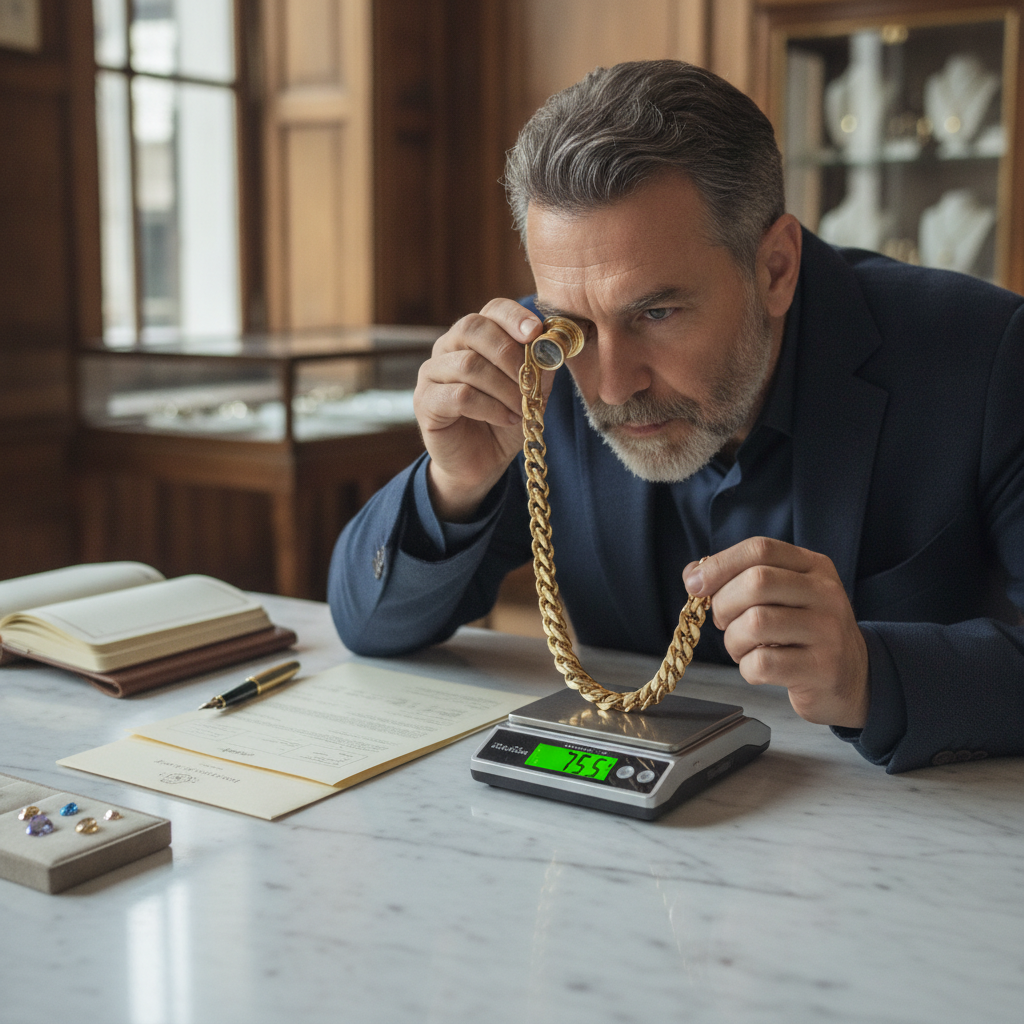
Jewelry appraisal is the formal process of determining the value of a jewelry item through expert examination and documented analysis. Whether you need insurance coverage, are dividing an estate, selling a collection, or simply want to know what grandmother's ring is worth, understanding how jewelry appraisal works protects your financial interests. This guide covers everything from appraisal types and methodologies to costs, credentials, and how modern tools like Jewelry Identifier: JewelValue complement professional evaluation.
The jewelry appraisal industry serves multiple purposes that require different valuation approaches. An insurance replacement appraisal estimates what it would cost to replace a piece with a substantially equivalent item at retail prices. A fair market value appraisal determines what a willing buyer would pay a willing seller in an appropriate marketplace, typically used for estate tax, charitable donation, and divorce proceedings. An liquidation appraisal reflects the price achievable in a forced or expedited sale scenario. Confusing these types leads to significant financial misunderstandings.
Professional appraisers bring gemological training, market knowledge, and standardized documentation to the process. They examine metal purity, measure and grade gemstones, assess craftsmanship and condition, research comparable sales, and produce a detailed report that insurance companies, courts, and tax authorities accept. However, professional appraisal costs money and takes time. For preliminary identification and value estimation, JewelValue provides an accessible first step that helps you decide which pieces warrant formal evaluation.
What Is a Jewelry Appraisal?
A jewelry appraisal is a written document prepared by a qualified professional that describes a jewelry item in detail and assigns a monetary value for a specific purpose. The report typically includes a detailed description of the piece, identification of all gemstones and metals, grading of gem quality where applicable, measurements and weights, photographs, and the appraiser's value conclusion with methodology explanation.
Appraisals differ fundamentally from casual estimates. When a jeweler glances at your ring and says "that's probably worth around three thousand dollars," that verbal estimate carries no documentation, no detailed analysis, and no professional liability. A formal appraisal, by contrast, is a legal document that the appraiser stands behind. Insurance companies require formal appraisals to add scheduled jewelry riders to homeowners policies. Estate attorneys need them for probate valuations. The IRS accepts properly prepared appraisals for charitable donation deductions on jewelry gifts.
The appraisal process begins with physical examination. The appraiser uses a jeweler's loupe (typically 10x magnification) to inspect gemstones for clarity characteristics, evaluates color against standardized grading systems, tests metal content, measures dimensions and carat weights, and assesses overall condition including wear, repairs, and structural integrity. This hands-on examination reveals details that photographs alone cannot capture, which is why appraisal remains essential for high-value documentation.
Modern technology is changing but not replacing this process. Tools like Jewelry Identifier: JewelValue help owners understand what they have before scheduling appraisals, making the professional visit more efficient. When you arrive knowing your brooch likely contains garnets and 14-karat gold rather than rubies and platinum, the appraiser can focus on precise grading rather than basic identification.
Types of Jewelry Appraisals Explained
Insurance replacement appraisals are the most commonly requested type. They estimate the retail replacement cost of a jewelry item in the general market at the time of appraisal. Insurance companies use these values to determine coverage limits on scheduled personal property riders. Replacement values are typically the highest appraisal type because they reflect full retail pricing including markup, design costs, and current market conditions for equivalent new or comparable items.
Fair market value (FMV) appraisals determine the price a knowledgeable buyer would pay a knowledgeable seller, neither being under compulsion to act, with both having reasonable knowledge of relevant facts. FMV is typically lower than replacement value because it reflects secondary market conditions without retail markup. Estate tax filings, equitable distribution in divorce, and charitable contribution deductions require FMV appraisals. The IRS has specific requirements for FMV documentation on donated jewelry valued above $5,000.
Liquidation value appraisals estimate what a piece would bring in a forced or expedited sale, such as an estate auction or dealer buyout. These values are lower still, reflecting the reality that sellers who need immediate cash accept discounts. Estate executors use liquidation values when planning timed sales. Pawn shops and gold buyers effectively offer liquidation-level prices, which is why their offers often seem low compared to insurance appraisals.
Other specialized appraisal types include damage assessments (evaluating loss after theft or damage for insurance claims), historical valuations (determining value at a specific past date for legal proceedings), and consignment estimates (projecting achievable prices on retail consignment). Each type serves a distinct legal or financial purpose, and using the wrong type creates problems ranging from under-insurance to tax penalties.
Understanding which type you need before contacting an appraiser saves time and money. Tell your appraiser the intended use: insurance scheduling, estate probate, charitable donation, divorce equitable distribution, or personal knowledge. A qualified appraiser will prepare the correct document format and apply appropriate valuation methodology.
How Professional Appraisers Evaluate Jewelry
Professional jewelry appraisers follow systematic evaluation protocols developed by organizations like the American Gem Society (AGS), National Association of Jewelry Appraisers (NAJA), and American Society of Appraisers (ASA). The process begins with identification of all materials in the piece. Every gemstone is identified by species and variety, tested for treatments and enhancements, and evaluated for synthetics or simulants. Metals are tested for purity using acid tests, electronic testers, or X-ray fluorescence analyzers.
Gemstone grading follows established systems. For diamonds, appraisers evaluate the Four Cs: carat weight, color grade, clarity grade, and cut quality. Colored gemstones are assessed for hue, tone, saturation, clarity, cut quality, and carat weight using systems appropriate to each species. A fine ruby's value depends on whether it is Burmese or African, heated or unheated, eye-clean or included. These nuances require trained expertise that goes beyond visual identification.
Craftsmanship and design affect value beyond raw materials. A signed Cartier piece commands premium over an unsigned piece with identical materials. Art Deco platinum construction with hand-set calibre-cut gemstones reflects labor and design value that mass-produced cast pieces lack. Appraisers evaluate setting quality, symmetry, finish, and overall design merit as components of total value.
Condition assessment identifies wear, previous repairs, and structural concerns that affect value. A ring with a thin, worn shank needing rebuild costs less than an identical ring in pristine condition. Previous resizing, retipping of prongs, and stone replacements are documented because they affect both value and insurability. Appraisers note these factors explicitly in their reports.
Market research grounds the value conclusion in current reality. Appraisers review recent comparable sales at auction, retail pricing for equivalent new items, and dealer asking prices in the secondary market. Market conditions fluctuate with economic trends, fashion cycles, and supply dynamics. Colored gemstone markets shift when new deposits are discovered or mining sources are depleted. Appraisers who maintain current market awareness produce more accurate and defensible valuations.
When Do You Need a Professional Appraisal?
Insurance scheduling is the most common trigger for jewelry appraisal. Standard homeowners policies include limited jewelry coverage, often $1,500 to $2,500 total. If your jewelry collection exceeds this limit, you need scheduled personal property riders backed by professional appraisals. Most insurers require appraisals dated within the past two to three years, with updated appraisals periodically to reflect market changes.
Estate settlement requires appraisal when jewelry forms part of a deceased person's assets. Probate courts, estate attorneys, and tax authorities need documented values for distribution among heirs and potential estate tax calculations. Even in informal family distributions, documented values prevent disputes among siblings over who received more valuable items.
Divorce proceedings use jewelry appraisals for equitable distribution of marital assets. Courts require fair market value documentation to ensure both parties receive their legal share. Informal agreements without professional valuation often lead to one party discovering later that they accepted significantly less than their fair portion.
Charitable donations of jewelry valued above $5,000 require qualified appraisal for IRS deduction claims. The appraisal must be prepared by a qualified appraiser, dated within 60 days of donation, and attached to your tax return. Inadequate documentation leads to denied deductions and potential penalties.
Selling valuable jewelry benefits from pre-sale appraisal even when not legally required. Knowing fair market value before negotiating with dealers, consignment shops, or auction houses prevents accepting lowball offers. JewelValue provides preliminary value ranges that help you recognize when professional appraisal before sale is worthwhile.
Inherited jewelry of unknown value should be appraised once preliminary identification suggests significant worth. JewelValue helps you sort a collection efficiently, identifying which pieces likely warrant professional appraisal and which are sentimental but modest in material value. This tiered approach saves appraisal fees on costume jewelry while ensuring fine pieces receive proper documentation.
Jewelry Appraisal Costs and What to Expect
Professional jewelry appraisal fees vary by geographic market, appraiser credentials, piece complexity, and report type. Simple solitaire ring appraisals typically cost $75 to $150. Complex pieces with multiple gemstones, antique or designer provenance, or extensive research requirements may cost $200 to $500 or more. Some appraisers charge hourly rates ($100 to $250 per hour) while others charge per-piece flat fees.
Turnaround time ranges from same-day for simple pieces to two to three weeks for complex estate lots. During busy seasons (tax filing deadlines, holiday insurance updates), expect longer waits. Rush fees of 25 to 50 percent are common for expedited service.
What you receive for the fee matters as much as the price. A proper appraisal report includes: detailed item description, identification of all materials, gemstone grading data, measurements and weights, clear photographs, value conclusion with type specified, appraiser credentials and qualifications, and the date of examination. Reports lacking these elements may not satisfy insurance companies or tax authorities.
Be wary of appraisals offered free by jewelry stores planning to buy your pieces. These "appraisals" often inflate values to make purchase offers seem generous. An independent appraiser with no financial interest in acquiring your jewelry provides objective valuation. The cost of independent appraisal is a worthwhile investment when significant value is at stake.
JewelValue offers a cost-effective preliminary step. Before spending $150 on a formal appraisal, use the app to identify the piece and estimate its value range. If JewelValue suggests your necklace contains fashion jewelry worth under $100, you can skip professional appraisal. If it identifies potential alexandrite or Art Deco diamonds, the appraisal fee is clearly justified.
How JewelValue Complements Professional Appraisal
Jewelry Identifier: JewelValue and professional appraisal serve different but complementary roles in your jewelry evaluation workflow. JewelValue provides immediate visual identification and preliminary value estimation from photographs. Professional appraisal provides documented, instrument-verified valuation for legal and insurance purposes. Together, they create an efficient tiered approach.
Use JewelValue as your first step when encountering unknown jewelry. Photograph inherited pieces, estate sale finds, and gifts without documentation. The app identifies likely gemstone species, metal types, and jewelry styles while providing educational context about each component. This preliminary knowledge helps you make informed decisions about which pieces deserve further investment in professional services.
JewelValue's value estimation feature provides market-context ranges that help you set expectations before formal appraisal. If the app estimates a ring's value between $500 and $1,200, you know whether scheduling a $150 appraisal makes financial sense. If it suggests a range of $5,000 to $15,000, professional appraisal and insurance scheduling become clear priorities.
The app also serves as an ongoing reference after professional appraisal. Your appraisal report describes the piece at a point in time, but market conditions change. JewelValue helps you monitor whether values in your collection are trending up or down, informing decisions about updating insurance coverage or timing a sale.
For jewelry resellers and estate liquidators, JewelValue accelerates inventory processing. Preliminary identification of each piece before professional appraisal on only the highest-value items dramatically reduces per-estate evaluation costs. Sort a 200-piece jewelry box with the app in an afternoon, then schedule formal appraisal for the 15 pieces that warrant it.
Education is perhaps the most valuable complement. Clients who understand their jewelry through JewelValue arrive at appraisal appointments with better questions and more realistic expectations. Appraisers report that informed clients make faster decisions about insurance, sale, and retention, making the professional relationship more productive for everyone.
Red Flags and Appraisal Best Practices
Not all jewelry appraisals are created equal. Protect yourself by recognizing red flags and following best practices. Avoid appraisers who are not certified by recognized organizations (AGS, ASA, NAJA, or GIA graduate gemologists with appraisal training). Verify credentials independently rather than accepting displayed certificates at face value.
Be suspicious of appraisals with values dramatically higher than expected, especially from sellers or buyers with financial interest in the transaction. Inflated appraisals are a classic scam tactic in jewelry resale. Compare JewelValue's preliminary estimate with the appraisal value. Significant discrepancies warrant a second independent opinion.
Ensure the appraisal specifies its intended use (replacement, fair market, liquidation). An insurance replacement appraisal is inappropriate for estate tax filing, and using it will cause problems with tax authorities. The document should state the valuation type explicitly.
Update appraisals regularly. Insurance companies typically require updates every two to three years. Gemstone markets shift, and outdated appraisals lead to under-insurance (leaving you uncovered after a loss) or over-insurance (paying premiums on inflated values you cannot recover). JewelValue helps you track when market movements might warrant an updated professional appraisal.
Keep appraisal documents secure. Store originals in a fireproof safe or safe deposit box separate from the jewelry itself. After a theft, you will need the appraisal report to file an insurance claim. Digital copies in cloud storage provide backup access. Photograph jewelry and appraisals together using JewelValue's collection feature for comprehensive documentation.
For estate jewelry, research the appraiser's experience with antique and period pieces. Modern jewelry appraisal training does not automatically translate to expertise in Victorian, Art Deco, or signed designer pieces. Ask specifically about experience with the era and style of your jewelry before scheduling.
Frequently Asked Questions
How often should I get my jewelry appraised?
Most insurance companies require updated appraisals every two to three years for scheduled jewelry coverage. Beyond insurance requirements, reappraise when market conditions shift significantly, when you modify a piece (resizing, stone replacement, repair), or when the intended use changes (from insurance to estate planning, for example). JewelValue can help you monitor value trends between formal appraisals, alerting you when market movements might justify an update.
Can I use JewelValue instead of a professional appraisal for insurance?
No. Insurance companies require formal appraisal documents from qualified independent appraisers for scheduling jewelry coverage above standard policy limits. JewelValue provides preliminary identification and value estimation that helps you decide whether to pursue professional appraisal, but it does not replace the documented, instrument-verified reports that insurers require. Use JewelValue to identify and prioritize pieces for professional appraisal.
What is the difference between an appraisal and a gemological certificate?
A gemological certificate (such as a GIA Diamond Grading Report) documents the characteristics of an individual gemstone: species, weight, color grade, clarity grade, cut grade, and treatment status. It does not assign a monetary value. A jewelry appraisal evaluates the entire piece including all stones, metals, craftsmanship, and design, and concludes with a monetary value for a specified purpose. High-value loose diamonds typically have both a lab certificate and a jewelry appraisal. JewelValue provides identification and educational context similar to a preliminary gemological assessment but without instrument-verified grading data.
How do I find a qualified jewelry appraiser?
Search for appraisers certified by the American Gem Society (AGS), American Society of Appraisers (ASA), or National Association of Jewelry Appraisers (NAJA). GIA Graduate Gemologists with additional appraisal training are also qualified. Verify credentials through the certifying organization's directory. Choose an independent appraiser with no financial interest in buying your jewelry. Ask about experience with your specific jewelry type (antique, designer, colored gemstones) before scheduling.
Why do appraisal values differ from what a store would pay me?
Retail replacement values reflect what you would pay to buy an equivalent piece new, including markup, design costs, and business overhead. Fair market values reflect secondary market conditions without retail markup. Store buyout offers reflect liquidation values minus the dealer's profit margin and resale risk. A ring with a $5,000 insurance appraisal might have a $2,500 fair market value and receive a $1,200 store offer. These differences are normal and reflect different valuation purposes, not appraiser error. JewelValue helps you understand these distinctions before entering negotiations.
Download Jewelry Identifier: JewelValue Today
Understanding your jewelry starts with knowing what you have. Jewelry Identifier: JewelValue provides instant identification and preliminary value estimates for rings, necklaces, bracelets, and more, helping you decide when professional appraisal is warranted and ensuring you arrive at appraiser appointments well-informed.
Build your jewelry knowledge with every photograph, save identifications to your personal collection, and make smarter decisions about insurance, estate planning, and resale.
Download Jewelry Identifier: JewelValue on the App Store and take the first step toward understanding your jewelry's true value today.