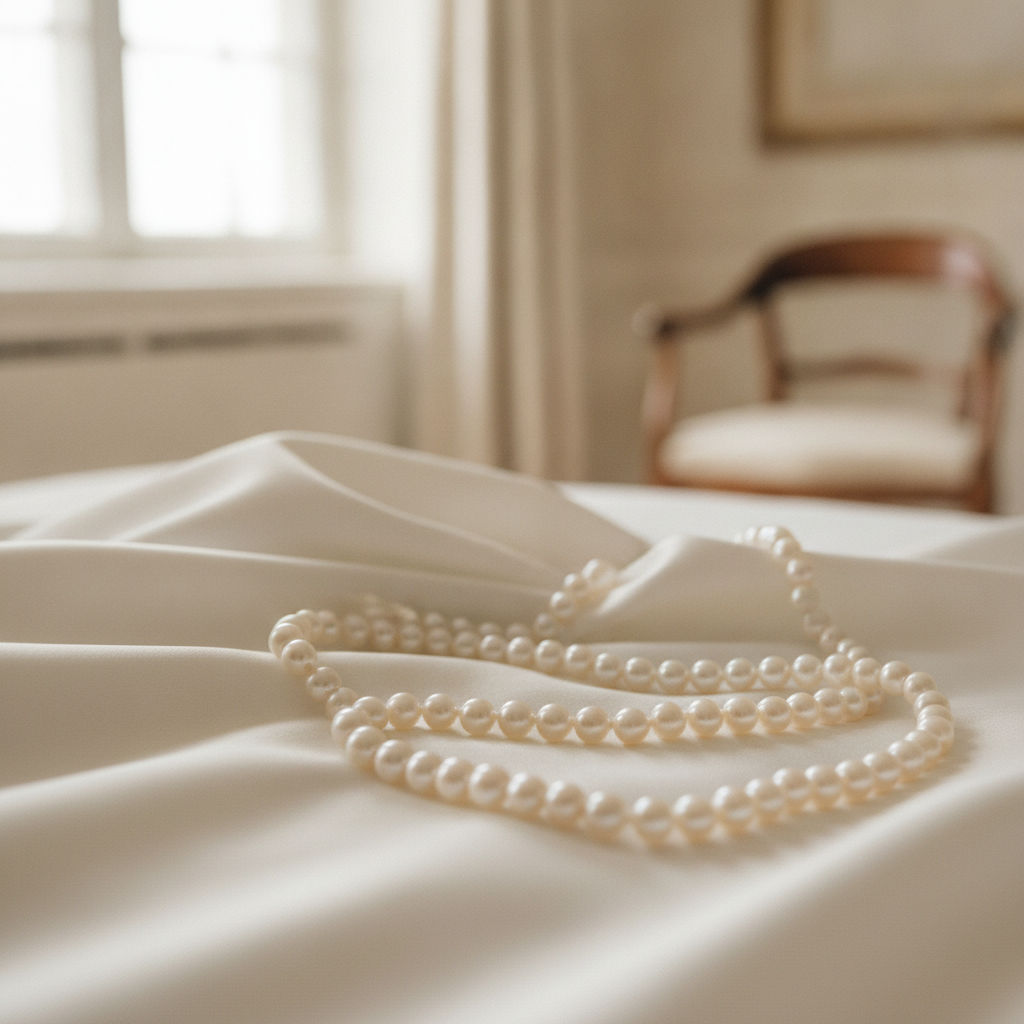
Pearl necklaces occupy a unique position in jewelry: they are the only gemstones created by living organisms, and they have symbolized elegance across cultures for millennia. From Mikimoto's revolutionary cultured pearls to grandmother's inherited strand, pearl necklaces require specialized knowledge to identify, grade, and value accurately. This guide covers pearl types, quality factors, identification techniques, and how Jewelry Identifier: JewelValue helps you evaluate pearl necklaces from photographs.
The pearl market divides sharply between natural pearls (extremely rare, formed without human intervention), cultured pearls (farmed with human assistance), and imitation pearls (glass, plastic, or shell beads coated with pearlescent material). Within cultured pearls, four main types dominate: Akoya (classic white round pearls from Japan and China), freshwater (affordable varied shapes from China), Tahitian (dramatic dark pearls from French Polynesia), and South Sea (the largest and most valuable cultured pearls from Australia, Indonesia, and the Philippines). Each type has distinct characteristics that identification tools and trained eyes evaluate systematically.
Pearl necklace values range from $30 fashion strands to $500,000+ exceptional South Sea suites. This enormous range makes accurate identification essential. A graduated strand of fine Japanese Akoya pearls commands thousands of dollars, while a similar-looking strand of dyed freshwater pearls might cost $50. Inherited pearl necklaces frequently lack documentation, leaving families uncertain about what they possess. JewelValue provides preliminary identification and value context that guides decisions about insurance, sale, and care.
Types of Pearls in Necklaces
Akoya pearls are the classic white round pearls most people picture when imagining a pearl necklace. Cultured primarily in Japan and China, Akoya pearls typically range from 2mm to 10mm in diameter, with 7-7.5mm being the most common necklace size. Body color is white to cream with rose, silver, or ivory overtones. Akoya pearls are known for their sharp luster and near-round shapes. Fine Akoya strands represent the traditional pearl necklace standard and remain popular for bridal and professional jewelry.
Freshwater pearls are cultured in lakes and ponds, predominantly in China. They are the most affordable cultured pearl type and offer the widest variety of shapes (round, oval, button, baroque, coin) and colors (white, pink, lavender, peach, and dyed colors). Freshwater pearls range from 3mm to 12mm or larger. Quality varies enormously: fine freshwater pearls rival Akoya in luster at lower prices, while inexpensive strands serve the fashion jewelry market. Identifying freshwater versus Akoya pearls requires examining luster depth, nacre thickness, and drill hole characteristics.
Tahitian pearls are cultured in black-lipped oysters around French Polynesia. They are famous for dark body colors ranging from charcoal gray through true black, with remarkable overtone colors including peacock green, aubergine, silver-blue, and pistachio. Tahitian pearls range from 8mm to 16mm, with strands typically featuring 8-10mm or larger pearls. Fine Tahitian pearl necklaces command premium prices, particularly strands with consistent peacock overtones and clean surfaces.
South Sea pearls are the largest and generally most valuable cultured pearls. Grown in silver-lipped and gold-lipped oysters in Australia, Indonesia, and the Philippines, South Sea pearls range from 9mm to 20mm, with many necklaces featuring 10-14mm pearls. White and silver South Sea pearls from Australia display soft, satiny luster, while golden South Sea pearls from the Philippines and Indonesia show warm champagne to deep gold body colors. A fine South Sea pearl necklace easily exceeds $10,000 and can reach six figures for exceptional strands.
Natural pearls, formed without human intervention when an irritant enters a wild mollusk, are exceedingly rare in today's market. Most pre-1920 pearl necklaces contain natural pearls, as cultured pearl farming did not begin commercially until the 1920s. Natural pearls are identified through X-ray examination showing concentric growth rings and the absence of a bead nucleus. Antique natural pearl necklaces can be extraordinarily valuable, making accurate identification critical for estate pieces.
Pearl Quality Grading Factors
Luster is the most important quality factor for pearls. Luster describes the intensity and quality of light reflected from the pearl's surface and the glow emanating from within (the "inner light"). Fine pearls display sharp, mirror-like reflections on their surface and a luminous depth that seems to radiate from the nacre layers beneath. Poor-quality pearls appear chalky, dull, or flat, reflecting light diffusely without inner glow. Luster differences are immediately visible and account for the largest price variations within a pearl type and size.
Surface quality evaluates the presence of blemishes, spots, bumps, wrinkles, and other imperfections on the pearl's surface. No pearl is perfectly flawless, but fine strands minimize visible blemishes. Grading systems typically classify surface as clean (virtually blemish-free), lightly spotted (minor blemishes covering less than 10% of surface), moderately spotted, and heavily spotted. Blemishes on the drill hole side of strung pearls are more acceptable than those on the face, as they are less visible when worn.
Shape affects value significantly. Round is the most valued shape for classic pearl necklaces, with strands graded on how uniformly round each pearl is and how well the strand matches in shape. Near-round, oval, button, drop, baroque, and circle shapes are increasingly appreciated for contemporary jewelry but command lower prices than round strands of equivalent quality. Baroque pearls with interesting organic shapes are popular in modern designs.
Size directly correlates with price because larger pearls take longer to cultivate and are rarer. Each millimeter increase in average strand diameter can double or triple the price for fine-quality pearls. A 7mm Akoya strand might cost $500; the same quality in 8mm costs $1,200 or more. South Sea pearls at 13-14mm represent a different value tier entirely from 10mm strands.
Color encompasses body color and overtone. Body color is the pearl's primary hue: white, cream, gold, gray, black. Overtone is the secondary color that appears to float over the body color: rose, silver, green, blue, aubergine. Orient is a rainbow iridescence visible on some fine pearls. Matching color across an entire strand is essential for necklace value. Fine strands show remarkable consistency in body color and overtone from pearl to pearl.
Nacre thickness matters particularly for Akoya pearls, which are nucleated with a bead and coated with nacre layers over one to three years of cultivation. Thin nacre wears through to the nucleus over time, causing the pearl to crack, peel, or lose luster. Freshwater pearls are typically nearly all nacre (tissue-nucleated), making nacre thickness less of a concern. X-ray examination reveals nacre thickness; visual assessment through drill holes provides clues in experienced hands.
How to Identify Pearl Types
Identifying pearl type begins with observing size, shape, color, and luster together. A strand of uniform 7mm white round pearls with sharp luster is likely Akoya. A strand of 10mm baroque pearls in mixed pastel colors is likely freshwater. Dark gray-to-black pearls of 9mm or larger with green overtones are Tahitian. Large 12mm+ white or golden pearls with satiny luster are South Sea.
The tooth test is a classic field identification technique. Gently rub a pearl against the edge of your front teeth. Real pearls (natural and cultured) feel gritty or sandy due to their crystalline nacre plate structure. Imitation pearls feel smooth and glassy. This test is suggestive but not definitive, as some coated imitation pearls have textured surfaces, and very fine cultured pearls can feel relatively smooth.
Examine drill holes with a loupe. Cultured pearls typically show a clear boundary between the nacre layer and the bead nucleus at the drill hole, appearing as a concentric ring pattern. Freshwater tissue-nucleated pearls may show irregular cavity shapes. Imitation pearls reveal a uniform glass or plastic interior without nacre layering. The drill hole edges of fine pearls are clean and precise; imitation pearls often show chipping or coating wear at drill points.
Weight provides a supplementary clue. Real pearls feel heavier than imitation pearls of the same size because nacre and nucleus materials are denser than glass or plastic. Comparing an unknown pearl's heft against a known genuine pearl helps calibrate this subjective assessment.
UV fluorescence can help identify some pearl treatments. Certain dyed pearls show uneven fluorescence under long-wave UV light. Untreated pearls may fluoresce weakly or not at all. This test is supplementary and requires experience to interpret.
JewelValue analyzes pearl necklaces from photographs, evaluating visible luster, color, shape consistency, size uniformity, and surface characteristics. The app suggests the most likely pearl type and quality grade while providing educational context about the characteristics it observed. For inherited strands without documentation, this preliminary identification is an invaluable first step.
Pearl Necklace Styles and Construction
The single-strand choker (14-16 inches) sits at the base of the neck and is the most formal pearl necklace style. Princess length (17-19 inches) is the most versatile and popular length, sitting just below the collarbone. Matinee length (20-24 inches) works well for professional settings. Opera length (28-34 inches) and rope length (45+ inches) offer dramatic styling options, often worn doubled or knotted.
Graduated strands feature pearls that increase in size toward the center, creating an elegant drape. Uniform strands have pearls of consistent size throughout. Graduated strands require more skilled matching and typically cost more than uniform strands of equivalent center pearl size. Both styles remain popular; choice is aesthetic preference.
Multi-strand necklaces combine two, three, or more strands of pearls twisted or worn parallel. Double and triple strands create a luxurious, vintage-inspired look associated with Chanel and mid-20th century elegance. Identifying multi-strand necklaces with JewelValue requires photographing each strand's pearls closely enough for individual assessment.
Pearl necklaces incorporate various clasp types. Fine strands feature 14-karat or 18-karat gold clasps, often with safety mechanisms. Sterling silver clasps appear on mid-range strands. Base metal clasps suggest fashion-quality pearls. Clasp metal identification through hallmarks and visual analysis contributes to overall necklace evaluation.
Necklace knotting between pearls serves both practical and quality purposes. Each pearl is individually knotted on silk thread so that if the strand breaks, pearls do not scatter. Fine strands are hand-knotted with tight, uniform knots. Machine-knotted and unknotted strands appear at lower price points. Knotting material and quality provide clues about overall strand quality.
Caring for Pearl Necklaces
Pearls are organic gemstones requiring gentler care than minerals. Nacre is composed of calcium carbonate crystals bound by conchiolin protein, making pearls vulnerable to acids, alkalines, heat, and dehydration. Apply cosmetics, perfume, and hairspray before putting on pearls, not after. These products contain chemicals that etch nacre and dull luster over time.
Wipe pearls with a soft, damp cloth after each wearing to remove skin oils, perspiration, and environmental residue. Periodically clean with a barely damp cloth; never submerge a strung pearl necklace in water, as moisture weakens silk thread. Professional restringing every one to three years (depending on wear frequency) replaces weakened thread and inspects each pearl for damage.
Store pearl necklaces flat in a soft pouch or lined jewelry box compartment. Hanging storage stretches and weakens silk thread. Keep pearls separate from harder gemstones and metal jewelry that can scratch nacre surfaces. Pearls benefit from being worn regularly; skin moisture helps prevent nacre dehydration, which can cause cracking and peeling in pearls stored unworn for years.
Avoid ultrasonic cleaners, steam cleaners, and jewelry cleaning solutions designed for mineral gemstones. These methods damage pearl nacre irreparably. If professional cleaning is needed, seek a jeweler experienced with pearl care who uses pearl-safe methods.
Insure fine pearl necklaces through scheduled personal property riders backed by professional appraisal. Use JewelValue to identify pearl type and estimate value range, determining whether formal appraisal is justified for insurance scheduling.
Valuing a Pearl Necklace
Pearl necklace valuation combines type identification, quality grading, size, length, clasp metal, and market conditions. A fine 7-7.5mm Akoya strand with excellent luster and clean surface in an 18-inch princess length typically values at $1,000-3,000 retail. Equivalent freshwater might value at $200-600. Tahitian strands at 8-10mm range from $2,000-8,000. South Sea strands at 10-12mm start around $5,000 and escalate rapidly with size and quality.
Antique and vintage pearl necklaces add complexity. Natural pearl antique strands can be extraordinarily valuable. Edwardian and Art Deco pearl necklaces with diamond clasps or period metalwork carry design value beyond pearl quality. Signed strands from houses like Mikimoto, Tiffany, and Cartier command brand premiums. JewelValue helps identify period style and apparent pearl type, guiding whether specialist antique jewelry appraisal is warranted.
Secondary market values for pearl necklaces are typically 30-50% of retail replacement value. Estate sales, auction houses, and consignment shops are common resale channels. Condition affects resale significantly: restrung necklaces with fresh thread, clean pearls, and intact clasps sell for more than neglected strands needing restoration.
JewelValue's value estimation provides market-context ranges based on identified pearl type, apparent quality, and size. Use these estimates for preliminary decision-making; obtain professional appraisal for insurance, estate, and high-value sale purposes.
Frequently Asked Questions
How can I tell if my pearl necklace is real?
Perform the tooth test (gritty texture against teeth suggests real nacre), examine drill holes for nacre layering versus uniform interior, assess weight (real pearls feel heavier than glass imitations), and evaluate luster (genuine pearls show depth and inner glow). Photograph the strand with JewelValue for AI-powered analysis of luster, color, shape, and surface characteristics. For definitive identification of natural versus cultured origin, X-ray examination by a gemological laboratory is required.
Are freshwater pearls less valuable than Akoya pearls?
Generally yes, but quality matters more than type. Fine freshwater pearls with excellent luster can exceed mediocre Akoya in beauty and approach Akoya pricing. Inexpensive freshwater strands cost far less than equivalent Akoya. The value hierarchy at equivalent quality is typically: South Sea and Tahitian (premium), Akoya (mid-premium), freshwater (accessible). JewelValue identifies pearl type and quality indicators to help you understand where your strand falls within this spectrum.
How often should pearl necklaces be restrung?
Restring fine pearl necklaces every one to three years with regular wear, or every three to five years with occasional wear. Signs that restringing is needed include visible fraying, stretched thread with increased space between pearls, loose knots, or discoloration of silk thread. Always restring antique pearl necklaces before wearing, as vintage silk thread is often degraded even when it appears intact.
Does JewelValue identify Mikimoto and designer pearl necklaces?
JewelValue analyzes pearl characteristics (type, quality, size) and may recognize certain clasp styles and design elements associated with major brands. However, brand authentication of pearl necklaces typically requires examination of clasps, tags, and packaging by brand specialists. Use JewelValue for pearl type and quality identification, and consult brand authentication experts or appraisers for definitive designer verification.
What is the difference between natural and cultured pearls?
Natural pearls form when an irritant enters a wild mollusk without human intervention. Cultured pearls form when technicians implant a nucleus (bead or tissue) into a farmed mollusk, which then coats it with nacre over months to years. Both are real pearls with nacre composition. Natural pearls are extremely rare and valuable; nearly all pearl necklaces made after 1930 contain cultured pearls. X-ray examination distinguishes natural from cultured pearls by revealing growth structure and nucleus presence.
Download Jewelry Identifier: JewelValue Today
Pearl necklaces deserve expert evaluation, and Jewelry Identifier: JewelValue delivers preliminary identification of pearl type, quality, and value from a simple photograph of your strand.
Download Jewelry Identifier: JewelValue on the App Store and discover what your pearl necklace is truly worth.