Vintage jewelry appraisal requires expertise that goes beyond standard contemporary jewelry evaluation. Pieces from the Victorian, Edwardian, Art Nouveau, Art Deco, and Retro eras carry historical, design, and material value that generic appraisers may undervalue or misidentify. Whether you inherited a jewelry box, are settling an estate, or purchased a piece at auction, understanding vintage jewelry appraisal protects your financial interests. This guide covers period identification, value factors, appraisal processes, and how Jewelry Identifier: JewelValue provides essential preliminary identification before professional evaluation.
"Vintage" in jewelry typically describes pieces from 20 to 99 years old, generally spanning the 1920s through early 2000s. This distinguishes vintage from "antique" (100+ years old) and "contemporary" (current production). However, the vintage category encompasses enormous diversity: Art Deco platinum diamond bracelets, 1940s Retro gold ruby suites, 1960s Mod enamel brooches, and 1980s statement costume jewelry all qualify as vintage with vastly different values. Accurate period identification is the foundation of accurate vintage jewelry appraisal.
The vintage jewelry market has strengthened significantly over the past two decades as collectors, fashion enthusiasts, and investors recognize the quality, craftsmanship, and design uniqueness of period pieces. Fine Art Deco and Retro jewelry regularly achieves strong prices at auction. Mid-century designer pieces from houses like Cartier, Bulgari, and David Webb command premiums. Even unsigned vintage pieces with fine materials and distinctive design outperform equivalent modern mass-produced jewelry on the secondary market. JewelValue helps you identify which vintage pieces in your collection deserve professional appraisal attention.
Defining Vintage Jewelry Periods
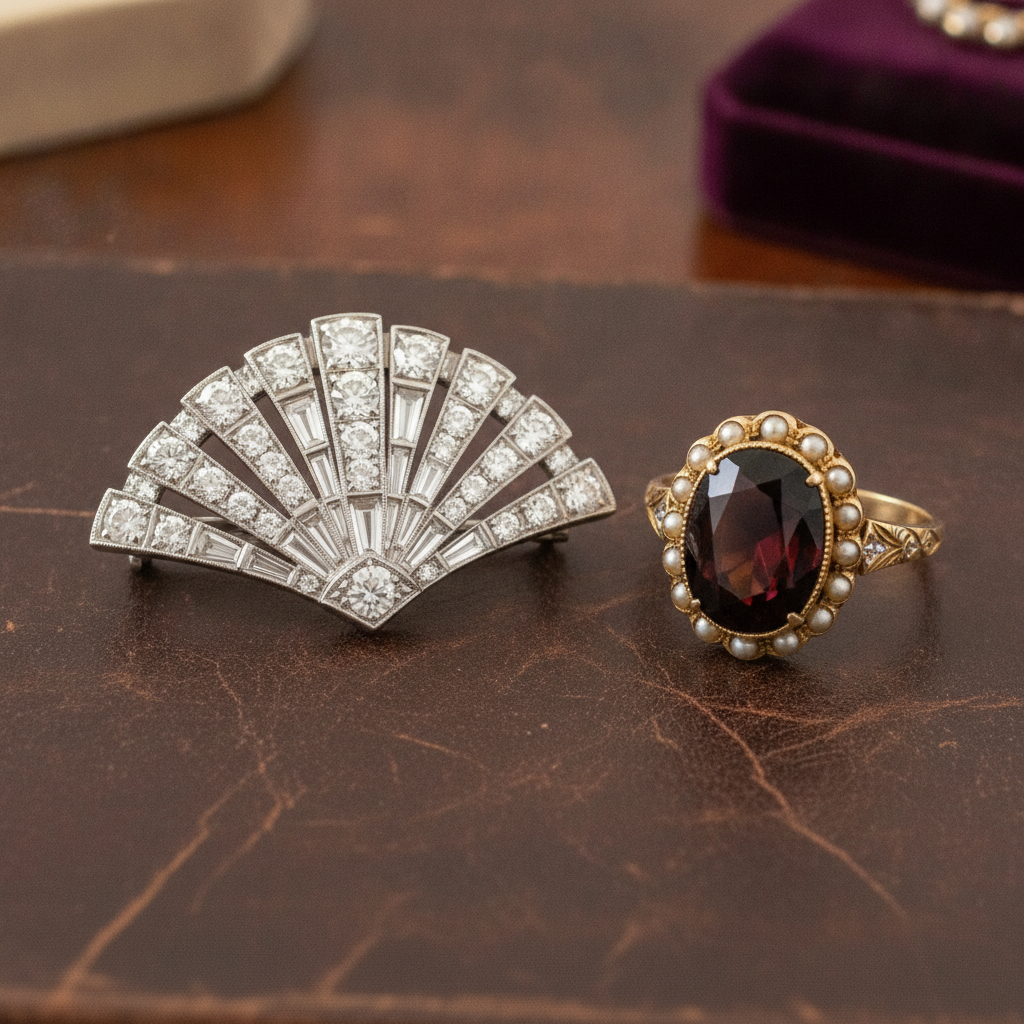
Victorian jewelry (1837-1901) reflects Queen Victoria's reign and its cultural moods. Early Victorian (Romantic period) features sentimental motifs: hearts, flowers, snakes symbolizing eternity, and hair jewelry commemorating loved ones. Mid-Victorian (Grand period) responds to Prince Albert's death with mourning jewelry in jet, onyx, and dark garnets. Late Victorian (Aesthetic period) embraces lighter designs with diamonds, sapphires, and Japanese-inspired motifs. Victorian pieces are typically antique (100+ years) rather than vintage, but late Victorian overlaps both categories.
Edwardian jewelry (1901-1915) coincides with King Edward VII's reign and emphasizes airy, feminine designs in platinum and white gold. Lace-like filigree, millegrain detailing, garland motifs, and bow designs characterize the era. Edwardian jewelers maximized platinum's strength to create delicate settings that appear almost weightless. Diamond and pearl combinations are iconic Edwardian choices. These pieces are now antique and highly collectible.
Art Nouveau jewelry (1890-1910) overlaps late Victorian and Edwardian periods with a distinct design philosophy: organic, flowing forms inspired by nature. René Lalique, Georges Fouquet, and Louis Comfort Tiffany produced iconic Art Nouveau jewelry featuring enamel, horn, glass, and unconventional gemstones. Art Nouveau pieces are primarily antique and valued for design artistry as much as materials.
Art Deco jewelry (1920-1939) is the most collected vintage category. Geometric patterns, bold color contrasts, calibre-cut gemstones, platinum and white gold construction, and influences from Egyptian, Asian, and machine-age aesthetics define the era. Cartier's tutti frutti designs, Van Cleef & Arpels' mystery settings, and countless unsigned pieces make Art Deco the backbone of vintage jewelry collecting. JewelValue recognizes many Art Deco design elements from photographs.
Retro jewelry (1940-1960) responds to wartime platinum restrictions and post-war prosperity with bold, sculptural gold designs. Wide bracelets, oversized brooches, rose and yellow gold combinations, and large colorful gemstones (aquamarine, citrine, amethyst, topaz) characterize Retro style. Retro pieces are quintessentially vintage and remain popular for their wearable statement scale.
Mid-century modern (1950-1970) introduces abstract, sculptural, and textured designs. Gold texturing techniques (florentine, bark, hammered finishes), starburst motifs, and cocktail jewelry define the era. Designer pieces from Tiffany (Jean Schlumberger), Cartier, and independent American studios are particularly collected.
Value Factors Unique to Vintage Jewelry
Material value provides the floor for vintage jewelry appraisal. Gemstones and metals have intrinsic worth regardless of age. However, vintage pieces often contain gemstones cut to period standards (Old European cut, Old Mine cut, calibre cuts) that weigh more than modern cuts for the same face-up diameter. Appraisers must understand period cutting when estimating carat weights and values. JewelValue identifies period-typical stone types and cut styles from photographs.
Craftsmanship and construction quality in vintage jewelry frequently exceeds modern mass production. Hand-fabricated settings, hand-engraved details, custom-cut gemstones fitted precisely into settings, and hand-knotted pearl strands represent labor-intensive techniques that add value. Machine-cast modern reproductions of vintage designs lack this craftsmanship premium.
Design significance and period authenticity drive collector premiums. A genuine Art Deco onyx and diamond brooch with calibre-cut onyx channels commands far more than a modern reproduction with similar appearance. Provenance documenting ownership history, original boxes, and period receipts add value. JewelValue helps establish period-typical design characteristics that support authenticity assessment.
Designer and maker attribution significantly affects vintage jewelry value. Signed pieces from Cartier, Tiffany, Van Cleef & Arpels, Boucheron, Schlumberger, Seaman Schepps, and Paul Flato command substantial premiums. Maker's marks on unsigned pieces can be identified by specialists who reference hallmark databases. Photograph all marks and signatures with JewelValue for preliminary identification.
Condition is evaluated differently for vintage than contemporary jewelry. Expected age-related wear (patina, minor surface scratches, gentle thinning of ring shanks) is normal and does not necessarily reduce value. Damage (missing stones, broken clasps, cracked enamel, resizes that altered original design) reduces value proportionally. Restoration quality matters: professional restoration preserves value; amateur repairs can destroy it.
Rarity and market demand fluctuate with fashion cycles and collector interest. Art Deco has been strong for decades. Victorian mourning jewelry attracts niche collectors. Mid-century modern experiences cyclical demand. Current auction results for similar pieces provide the most reliable value benchmarks for vintage jewelry appraisal.
The Vintage Jewelry Appraisal Process
Professional vintage jewelry appraisal begins with thorough examination under magnification. The appraiser identifies period based on construction techniques, design elements, hallmark styles, and gemstone cutting methods. This period attribution is critical because it contextualizes every subsequent evaluation step.
Gemstone identification in vintage pieces requires knowledge of period-typical materials. Victorian jewelry commonly features garnets, amethysts, turquoise, seed pearls, and opals. Art Deco favors diamonds, onyx, coral, jade, and calibre-cut colored stones. Retro showcases aquamarine, citrine, amethyst, and kunzite in large sizes. An appraiser unfamiliar with period materials may misidentify stones or overlook synthetics that entered the market during specific eras.
Metal testing confirms purity and type. Vintage platinum pieces predate modern alloy standards and may test slightly differently from contemporary platinum. Early white gold pieces contain different alloy compositions than modern white gold. Gold-filled and rolled gold pieces from the early 20th century are common and must be distinguished from solid gold.
The appraiser documents every component: gemstones (species, estimated weight, cut style, color, clarity), metals (type, purity, weight), construction method, dimensions, condition issues, marks and signatures, and period attribution. Photographs accompany the written report. This documentation level exceeds what JewelValue provides but builds upon the preliminary identification the app offers.
Market research for vintage appraisal references recent auction results, dealer asking prices, and retail replacement costs for equivalent period pieces. Vintage jewelry markets are more specialized than contemporary markets, requiring appraisers with period-specific knowledge and current market awareness.
The appraisal report specifies its intended use (insurance replacement, fair market value, estate, donation) and states the value conclusion with methodology. For vintage pieces, fair market value appraisals are often more relevant than replacement value because exact period replacements may not exist at any price.
When to Appraise Vintage Jewelry
Estate settlement requires vintage jewelry appraisal when pieces form part of a deceased person's assets. Heirs need documented values for equitable distribution, potential estate tax calculations, and informed decisions about retaining versus selling. JewelValue helps executors quickly sort large jewelry collections, identifying which pieces likely warrant professional appraisal and which are modest in value.
Insurance scheduling protects valuable vintage collections against loss, theft, and damage. Standard homeowners policies inadequately cover vintage jewelry. Scheduled riders backed by professional appraisals provide appropriate coverage. Because vintage jewelry markets appreciate differently from contemporary pieces, regular reappraisal every three to five years is advisable.
Charitable donation of vintage jewelry valued above $5,000 requires qualified appraisal for IRS deduction claims. Fair market value documentation must meet IRS requirements for donated property. The appraiser must be qualified and independent from the receiving organization.
Pre-sale appraisal informs selling strategy for vintage jewelry. Understanding fair market value before consigning to auction, offering to dealers, or listing online prevents underselling. Different channels achieve different prices: major auction houses for exceptional pieces, specialized vintage dealers for mid-range items, and online platforms for accessible vintage fashion jewelry.
Divorce proceedings require documented values for equitable distribution of marital vintage jewelry assets. Independent appraisal prevents disputes over worth.
Personal knowledge motivates many vintage jewelry owners to seek appraisal simply to understand what they own. Inherited pieces carry family stories but often lack documentation. JewelValue satisfies initial curiosity; professional appraisal provides definitive answers.
Using JewelValue Before Vintage Appraisal
Jewelry Identifier: JewelValue serves as an efficient first step in vintage jewelry evaluation. Photograph each piece under natural daylight, capturing overall design, individual stones, hallmarks, and construction details. The app suggests period style, likely gemstone types, metal identification, and preliminary value ranges.
This preliminary sorting is invaluable for estate jewelry boxes containing dozens of pieces. Rather than paying $150-300 per piece for professional appraisal of everything, use JewelValue to identify the five pieces that likely warrant professional attention and the thirty pieces that are sentimental or fashion jewelry with modest material value.
JewelValue's educational content helps you understand period design elements before your appraiser appointment. Arriving with knowledge of Art Deco characteristics, Retro gold work, or Victorian mourning jewelry conventions makes the professional consultation more productive.
Document your JewelValue identifications as supplementary records alongside professional appraisals. The combination of AI preliminary identification and certified professional evaluation creates comprehensive documentation for insurance, estate, and resale purposes.
When JewelValue suggests a piece may be signed or designer despite unclear marks, mention this to your appraiser who can investigate further with specialized reference materials and ultraviolet examination for obscured marks.
Selling and Insuring Vintage Jewelry
Selling vintage jewelry successfully requires matching pieces to appropriate sales channels. Exceptional Art Deco, signed designer, and rare period pieces belong at specialized auction houses (Christie's, Sotheby's, Heritage Auctions, or regional specialists). Mid-range vintage fine jewelry sells well through vintage dealers, consignment shops, and curated online platforms (1stDibs, Ruby Lane). Fashion vintage and modest pieces work on eBay, Etsy, and Poshmark.
Condition presentation affects sale price. Professional cleaning appropriate to the piece's age and materials, secure clasp repair, and prong retipping justify their costs before sale. However, avoid over-restoring vintage pieces: removing desirable patina or replacing period-appropriate findings with modern components can reduce collector value.
Insurance for vintage collections requires appraisers experienced with period jewelry. Not every certified appraiser understands Art Deco construction or Victorian hair jewelry. Seek specialists with demonstrated vintage expertise, verified through professional associations (ASA, NAJA) and period-specific credentials.
Frequently Asked Questions
What is the difference between vintage and antique jewelry?
Antique jewelry is generally defined as 100 or more years old. Vintage jewelry is typically 20 to 99 years old. A piece from 1920 is antique; a piece from 1940 is vintage. These definitions affect market categorization, collector interest, and occasionally import regulations. JewelValue helps date pieces by recognizing period-typical design elements, though definitive dating often requires expert physical examination.
How much does vintage jewelry appraisal cost?
Vintage jewelry appraisal typically costs $100-300 per piece, with complex estate pieces or extensive research requirements costing more. Hourly rates range from $150-300 for specialists. Estate lot appraisals may be priced per piece or by the hour for large collections. Use JewelValue to prioritize which pieces justify appraisal fees, potentially saving hundreds of dollars on unnecessary evaluations of low-value items.
Is all vintage jewelry valuable?
No. Vintage encompasses both fine jewelry with precious materials and craftsmanship and fashion jewelry with base metals and synthetic stones. A 1960s rhinestone brooch is vintage but may be worth $20. A 1925 Art Deco diamond bracelet is vintage and may be worth $20,000. Age alone does not create value; materials, craftsmanship, design significance, and condition determine worth. JewelValue helps distinguish fine vintage from fashion vintage.
Can JewelValue replace vintage jewelry appraisal?
JewelValue provides preliminary identification, period style recognition, and value estimation but does not replace professional appraisal for insurance, estate, tax, or legal purposes. The app excels at sorting collections, educating owners, and guiding decisions about which pieces need professional attention. For documented valuation, consult a certified appraiser experienced with vintage and period jewelry.
How do I find an appraiser for vintage jewelry?
Seek appraisers certified by the American Society of Appraisers (ASA), National Association of Jewelry Appraisers (NAJA), or American Gem Society (AGS) with demonstrated vintage and period expertise. Ask specifically about experience with your jewelry's era (Art Deco, Retro, Victorian). Review sample appraisal reports. Choose independent appraisers without financial interest in purchasing your jewelry. GIA Graduate Gemologists with additional appraisal training are well-qualified for vintage gemstone identification.
Download Jewelry Identifier: JewelValue Today
Vintage jewelry deserves informed evaluation. Jewelry Identifier: JewelValue identifies period styles, gemstones, and metals from photographs, helping you understand your collection before investing in professional vintage jewelry appraisal.
Download Jewelry Identifier: JewelValue on the App Store and start evaluating your vintage jewelry collection today.