Pandora rings occupy a distinctive place in modern jewelry: affordable enough to buy on impulse, branded enough to counterfeit, and collected enough that a single jewelry box can hold a dozen of them in mixed condition. If you are sorting an inherited stack, checking a marketplace find, or trying to figure out whether the "Pandora" ring from an online seller is genuine sterling silver or plated base metal, the identification skills are the same: read the stamps, evaluate the construction, and understand what the materials are actually worth. This guide covers Pandora ring styles, authenticity checks, sizing, and realistic resale expectations—and shows how Jewelry Identifier: JewelValue turns photos of a ring into a structured material and value read. We are not affiliated with Pandora; this is an independent identification resource.
Pandora built its ring business the same way it built its charm bracelet ecosystem: modular, collectible, and designed for combination. Stacking is the core idea—thin bands with sparkle, metal texture, or motif details meant to be worn in personalized sets of two to five. That collectibility cuts both ways for identification. On one hand, most genuine rings follow consistent material and stamping conventions, which makes checking easier. On the other, enormous sales volume means enormous counterfeit volume, and "Pandora-style" fashion rings circulate everywhere from market stalls to mixed estate lots.
Before evaluating any ring, photograph it properly: straight-on from the top, profile from the side, and—most importantly—the inside of the band where stamps live, shot in bright diffuse light at an angle that shows engraving depth. JewelValue reads those photos for metal appearance, stone characteristics, and construction category, giving you an organized starting point in seconds. For technique details, see our guide to identifying jewelry by photo.
Popular Pandora Ring Styles and Collections
Recognizing the style family helps date a ring, estimate replacement cost, and spot combinations that never existed. The sparkle-focused lines are the biggest sellers: halo-style rings with a center cubic zirconia surrounded by smaller stones, eternity-style bands with continuous CZ rows, and wishbone or chevron shapes designed to nest against other bands in a stack. Heart motifs, crowns, bows, and daisies recur across seasons, as do open-ended adjustable designs and signature logo bands.
Materials follow predictable conventions. The overwhelming majority of Pandora rings are sterling silver (stamped S925 or 925), with lines in 14k gold-plated sterling marketed under names like Pandora Shine, rose gold-plated alloy under Pandora Rose, and a smaller selection of solid 14k gold pieces. Stones are almost always cubic zirconia, lab-created stones, or man-made crystals rather than natural diamonds—by design, to keep prices accessible. A seller claiming a standard Pandora ring contains natural diamonds should trigger immediate skepticism; verify against the product line before paying a diamond premium.
Discontinued styles matter to collectors. Pandora retires designs regularly, and sought-after retired rings can resell above their original price—one of the few segments of the brand where appreciation happens. If a ring does not match any known Pandora design, it is either a rare retired piece or, far more often, a lookalike. Photograph it and compare construction details before assuming rarity.
How to Check Pandora Ring Authenticity
Start inside the band. Genuine Pandora rings carry a metal stamp—S925 for sterling silver, G585 for 14k gold pieces, or metal marks combined with the ALE mark (the company's historic maker mark referencing founder Algot Enevoldsen). Stamps on authentic rings are crisp, evenly spaced, and machine-consistent under magnification. Fakes frequently show shallow, wobbly, or missing stamps, or stamp combinations that do not match the metal in hand—a "G585" stamp on a ring that tests as plated brass, for example.
Construction quality is the second layer. Genuine rings have smooth, finished inner bands with no casting seams or file marks; stones are set in real prongs or channels rather than glued into shallow cups; and plated lines wear evenly rather than flaking. Look at stone seats under magnification: glue shine around a stone's girdle is a strong fake indicator on a supposedly prong-set design. Weight is a softer clue—sterling has a denser feel than lightweight pot-metal copies—but thin stacking bands are light either way, so do not over-rely on heft.
Context completes the picture. Boxes, pouches, and receipts can be forged, so treat packaging as supporting evidence only. Price is real evidence: genuine new rings sell within a known retail band, and a "brand new" lot of ten rings for the price of one is telling you what it is. When a ring passes photo-level checks and the price is meaningful, a jeweler can confirm metal with an X-ray fluorescence test in minutes. JewelValue helps you decide which rings in a pile justify that step—scan each one and triage by likely material first.
Stacking: How Pandora Rings Are Meant to Be Worn
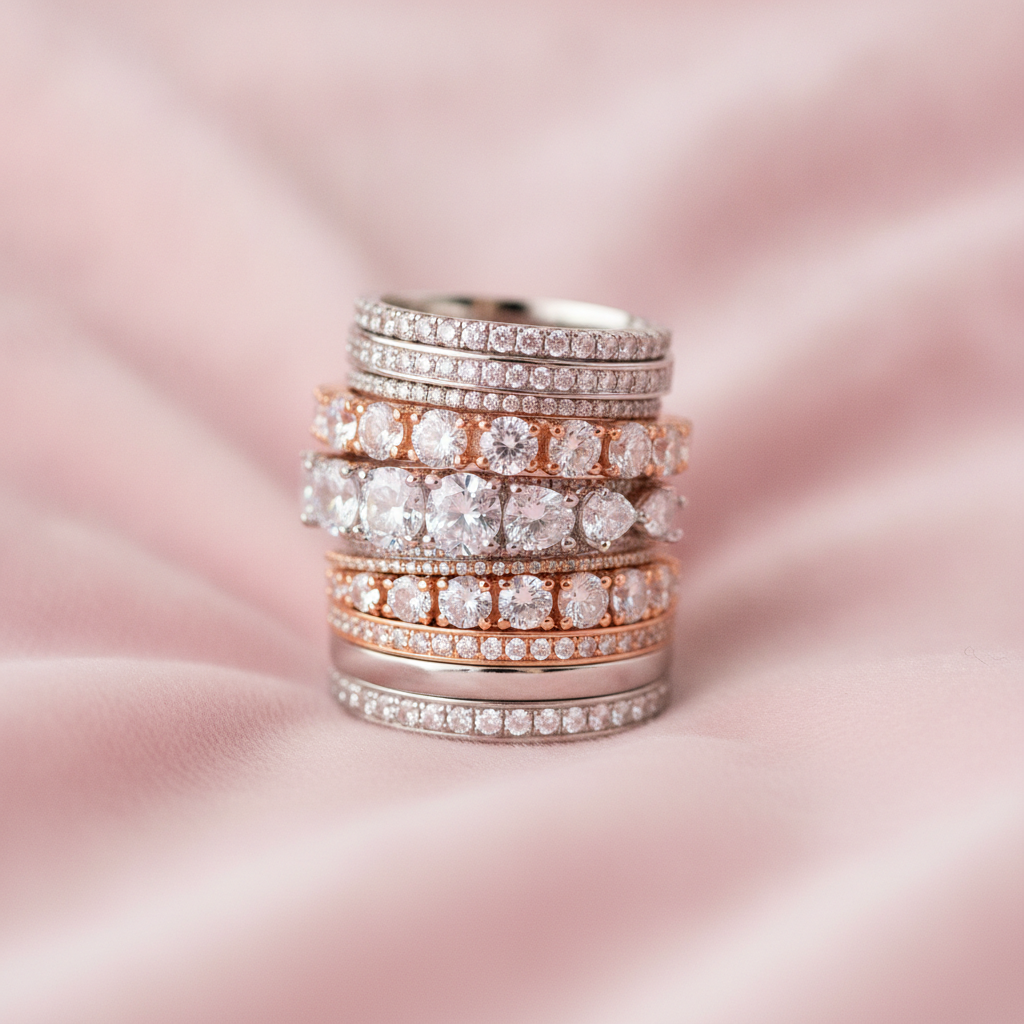
Stacking is where Pandora rings differ from standalone fine jewelry, and it affects both buying and valuation. The design language assumes combination: a sparkle band, a plain metal band, and a motif ring worn together, often mixing silver with rose or gold tones. Because of this, individual rings are deliberately thin—typically 2 to 3 millimeters—which keeps stacks comfortable but also means single rings can feel slight on their own.
For identification purposes, stacking has two consequences. First, wear patterns concentrate where rings rub against each other; expect micro-scratching on band edges of genuinely worn stacks, and be suspicious of "worn daily for years" listings showing factory-fresh edges. Second, mixed stacks acquired secondhand often contain a genuine ring or two alongside lookalikes bought to extend the set. Evaluate every ring in a lot individually rather than letting one authentic stamp vouch for the pile—the same rule we recommend for mixed Pandora jewellery lots.
If you are building a stack, size consistency matters more than brand purity. Rings worn on the same finger should match sizes exactly; a half-size mismatch that feels fine for one ring becomes uncomfortable in a three-ring stack. Plated rings (Shine, Rose) will always wear faster than solid sterling in a stack because friction accelerates plating loss—put plated pieces between silver bands sparingly if longevity matters.
Sizing, Fit, and Common Condition Issues
Pandora uses numeric ring sizes based on inner circumference in millimeters—size 52 equals a 52 mm circumference, roughly a US size 6. Conversion mistakes are a leading cause of marketplace returns, so measure rather than guess: an existing well-fitting ring's inner diameter times pi gives circumference. Thin stacking bands fit slightly looser than wide bands at the same size; buyers between sizes usually size down for single thin rings.
Condition issues cluster predictably. Sterling rings tarnish—a gray-to-black surface layer that polishes off easily and does not indicate fake or damaged metal. Plated lines show their base layer at high-friction points (band edges, the underside) after months of wear; visible brassy or silvery undertones on a "rose gold" ring mean plating loss, which is normal wear but unrepairable at economic cost on inexpensive rings. Missing stones are common on pavé and eternity styles, and replacement stones rarely match the original's cut and brightness exactly.
Photograph condition honestly when selling: tarnish, plating wear, missing stones, and resizing marks all belong in listing photos. When buying, ask for exactly those photos. JewelValue's material read helps here too—if a "sterling" ring's photos show plating wear exposing yellow base metal, you have your answer before any money moves.
What Pandora Rings Are Worth: Retail and Resale Reality
New Pandora rings retail from roughly $40 for simple sterling bands to around $200 or more for elaborate or gold-plated designs, with solid gold pieces higher. That accessibility shapes resale expectations: the secondary market for common in-production rings is soft, typically a fraction of retail, because buyers can get a new ring with warranty for modest money.
The exceptions are worth knowing. Retired and discontinued designs with collector followings can meet or exceed original retail. Solid gold Pandora pieces carry intrinsic metal value that sets a floor under resale regardless of brand demand—weigh the ring and check current gold prices. Complete sets, original packaging, and receipts nudge prices upward within any category. Melt value on sterling silver rings is minimal given typical weights of 2 to 4 grams, so silver rings sell on style demand rather than metal content.
Set expectations accordingly whether you are buying or selling. For sellers, honest photos, correct style names, and material documentation move rings faster. For buyers, the soft resale market is your friend: patient shopping finds genuine rings at strong discounts. Either way, a quick JewelValue scan sorts a mixed jewelry box into "list it," "melt-adjacent," and "check this one further" piles quickly—the same triage approach covered in our broader rings guide.
When a Pandora Ring Deserves Professional Evaluation
Most Pandora rings do not justify professional appraisal fees—the appraisal can cost more than the ring. But several situations change that math. Solid gold pieces warrant metal verification because the gold content dominates value. Suspected rare retired designs benefit from a specialist reseller's opinion, since collector premiums depend on exact identification. Estate settlements sometimes require documented values for entire collections, in which case a single appraisal session covering many pieces is efficient.
Insurance is the other consideration. Individual inexpensive rings fall under most homeowners' policies without separate scheduling, but a large collection—dozens of rings, bracelets, and charms—can add up to a scheduled-property conversation. Document the collection with photos and a structured inventory first; our jewelry appraisal guide explains when formal appraisal is genuinely necessary versus when organized self-documentation suffices.
For everything below those thresholds, photo-based identification is the right tool for the job. Scan each ring with Jewelry Identifier: JewelValue, record the material read and value context, and keep the results with your photos as a living inventory. It costs minutes, not appraisal fees, and it is exactly the level of rigor most Pandora collections need.
Frequently Asked Questions
How can I tell if a Pandora ring is real?
Check the inner band for crisp stamps: S925 for sterling silver, often with the ALE maker mark; G585 on 14k gold pieces. Then evaluate construction—finished inner surfaces, properly set stones without glue residue, even plating. Compare the design against known Pandora styles and be skeptical of prices far below retail. A jeweler can confirm metal content in minutes for pieces where it matters; use JewelValue first to triage which rings are worth that step.
Are Pandora rings real silver or gold?
Most Pandora rings are genuine sterling silver (92.5% silver, stamped S925). Gold-tone lines are usually 14k gold-plated sterling or alloy (Pandora Shine) and rose gold-plated alloy (Pandora Rose) rather than solid gold, though a smaller selection of solid 14k gold pieces exists (stamped G585). Stones are typically cubic zirconia or man-made crystals, not natural diamonds.
Do Pandora rings hold their value?
Common in-production rings resell for a fraction of retail because new replacements are affordable. Exceptions include retired designs with collector demand, which can meet or exceed original prices, and solid gold pieces, which carry intrinsic metal value. Condition, original packaging, and receipts improve resale within every category.
What size Pandora ring should I buy?
Pandora sizes are the inner circumference in millimeters—size 52 is about a US 6, size 56 about a US 7.5. Measure a well-fitting ring's inner diameter and multiply by pi to get circumference. For thin stacking bands, size down if between sizes; for stacks worn on one finger, match all sizes exactly.
Can JewelValue identify a Pandora ring from a photo?
JewelValue analyzes photos to assess metal appearance, stone characteristics, construction style, and value context, and flags mismatches like plating wear on a "sterling" listing. It cannot issue formal brand authentication—no app can—but it is an effective first filter for marketplace finds, estate lots, and collection inventories before deciding whether professional verification is worthwhile.
Download Jewelry Identifier: JewelValue Today
Whether you are untangling an inherited stack or vetting a marketplace listing, the answers start with a photo. Jewelry Identifier: JewelValue identifies metals, stones, and construction from your camera, estimates realistic value ranges, and tells you which pieces deserve a closer look. Scan your rings today and sort the genuine sterling from the lookalikes in minutes.
Download Jewelry Identifier: JewelValue on the App Store and turn photographs into informed jewelry decisions.