Rings are the jewelry category people photograph most often for identification—and for good reason. A single ring can represent a marriage proposal, a family crest, a cocktail-hour statement, or an everyday gold band worn thin by decades of use. Learning the major types of rings, common metals and stones, and practical ring identification methods helps you understand what you own before you sell, insure, resize, or pass a piece to the next generation. This guide is a broad educational overview of rings and how Jewelry Identifier: JewelValue supports photo-based identification from the palm of your hand.
Ring identification combines style recognition with materials science. Style tells you whether a piece is likely an engagement solitaire, a signet, or a fashion cocktail ring. Materials tell you whether the band is platinum or plated brass and whether the sparkle comes from diamond, moissanite, or cubic zirconia. Clear photographs analyzed with AI provide educational context so you can decide when a loupe, acid test, or professional appraisal is the right next step.
Engagement Rings: Symbolism Meets Construction
Engagement rings are designed to showcase a center stone—most often a diamond, though colored gemstones and alternative stones are widely worn. Classic constructions include solitaires with four or six prongs, halo mounts that frame the center with accent stones, and three-stone designs symbolizing past, present, and future. Cathedral shoulders and vintage-inspired filigree expand the visual vocabulary further. For diamond-focused shopping and quality factors, see our dedicated diamond engagement rings guide and the complementary engagement rings guide.
When identifying an engagement ring from a photo, capture the face-up view of the center stone, a side profile showing prong or bezel height, and the interior of the shank for hallmarks. Accent diamonds on the band can complicate estimation of total carat weight; photograph the whole ring and separate close-ups so major versus minor stones can be interpreted correctly. Note whether the center stone shows the sharp scintillation pattern of a well-cut diamond, the rainbow flash tipping toward moissanite in some lighting, or the softer look of white sapphire or CZ.
Setting security affects both wearability and value. Thin, worn prongs are a repair issue and a risk of stone loss. Bezel settings protect edges for active lifestyles. Tension and semi-tension styles look contemporary but require professional inspection after impacts. Identifying setting type helps jewelers quote repairs accurately and helps resellers describe listings honestly.
Metal choice for engagement rings commonly includes platinum, 18K and 14K white, yellow, or rose gold, and occasionally palladium. White metals may be rhodium plated for brightness; plating wears and can be renewed. Photo identification suggests likely metal categories from color and stamp cues while reminding you that definitive purity testing needs physical methods outlined in our gold jewelry identification guide.
Wedding Bands, Eternity Rings, and Stacking Sets
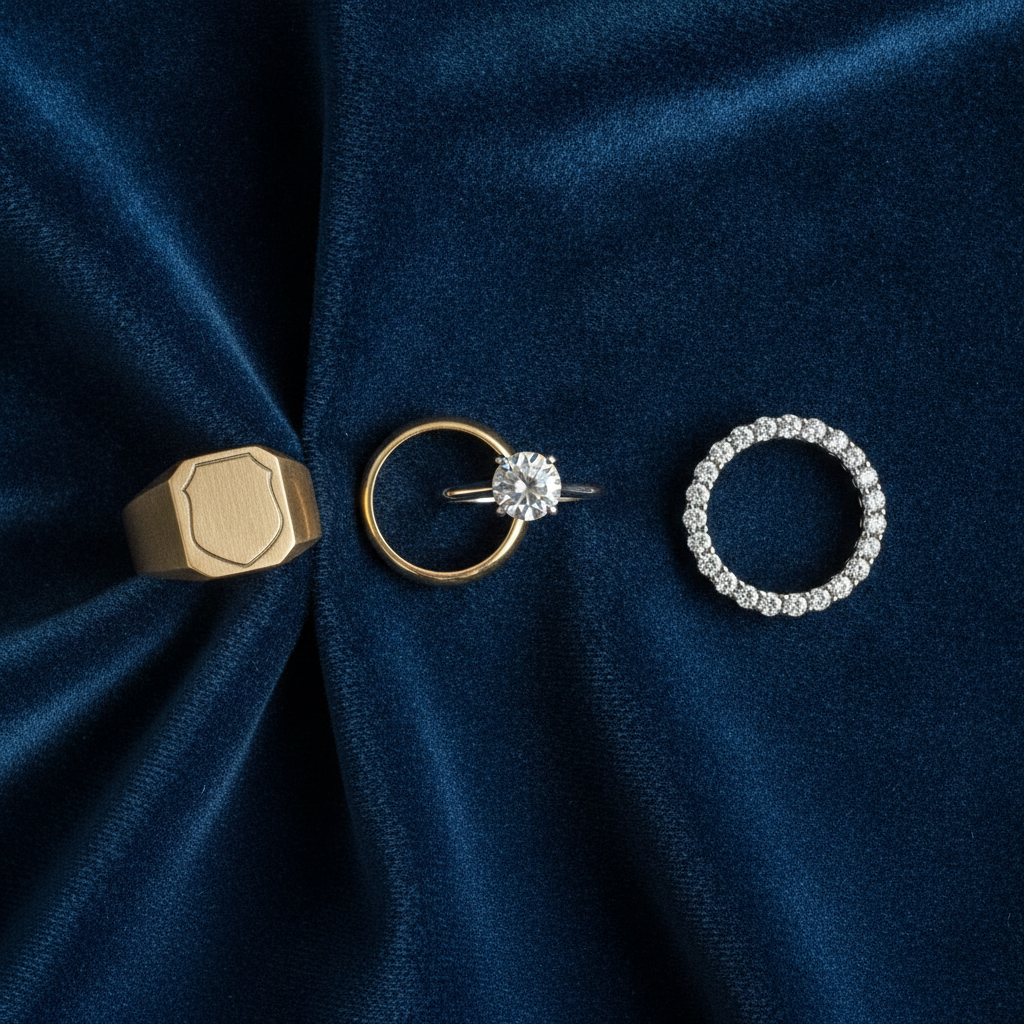
Wedding bands prioritize continuous wear. Plain milgrain or polished metal bands, diamond pavé bands, channel-set bands, and contoured bands shaped to nest with an engagement ring all fall into this family. Matching bridal sets sold together may share design motifs—shared milgrain, matching metal color, and complementary profiles—that help you recognize them as a pair even when stored separately.
Eternity rings feature a continuous circuit of identically sized stones around the band, historically gifted for anniversaries or the birth of a child. Full eternity bands can be harder to resize because stone settings wrap the entire circumference; half-eternity designs leave a plain metal section for easier sizing. Identification focuses on stone uniformity, setting security (shared prongs, channel, or bezel), and metal stamps. Missing stones on eternity bands sharply reduce desirability and increase repair cost.
Stacking rings are intentionally worn in multiples: thin gold bands, curved nesting rings, and mixed-metal stacks create a custom look. Individually, stackers may have modest material value; as a coordinated set, sentimental and aesthetic value rises. Photograph stacks both assembled and as separate rings so each band's metal and any gemstone accents can be identified without confusion from overlapping reflections.
Men's wedding bands and dual-finish bands (for example, gold centers with edged grooves) are increasingly common. These may include tungsten, titanium, cobalt, or ceramic alternatives that are not traditional karat gold. Alternative metals often cannot be resized conventionally and may be brittle under certain stresses. Photo identification that flags "likely alternative metal" prevents incorrect assumptions about melt value.
Cocktail Rings, Fashion Rings, and Statement Styles
Cocktail rings emerged as bold evening jewelry—often oversized colorful center stones, cluster arrangements, or dramatic geometric mounts. Mid-century and costume traditions sometimes used synthetic spinel, glass, or paste to achieve glamour without gemstone rarity. Vintage cocktail rings can still be collectible for design even when stones are not precious. Distinguishing Art Deco geometric cocktail rings from modern fashion duplicates requires looking at metalwork detail, stone cutting styles, and wear consistent with age.
Fashion rings sold through trend retailers may use base metals, plated finishes, and glass or CZ centers. They can look spectacular in photos and still have low intrinsic value. Magnet tests, hallmark absence, and plating wear on the shank bottom are classic clues. An AI jewelry identifier is useful precisely because it can nudge owners away from assuming every sparkly ring is a diamond heirloom.
Cluster rings and flower motifs arrange multiple stones to create a larger visual footprint from smaller gems. These designs appear in both fine jewelry and costume lines. Evaluate metal first, then stone species. A cluster of genuine small diamonds in platinum differs enormously from a cluster of CZ in gold-plated brass despite similar silhouettes at arm's length.
Signet-adjacent fashion rings with enamel, engraved motifs, or large flat tops blur into costume if materials are light. Always photograph interiors and edges. Hollow construction, open backs with rough casting, and painted rather than inlaid color are common in lower-cost fashion rings.
Signet Rings, Class Rings, and Symbol Rings
Signet rings traditionally present a flat or gently domed face for engraved initials, family crests, or symbols. Historically they sealed wax; today they function as personal or heritage jewelry. Precious-metal signets in gold or platinum can carry substantial melt value because of their solid mass, even without gemstones. Hollow or electroformed signets look similar but weigh less and value differently.
Class rings blend signet ideas with school icons, birthstones, and enamel. Materials vary widely from substantial karat gold to fashion alloys. Identification should separate metal purity claims from stone identity and enamel condition. Chipped enamel and replaced stones are common after decades.
Symbolic rings—claddagh, purity, religious, fraternal—encode meaning through iconography. Their markets mix sentimental demand with metal value. A gold claddagh with clear hallmarks may interest both gold buyers and collectors of Irish jewelry motifs. Photograph both faces of a signet or symbolic ring; reverse-side stamps and artisan marks are easy to miss.
Because signets are frequently solid and heavy relative to delicate fashion rings, weight-in-hand is a helpful field clue. Photos cannot weigh a ring, but they can prompt you to notice construction that looks hollow versus solid and to pursue professional weighing when melt value may matter. Pair that with our jewelry appraisal guide when estate totals are significant.
Metals and Stones: What Rings Are Made Of
Ring metals span platinum (often stamped PT950 or PLAT), gold in 10K–22K and fineness equivalents, palladium, sterling silver (925), and numerous fashion alloys. White gold and platinum can look similar in casual lighting; stamps and density differ. Rose gold's copper content creates its pink tone in genuine gold alloys, while rose-tone plating can mimic the look temporarily.
Gold-filled and gold-plated rings complicate identification. Plating wears through on the bottom of the shank where rings rub against surfaces. Seeing a different metal color in that high-wear zone is one of the strongest visual indicators of plating. Solid gold maintains uniform color as it thins. JewelValue looks for these wear cues in photos when lighting is adequate. Learn more in the gold jewelry identification guide.
Center stones and side stones include diamonds, sapphires, rubies, emeralds, aquamarines, morganite, moissanite, CZ, glass, and more. Each has optical personalities. Emeralds often show garden-like inclusions; rubies and sapphires (corundum) are tough and may display silk or color zoning; moissanite typically shows higher dispersion ("fire"); CZ is usually too clean and inexpensive-looking under scrutiny. Photo identification ranks likely candidates and explains distinguishing tests.
Treatments and synthetics are widespread. Heat-treated sapphires, fracture-filled emeralds, and laboratory-grown diamonds are legitimate market categories when disclosed. Problems arise when treatments or synthetics are sold as untreated natural gems. Ranked possibilities can raise flags when visuals align with common simulants, while laboratory reports remain the gold standard for high-value stones.
How to Identify Rings by Photo
Ring identification by photo succeeds when images are deliberate. Use natural daylight near a window, avoid heavy filters, and place the ring on a neutral background. Capture: (1) face-up of the entire ring, (2) profile of the setting height, (3) interior shank hallmarks with macro or cropped clarity, (4) any engraving or maker's marks, and (5) the bottom of the shank where plating wear appears. The identify jewelry by photo guide expands on lighting and multi-angle strategies.
Clean fingerprints from stones and metal before shooting. Oily haze reduces brilliance cues that help distinguish diamond from glass. Do not over-polish plated fashion rings aggressively just for a photo; you may worsen wear. A soft cloth wipe is usually enough.
Include a size reference occasionally—a coin or ruler in a secondary photo—to help contextualize stone face-up size. Carat estimation from photos is inherently approximate, but scale references improve it. Visual scale combined with setting style priors suggests educational size and value ranges rather than certified carat weights.
When results return multiple possibilities, treat that honesty as a feature. A blue center stone might be sapphire, tanzanite, topaz, or glass. Ranked suggestions tell you which confirmatory tests or professional visits are worth your time. For insurance-level certainty, escalate to appraisal rather than forcing a single definitive answer from a phone image.
Document pairs and sets. Engagement rings and wedding bands photographed together reveal design matching. Photograph them separately as well so metal stamps on each band are readable. Save all scans to build a household ring inventory over time—ideal for estates and insurance riders discussed in the Jewelry Identifier app guide.
Photo Identification Workflow for Rings
A practical photo-ID ring workflow looks like this. First, sort rings by apparent category: bridal, band, statement, signet, fashion. Second, photograph each ring with hallmark close-ups. Third, review results for metal and stone candidates. Fourth, separate rings into keep, repair, appraise, or sell piles. Fifth, schedule professional services only for pieces where results and your goals justify the cost.
This triage prevents the two classic errors: paying for appraisals on obviously plated fashion rings, and selling precious-metal heirlooms for costume prices because nobody checked the stamp. Jewelry Identifier: JewelValue sits in the middle as a fast educational first opinion. It is preliminary—not a legal appraisal document—but it dramatically improves decision quality.
Resellers benefit especially. Accurate titles like "14K yellow gold signet, no stone" versus "gold-tone fashion ring" reduce returns and platform disputes. Collectors cataloging inherited boxes can attach notes such as "possible anniversary eternity, missing two stones" directly to each photo record.
Families settling estates can share identification screenshots with co-heirs to ground conversations in materials rather than memories alone. When disagreements remain about high-value candidates, jointly fund a certified appraisal. That complementary pathway is exactly how consumer AI tools and professional gemology should coexist.
Frequently Asked Questions
What are the main types of rings?
Major categories include engagement rings, wedding bands, eternity rings, cocktail or statement rings, signet and class rings, and fashion or stacking rings. Each category has typical construction, materials, and valuation patterns. Identifying the category first narrows what metal stamps and stone clues matter most.
How can I identify a ring from a photo?
Photograph the face-up view, side profile, and interior hallmarks in natural light, then analyze the images with Jewelry Identifier: JewelValue. Clean the ring first and avoid filters. Use ranked results as a guide for follow-up testing or appraisal when the piece may have significant value. See the identify jewelry by photo guide for detailed technique.
Are magnetic rings fake?
If a strong magnet attracts a ring claimed to be solid gold or platinum, ferromagnetic base metal is present and the piece is not solid precious metal as claimed. Non-attraction does not prove gold—brass and some other non-magnetic base metals also fail to stick. Combine magnet screening with stamps, wear patterns, and photo analysis.
What hallmarks should I look for on rings?
Common stamps include 10K, 14K, 18K, 585, 750, 925, STER, PLAT, PT950, and maker's marks. Locations are usually inside the shank. Photograph marks clearly; unclear stamps should be reviewed by a jeweler under magnification. Absence of stamps increases the need for physical testing.
When should I get a ring professionally appraised?
Seek a professional appraisal for insurance scheduling, estate distribution, divorce settlements, or potential high-value diamonds and platinum pieces. Use photo identification first to triage a mixed jewelry box so you invest appraisal dollars where they matter. Our jewelry appraisal guide explains documentation standards.
Download Jewelry Identifier: JewelValue Today
From thin gold wedding bands to bold cocktail rings and crest signets, ring identification starts with clear photos and better questions. Jewelry Identifier: JewelValue delivers educational answers on metals, stones, and styles in seconds so you can protect, wear, or sell with confidence.
Build a private catalog of every ring you own, learn what hallmarks mean, and know when a professional should take a closer look.
Download Jewelry Identifier: JewelValue on the App Store and start identifying your jewelry today.