Kendra Scott jewelry—often searched as "kendrascott"—has become one of the most recognizable contemporary fashion jewelry brands in North America. Colorful gemstones, sculptural silhouettes, and approachable price points turned Kendra Scott necklaces, earrings, and bracelets into everyday staples and popular gifts. If you own a piece, bought secondhand, or inherited a jewelry box with signature stone colors and metal tones, this guide explains brand style, materials, authenticity checks, care, value, and how Jewelry Identifier: JewelValue helps you identify designer fashion jewelry from a photo. This article is educational and is not affiliated with Kendra Scott or its parent company.
Fashion designer jewelry occupies a middle ground between luxury fine jewelry and disposable costume accessories. Kendra Scott pieces frequently use gold vermeil, base metals with precious finishes, and natural or simulated stones chosen for color and presence. Understanding that material language protects you from paying fine-jewelry prices for fashion constructions—and from undervaluing well-made designer pieces that still command strong secondary-market demand.
Brand Style and Design Language
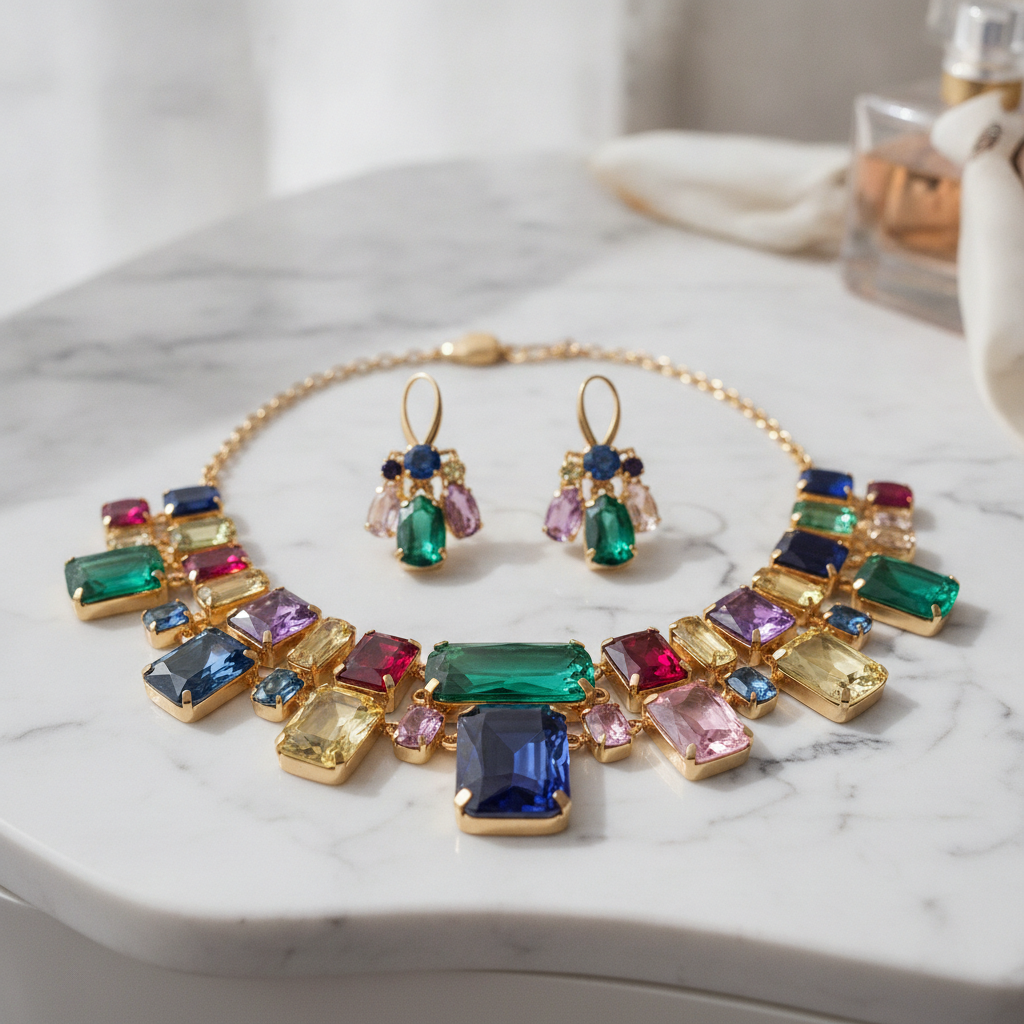
Kendra Scott's visual identity centers on bold, wearable color. Signature necklaces often feature oval, teardrop, or geometric stones in tones such as lilac, emerald green, coral, ivory mother-of-pearl, and classic white. Metal frames tend to be open, architectural, and relatively lightweight for all-day wear. That combination—saturated stone color plus clean metal silhouette—is why Kendra Scott jewelry photographs distinctively and why counterfeit makers try to copy it.
Necklaces are the brand's most searched category. Pendant styles range from single-stone drops to multi-stone stations and elongated vertical designs. Chain proportions are usually polished and modern rather than heavy ornate linkwork. Matching earring and bracelet sets amplify the brand's giftability: coordinated stone colors make sets easy to recognize even when cardboard tags are gone.
Earrings frequently use lightweight posts or hooks with elongated drops, studs framed in open metal, or clustered multi-stone arrangements. Because fashion jewelry must stay comfortable, earring weight and back construction are practical authenticity clues. Extremely heavy lookalike earrings with glued-on stones and rough soldering often diverge from brand manufacturing norms.
Bracelets and rings extend the same color-stone language into cuff, bangle, and statement-ring forms. Stone cabochons—smooth domed surfaces rather than heavily faceted disco-ball cuts—appear often and contribute to the brand's soft, luminous look. When you photograph Kendra Scott jewelry for identification, include a face-on view of the stone color and a profile of stone height and bezel depth.
Seasonal and collaboration collections rotate regularly. Color stories shift with fashion seasons, which means identical silhouettes may exist in many stone options. Identification therefore focuses less on memorizing every SKU name and more on recognizing construction patterns, finish quality, clasp types, and branding details. Photo analysis that evaluates materials and style characteristics works better than requiring an exact catalog match.
Materials: Gold Vermeil, Base Metals, and Stones
Gold vermeil is one of the most important material terms related to Kendra Scott jewelry. In U.S. trade practice, vermeil generally means a substantial gold layer over sterling silver, thicker than ordinary flash plating, though exact thickness standards can vary by maker and era. Vermeil offers a warm gold look at a lower cost than solid karat gold. It can wear differently than solid gold: high-friction points may eventually reveal silver beneath if finishes thin over years of wear.
Sterling silver and other base or alloy metals also appear across fashion jewelry categories. Some pieces are plated in gold tone or rhodium-like finishes for color stability and mixed-metal styling. When owners assume "gold-looking" equals solid gold, valuation mistakes follow. Photograph any stamp that suggests 925, sterling, vermeil, or plating language, then interpret those clues alongside surface wear patterns. Our gold jewelry identification guide explains how solid gold, gold-filled, vermeil, and thin plating differ.
Stones in Kendra Scott jewelry are selected for color impact. Depending on the design and period, stones may be natural gem materials, reconstituted stones, glass, or other fashion-appropriate materials chosen for hue and translucency rather than high carat-value rarity. Mother-of-pearl, howlite-like whites, dyed stones, and vibrant opaque gems are part of the aesthetic vocabulary. That does not make the jewelry "fake"—it means value is driven by brand design and condition more than by diamond-equivalent scarcity.
Photo identification helps separate visual categories: pearl-like materials, translucent colored stones, opaque cabochons, and metallic finishes. It will not always name a niche branded stone SKU, but it can prevent confusing a fashion pendant with a high-value sapphire or emerald solitaire. Pairing scan results with style context keeps expectations accurate for designer fashion jewelry.
Hardware details complete the material story. Lobster clasps, adjuster chains, earring posts, and jump rings should feel proportional and finished. Rough file marks, mismatched metal colors at joins, or glue overflow around stones are more common on low-grade counterfeits than on authentic brand production. Capture close-ups of clasps and stone settings when you want a thorough photo-based read.
How to Identify Authentic vs Counterfeit Kendra Scott
Authenticity for Kendra Scott jewelry rests on construction quality, branding details, materials consistent with the brand's fashion-fine positioning, and—when available—original packaging, authenticity cards, and purchase records. Counterfeiters target popular necklace and earring silhouettes because search demand for "Kendra Scott necklace" remains high. Visual similarity alone is not enough.
Start with branding marks. Authentic pieces often include brand identification on tags, clasps, earring backs, or accompanying cards. Markings should be crisp and consistent with other known genuine pieces. Blurry logos, crooked stamps, misspellings, or oddly placed brand names are warning signs. Photograph these marks at high magnification so you can compare them carefully against trusted references.
Stone seat and finish are next. Authentic pieces typically show clean bezels or frames, even color distribution within the design language, and polished metal edges. Counterfeits may reveal glue ridges, uneven stone height, scratched plating from manufacture, or metallic smells associated with low-grade alloys. Compare weight: oddly heavy base-metal knockoffs or paper-light hollow fakes both diverge from expected balance for a given silhouette.
Packaging can help but is not definitive. Branded pouches, boxes, and cards travel separately from jewelry and can be mixed by resellers. Conversely, an authentic piece without packaging remains authentic. Treat packaging as supporting evidence. If a marketplace listing shows pristine packaging photos but blurry jewelry stamps, ask for better hallmark and clasp images before buying.
Marketplace red flags include prices far below typical secondary-market ranges for popular styles, sellers unwilling to show clasps, and stock photos reused across unrelated listings. When shopping thrift and consignment, use your phone immediately: photograph the piece and run Jewelry Identifier: JewelValue to check whether metal and stone cues align with designer fashion jewelry rather than cheap costume copies. The identify jewelry by photo guide outlines lighting and angle tips that improve these quick assessments.
Remember the distinction between "authentic brand" and "valuable materials." A genuine Kendra Scott necklace can be real brand merchandise made with vermeil and fashion stones. A counterfeit can be fake brand merchandise that looks similar. Separately, a non-branded sterling and gemstone pendant might be more intrinsically valuable than either—brand and material analyses answer different questions.
Care and Cleaning for Kendra Scott Jewelry
Designer fashion jewelry lasts longer with gentle habits. Remove necklaces and earrings before swimming, showering, or applying lotions, perfumes, and hairspray. Chemicals and chlorinated water accelerate finish wear on vermeil and plated surfaces and can dull porous or treated stones. Store pieces separately in soft pouches so harder metals and stones do not scratch neighboring finishes.
Clean with a soft, dry or slightly damp microfiber cloth after wear to remove oils. Avoid harsh ultrasonic cleaners, abrasive pastes, and bleach-based solutions unless a professional specifically recommends them for your exact materials. Cabochon stones and fashion materials can be more sensitive than diamond solitaires. If a piece has glued components—more common in fashion jewelry than in high karat fine jewelry—soaking can loosen adhesives.
For vermeil and gold-tone finishes, polishing cloths designed for gold-plated or vermeil jewelry help restore luster without stripping layers too aggressively. Over-polishing is a real risk; stop once shine returns. If underlying silver begins to show on edges, that is a condition note for resale, not necessarily a reason to discard a beloved piece. Collection notes in your identification app are a convenient place to track wear progression over years.
Chain kinks and clasp stress deserve preventive attention. Open jump rings carefully with proper tools rather than bending them sideways repeatedly. Have a jeweler repair stretched chains or weak clasps before a necklace is lost. Documenting before-and-after repair photos keeps a record if you later insure or sell the piece.
Travel with fashion jewelry in rigid or padded organizers. Soft crumpled pouches at the bottom of a suitcase allow stones to knock together. Because colorful stones define much of Kendra Scott's appeal, chips and scratches reduce both aesthetic pleasure and secondary-market desirability more than minor metal hairlines sometimes do.
Understanding Value and Resale Reality
Kendra Scott jewelry value is primarily brand-and-style driven within the fashion jewelry market. Popular necklace colors and iconic silhouettes often retain stronger resale interest than obscure seasonal experiments. Condition is critical: deep finish wear, missing stones, bent frames, and stained ribbons or cords suppress prices quickly. Original packaging can improve listing presentation but rarely transforms value on its own.
Do not confuse retail gift-set pricing with cash value. Like other contemporary designer fashion brands, secondary markets usually clear below original retail, especially for common colors still widely available. Limited or discontinued colorways may perform better among brand enthusiasts. Research recently sold comps for the same silhouette and stone color rather than relying on the original receipt.
Material melt value is typically modest compared with solid gold fine jewelry. Vermeil and plated constructions do not price like 14K gold chains of similar visual size. That is expected. Owners should enjoy these pieces as design objects and wardrobe staples, then use realistic comps when selling. If a piece tests or stamps as solid karat gold contrary to brand expectations, reassess carefully—either it is a different item than assumed or something unusual has occurred. Photo analysis plus physical hallmark reading clarify such surprises before you set a price.
Insurance needs differ from fine diamond jewelry. Some owners add scheduled personal property coverage for extensive designer collections; others rely on homeowners contents limits. Either way, photographs and identification records help prove ownership and describe pieces after loss. A dated visual catalog is useful for claims conversations, while a formal jewelry appraisal may still be required for high total collection values.
Gift and estate contexts add sentimental value that markets ignore. A Kendra Scott necklace tied to a graduation or wedding memory may be irreplaceable to the family even if resale offers are modest. Identification still matters so heirs understand what they have, how to care for it, and whether any mixed pieces in the same box are actually fine gold or diamonds that deserve separate handling.
Using Photo ID for Designer Fashion Jewelry
Jewelry Identifier: JewelValue is not only for antique diamonds and estate gold. Fashion and designer pieces benefit from photo ID whenever stone type, metal finish, or authenticity is unclear. Photograph the full necklace or earring set, then add close-ups of clasps, posts, stamps, and stone surfaces. Educational results help you place the piece in a material category and compare it against similars.
Common use cases include thrift flips, closet clean-outs, marketplace buying, and sorting mixed jewelry after a move. A drawer may contain Kendra Scott necklaces, solid gold chains, CZ studs, and unknown pendants. Photo triage tells you which items need fine-jewelry follow-up and which are fashion keepers. Pair that workflow with the Jewelry Identifier app guide for collection-tracking tips.
Photo ID also supports authenticity diligence. While no consumer app can formally authenticate every branded fashion SKU the way a brand boutique might, material inconsistencies—base-metal wear inconsistent with claimed vermeil, stone appearance inconsistent with expected cabochon materials, sloppy construction—give you reason to walk away from a risky listing. Combine app insights with hallmark inspection and seller reputation.
For families unfamiliar with contemporary brands, photo identification reduces the intimidation of "I don't know what this purple necklace is." Identifying color-stone fashion jewelry as such prevents accidental donation of still-wearable designer pieces and prevents costly appraisal appointments for items whose market is fashion resale rather than gemological rarity. Learn more techniques in the identify jewelry by photo guide.
Practical Buying Checklist for Kendra Scott Shoppers
Whether buying new or secondhand, adopt a short checklist. Confirm construction quality of frames and clasps. Inspect stone surfaces for chips. Check for brand marks and request stamp photos from sellers. Test your expectations about metal: gold tone often means vermeil or plating, not solid karat gold. Compare sold prices for the same colorway. Run a JewelValue scan when anything about materials seems ambiguous.
Prefer natural daylight photos over filtered social images when evaluating online listings. Over-saturated seller photos can disguise stone discoloration or metal fading. Ask for a photo next to a neutral white card if color accuracy matters for matching a set you already own. Save listing screenshots and your identification results together for purchase records.
If you already own multiple pieces, photograph each into a personal collection and note stone colors, occasions, and purchase years. That habit turns a fashion jewelry collection into a searchable wardrobe inventory and simplifies insurance or estate conversations later. Designer fashion jewelry deserves the same documentation discipline as fine bridal jewelry—just with different valuation benchmarks.
Frequently Asked Questions
Is Kendra Scott jewelry real gold?
Many Kendra Scott pieces use gold vermeil or gold-tone finishes over silver or other metals rather than solid karat gold throughout. Vermeil can include real gold content in the surface layer, but it is not the same as a solid 14K gold jewel. Always read stamps and product materials, and use photo ID plus hallmark close-ups to avoid assumptions based on color alone.
How do I spot fake Kendra Scott necklaces?
Look for blurry or misspelled branding, glue-heavy stone setting, rough clasp finishing, implausibly low prices, and sellers who will not show clear stamp photos. Compare construction weight and polish to known authentic pieces. Jewelry Identifier: JewelValue can flag material and construction clues that warrant extra caution before you buy.
Does Kendra Scott jewelry tarnish or fade?
Finishes on vermeil and plated jewelry can wear or dull with chemicals, friction, and time. Sterling components may tarnish if exposed. Proper storage and gentle cleaning slow these changes. Visible silver underneath a gold-tone surface indicates finish wear and affects resale condition more than day-to-day wearability for many owners.
Can JewelValue identify Kendra Scott jewelry from a photo?
JewelValue analyzes metals, stones, and style characteristics from photographs. It may not always name a specific brand SKU, but it helps classify materials and detect inconsistencies useful for authenticity and valuation decisions. Save scans with your own notes when packaging confirms brand origin.
Is secondhand Kendra Scott jewelry worth buying?
Yes, when condition is good and the price reflects secondary-market comps. Popular necklace colors and matching sets can offer strong style value at a discount to retail. Inspect stones, finishes, and clasps carefully, request hallmark photos, and use photo identification to verify that materials match the listing claims.
Download Jewelry Identifier: JewelValue Today
Colorful designer fashion jewelry deserves clear answers about materials, care, and realistic value. Jewelry Identifier: JewelValue turns a phone photo into an educational identification that helps you buy smarter, clean safely, and catalog every Kendra Scott necklace or lookalike with confidence.
Whether you are authenticating a marketplace find or organizing a gift collection, photo ID keeps brand jewelry identification practical and fast.
Download Jewelry Identifier: JewelValue on the App Store and start identifying your jewelry today.