Promise rings occupy a special place in jewelry culture: intimate enough to signal commitment, flexible enough that couples define the meaning themselves. Unlike engagement rings, which traditionally point toward marriage, a promise ring can mark exclusivity, a future intention, a long-distance commitment, a personal vow, or even a milestone gift that is romantic without being a proposal. That openness is part of the appeal—and part of the confusion when people inherit unlabeled rings, shop secondhand, or try to understand what a partner’s gift actually represents. This guide explains promise ring meaning, popular styles especially for her, metals and stones, how promise rings differ from engagement rings, and how to identify materials with Jewelry Identifier: JewelValue from photographs.
Because promise rings live across fashion jewelry and fine jewelry tiers alike, visual similarity does not equal equal value. A delicate CZ band in silver and a petite diamond solitaire in platinum can both be “promise rings” in social intention while differing by orders of magnitude in material worth. Learning to identify metal stamps, stone behavior in photos, and setting construction protects buyers and clarifies estate inventories. For a broader identification workflow, see our jewelry identifier app guide and how to identify jewelry by photo.
What Promise Rings Mean
A promise ring is a wearable symbol of a commitment the giver and wearer agree upon. There is no universal legal definition and no single gemological requirement. Historically, rings have long been used as tokens of betrothal, affection, or fidelity; modern “promise ring” language rose in popular culture as a middle ground between casual dating jewelry and formal engagement. Couples may use a promise ring when they want to acknowledge seriousness before they are ready for marriage timelines, budgets, or life logistics. Others use promise rings after engagement conversations that need waiting seasons—military deployments, education, immigration timing, or financial goals.
Meaning is negotiated, not assumed. One couple’s promise ring means monogamy; another’s means “we will get engaged when we finish school”; another’s is a personal sobriety or faith pledge that is not romantic at all. That is why description matters in gifts and estates. If you are documenting jewelry for a family, note any letters, dates engraved inside the band, or stories told about the piece. Engravings such as initials and dates do not by themselves distinguish promise from engagement styles, but they add provenance that appraisers and heirs care about.
Because meanings vary, avoid over-reading design as destiny. A small center stone does not “prove” a ring is “only” a promise ring, and a plain band does not prove it is not. Social media stereotypes—tiny heart motifs “for promises,” larger solitaires “for proposals”—are trends, not rules. When identification is your goal, separate sentimental category from material identity. JewelValue helps with the second: what metal and stone are likely present, regardless of the story attached.
Gift etiquette usually favors clarity. Partners who give promise rings often explain the intention verbally so the recipient is not left guessing whether a proposal just happened. If you are the giver, match metal allergies, lifestyle (active hands vs desk work), and aesthetic preferences. If you are the recipient evaluating an unmarked ring later, treat “promise” as a possible social label while verifying materials like any other piece of jewelry.
Popular Promise Ring Styles for Her
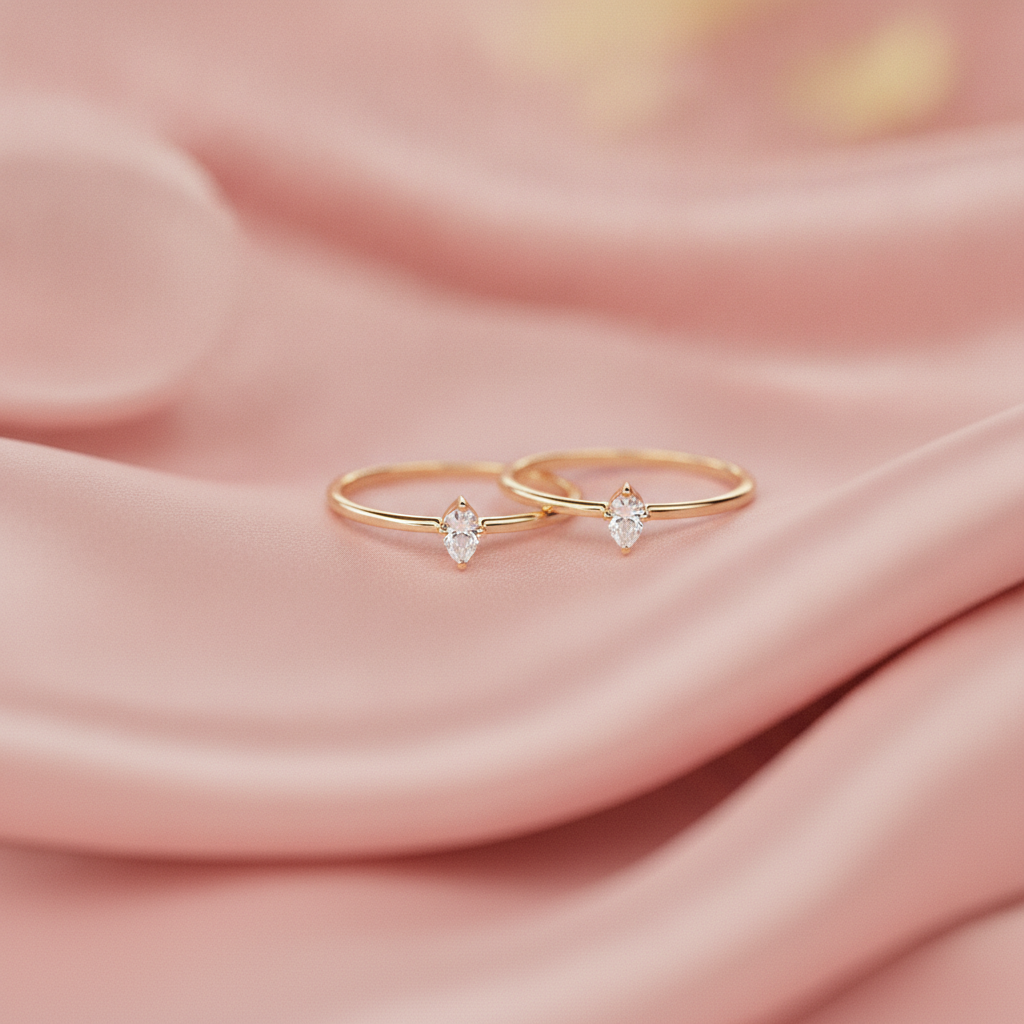
Promise rings for her often emphasize wearability and subtlety: designs that fit daily life, stack with other rings, or sit comfortably beside a future engagement set. Classic choices include petite solitaires with small accent diamonds or CZ stones, heart motifs, infinity symbols, interlocking bands, simple polished domes, and birthstone accent rings. Vintage-inspired promise rings borrow milgrain, filigree, and floral shoulders without requiring the scale of a formal engagement centerpiece. Minimalist modern styles favor clean geometry—thin knife-edge bands, bezel-set tiny stones, or open-shank designs.
Stackability is a practical design factor. Many wearers plan to keep a promise ring after engagement, either on the same hand as a stacked set or moved to the right hand. Low-profile settings that do not catch on sweaters are popular for that long-term wearing plan. Halo mini designs appear frequently in commercial “promise” marketing because they create visual presence with modest carat sizes—attractive, but also commonly executed in simulants. Always verify stone type rather than assuming brilliance equals diamond.
Metal color stories matter for styling. Yellow gold promise rings read classic and warm; white metals (white gold, platinum, silver) read contemporary next to cool-toned wardrobes; rose gold remains strongly associated with romantic gift markets. Two-tone designs can bridge mixed jewelry collections. When photographing a ring for identification, capture the metal color in daylight without filters—phone beauty modes can push rose tones pinker and yellow tones warmer, confusing both eyes and AI analysis. JewelValue works best with honest lighting and multiple angles, including the profile and the hallmarks inside the shank.
Personalized styles include engraved messages, fingerprint textures, and birthstone side accents. These features increase sentimental uniqueness but can complicate resale comps because buyers may not want someone else’s engraving. From an identification standpoint, engravings help provenance; from a market standpoint, they can narrow the buyer pool. Document them clearly if you plan to sell or insure.
Metals, Stones, and How to Identify Materials
Material identification is where promise rings most often surprise people. A ring sold or gifted as a “diamond promise ring” may contain cubic zirconia, moissanite, white sapphire, lab-grown diamond, or natural diamond. Metal marketed casually as “gold” may be gold-plated brass, gold-filled, vermeil over sterling, or solid karat gold. Stamps are your first concrete clues: look inside the shank for “925,” “14K,” “585,” “18K,” “750,” “10K,” “PT950,” “PLAT,” or maker’s marks. Photograph hallmarks with macro mode; tiny stamps are easy to misread in dim light.
Stone evaluation from photos starts with optical behavior. Diamonds typically show a balance of white brilliance and spectral fire. Cubic zirconia often appears glassy with exaggerated rainbow flashes and may show facet-edge wear over time. Moissanite can display strong dispersion (fire) under point lighting and may need specialized testing to separate confidently from diamond. Colored birthstones introduce another matrix of lookalikes—glass, synthetic spinel, and assembled stones frequently appear in fashion tiers. Our photo identification guide walks through lighting and angle techniques that improve accuracy for any jewelry category, including small promise-ring stones.
Setting construction supports material claims. Prong settings on fine jewelry tend to be carefully formed; glued stones in shallow cups lean costume. Thin plating that reveals base metal at the ring’s bottom edges is common after months of wear. Magnetic tests can flag some base-metal cores but should be interpreted carefully—many precious pieces have non-magnetic behavior while some clasps or alloys complicate simple rules. Weight relative to size is another soft clue: pewter-light large “gold” rings with big stones at tiny prices are rarely solid fine jewelry.
JewelValue is designed for this triage. Capture the face-up view, side profile, and hallmark area, then review suggested materials and educational context. Treat results as a knowledgeable preliminary opinion that guides next steps—especially whether a jeweler’s loupe inspection, diamond tester, or formal appraisal is justified. That workflow mirrors how collectors handle unlabeled estate rings: identify first, spend on certification second.
Promise Rings vs Engagement Rings
The difference between promise rings and engagement rings is primarily social and intentional, not a fixed gemological rule. Engagement rings traditionally signal a marriage proposal and often feature a more prominent center gemstone with a budget reflecting long-term investment and cultural expectations. Promise rings traditionally signal commitment without (necessarily) that marriage-ready declaration. In practice, overlaps exist: some couples use modest diamond rings as promises and later upgrade; others propose with simple bands. Style alone is an unreliable classifier.
Still, commercial patterns emerge. Engagement rings more often center larger stones (or designs that read large via halos), stronger side-stone architectures, and matching wedding-band compatibility. Promise rings skew smaller, lower profile, and more motif-driven (hearts, infinity). For identification and valuation, ignore the label until materials are known. A “promise ring” listing with a one-carat-looking center stone at an implausible price should trigger simulant checks the same way a bargain “engagement ring” would. For diamond-focused ring education adjacent to proposal jewelry, see our diamond engagement rings guide.
Relationship timing also differs. Promise rings may appear early, including teen and early-adult relationships where budgets are limited—another reason fashion materials are common. Engagement rings often arrive after longer planning. When estate sorting, handwritten notes, boxes labeled “promise,” or paired jewelry stories help interpret meaning for heirs even when market value is modest. Never discard sentimental context; just do not confuse it with appraisal value.
Wear placement customs vary by culture and couple preference. Some wear promise rings on the left ring finger and move them when engaged; others use the right hand from the start. These customs do not change metal identity. What does change valuation is condition from years of stacking—scratches where rings rub, thinned shanks, and worn prongs. Factor condition into any sale or insurance conversation.
Gifting, Timing, and Practical Buying Advice
Successful promise ring gifting balances symbolism with comfort and honesty. Learn size quietly (borrow a well-fitting ring and measure inner diameter, use a ring sizer, or ask a friend). Promise rings worn daily need durable choices for the wearer’s lifestyle: bezel settings for active hands, secure prongs for desk jewelry, hypoallergenic metals for sensitive skin. Allergy-prone wearers often do better with platinum, palladium, stainless options marketed carefully, or properly alloyed gold—while nickel-heavy white gold formulations can irritate some people.
Budget conversations prevent mismatched expectations. Decide whether this ring is meant as a modest token or a fine jewelry purchase near engagement scale. Communicating that intention reduces later disappointment. Receipts and certificates (when stones are natural or lab-grown diamonds with reports) should stay with the ring’s digital photo file. Photograph the ring with JewelValue at purchase to create a baseline inventory record—useful if the piece is lost, resized, or later needs appraisal documentation.
Secondhand and estate shopping can yield beautiful promise rings at fair prices if you verify materials. Ask for hallmark photos, inspect for resize marks that thinned the shank, and be cautious of rhodium-plated silver sold as white gold without clear stamps. Online returns policies matter when photos are ambiguous. Use JewelValue on seller images as a pre-purchase screen, then re-check under your own lighting when the ring arrives.
Custom fabrication is an option for couples who want specific motifs without brand markup. Custom does not automatically mean higher secondary-market liquidity; it means better personal fit. Keep CAD renderings and metal invoices with your records.
Value, Resale, and Insurance Considerations
Promise ring market value tracks metals, gemstones, brand (if any), craftsmanship, and condition—not the depth of the promise. Fashion CZ rings may have minimal resale. Solid gold rings retain metal-related value even if the style is dated. Diamond and moissanite quality, when present, dominate pricing for fine examples. Sentimental premium paid at retail rarely fully returns on secondary markets; expect that emotionally significant pieces often sell for less than the giver remembers spending.
When to insure depends on replacement cost and your homeowner or renter policy limits. Many standard policies sublimit jewelry unless scheduled. If JewelValue and a jeweler agree you have solid gold and genuine diamonds, obtain a formal appraisal for scheduling. If materials are fashion-grade, insurance may be unnecessary, but a photo inventory still helps with theft reports for sentimental recovery.
Estate and breakups add sensitive contexts. Clear agreements about what happens to promise rings if a relationship ends can prevent conflict; customs vary widely and are personal. For estates, inventory every ring with photos and preliminary IDs so executors do not accidentally scrap a fine piece or overvalue a plated one. JewelValue speeds that first pass when boxes contain many similar small rings.
Pricing a sale: photograph in daylight, disclose stamps and any damage, and price against sold comps for the same metal and stone type—not against “promise ring” search filters that mix fashion and fine. Honesty about CZ versus diamond is both ethical and practical; misrepresentation creates returns and account problems on resale platforms.
Photographing Promise Rings for Accurate Identification
Small rings are easy to mis-photograph. Place the ring near a window with diffuse daylight, clean oils from the stone, and use a neutral background. Capture: (1) face-up, (2) side profile showing prong height, (3) underside and inner shank stamps, (4) any engraving. Avoid HDR extremes that blow out facets. Include a coin or ruler for scale so stone size is not exaggerated by wide-angle lenses.
If the ring has colored stones, take one photo in shade and note any color change myths carefully—genuine alexandrite behaves differently from color-change glass, and photo apps can invent shifts. When results from JewelValue return multiple possibilities, use those candidates to ask better jeweler questions rather than forcing a single answer prematurely. That is the productive use of AI identification: narrowing the field skillfully.
For stacks, photograph rings separately. Overlapping bands confuse edge detection and hallmark reading. If a promise ring is soldered to another band, note that modification; soldered sets can complicate resizing and separate valuation.
Frequently Asked Questions
What is the meaning of a promise ring?
A promise ring symbolizes a commitment defined by the people exchanging it—often romantic exclusivity or a step toward future engagement, but sometimes a personal vow unrelated to marriage. There is no single official definition. Clarify intention when giving one so the symbol matches the relationship. Material quality is separate from meaning; identify metals and stones independently with tools like JewelValue.
How are promise rings different from engagement rings?
The main difference is social intention: engagement rings traditionally mark a marriage proposal, while promise rings mark commitment without necessarily implying immediate marriage plans. Designs overlap. Some promise rings are modest solitaires; some engagement rings are simple bands. Identify materials the same way for both, and see our diamond engagement rings guide for proposal-ring specifics.
What metal is best for a promise ring for her?
Choose based on allergies, lifestyle, budget, and jewelry wardrobe. Sterling silver and fashion plating suit modest budgets but need tarnish and wear care. Karat gold and platinum offer durability and stronger intrinsic value. Rose, yellow, and white tones are aesthetic choices. Verify stamps rather than assuming color equals solid gold—JewelValue photo analysis helps flag plating versus solid appearance clues.
Can JewelValue tell if my promise ring stone is a real diamond?
JewelValue analyzes visual characteristics from photographs and provides likely material suggestions and educational context. Photos can strongly support or challenge diamond versus common simulants, but definitive separation of diamond from moissanite—and natural from lab-grown—may require professional instruments and laboratory reports. Use the app to triage and decide when testing is worth the cost.
Do promise rings have resale value?
Some do—especially solid gold and diamond examples in good condition. Many fashion promise rings have limited secondary-market value beyond modest scrap or decorative appeal. Sentimental retail prices rarely equal resale offers. Document with photos, disclose materials honestly, and consult our jewelry appraisal guide when insurance or estate values are material.
Download Jewelry Identifier: JewelValue Today
Promise rings carry personal meaning, but smart ownership still starts with knowing what you actually have—metal, stone, and condition. Jewelry Identifier: JewelValue turns clear phone photos into a practical identification starting point for gifts, estate finds, and secondhand buys.
Download Jewelry Identifier: JewelValue on the App Store and identify your promise ring today.