A Cartier bracelet is one of the most copied objects in the jewelry market. The Love bangle, the Juste un Clou nail, and the Panthère motif are recognizable enough that counterfeits, gold-plated fashion copies, and honest vintage pieces all show up in the same search results. If you inherited a bracelet, are buying pre-owned, or need to understand what is already in a jewelry box, the useful question is not "does it look like Cartier?" It is whether the metal, screws or clasp, hallmarks, weight, and provenance agree with each other. This guide explains the main Cartier bracelet families, how authentication actually works, and where Jewelry Identifier: JewelValue fits as a structured first pass from photographs. We have no affiliation with Cartier; this is an independent identification resource.
Cartier's bracelet designs span a century of different workshops. A 1970s Love bracelet, a current boutique piece, and a high-jewelry panther bracelet are not authenticated with one checklist. Era, country of sale, and model all change which marks you should expect. That is why a single "tell" — a missing eagle's head, a slightly worn stamp, or a serial number that does not match a format you saw online — is never enough. Experienced buyers accumulate evidence, then spend professional fees only on pieces that survive the photo stage.
Start by photographing the bracelet before you clean it or try to open it. Lay the full piece flat, then shoot the opening or clasp, every inner engraving, each screw head or motif, and the edge where plating would wear through. Diffuse daylight beats a direct flash, which blows out gold color and hides engraving depth. JewelValue can organize those photos into a first read on metal appearance, construction, and likely materials. For the shooting method itself, see our guide to identifying jewelry by photo.
Cartier Bracelet Styles Worth Knowing
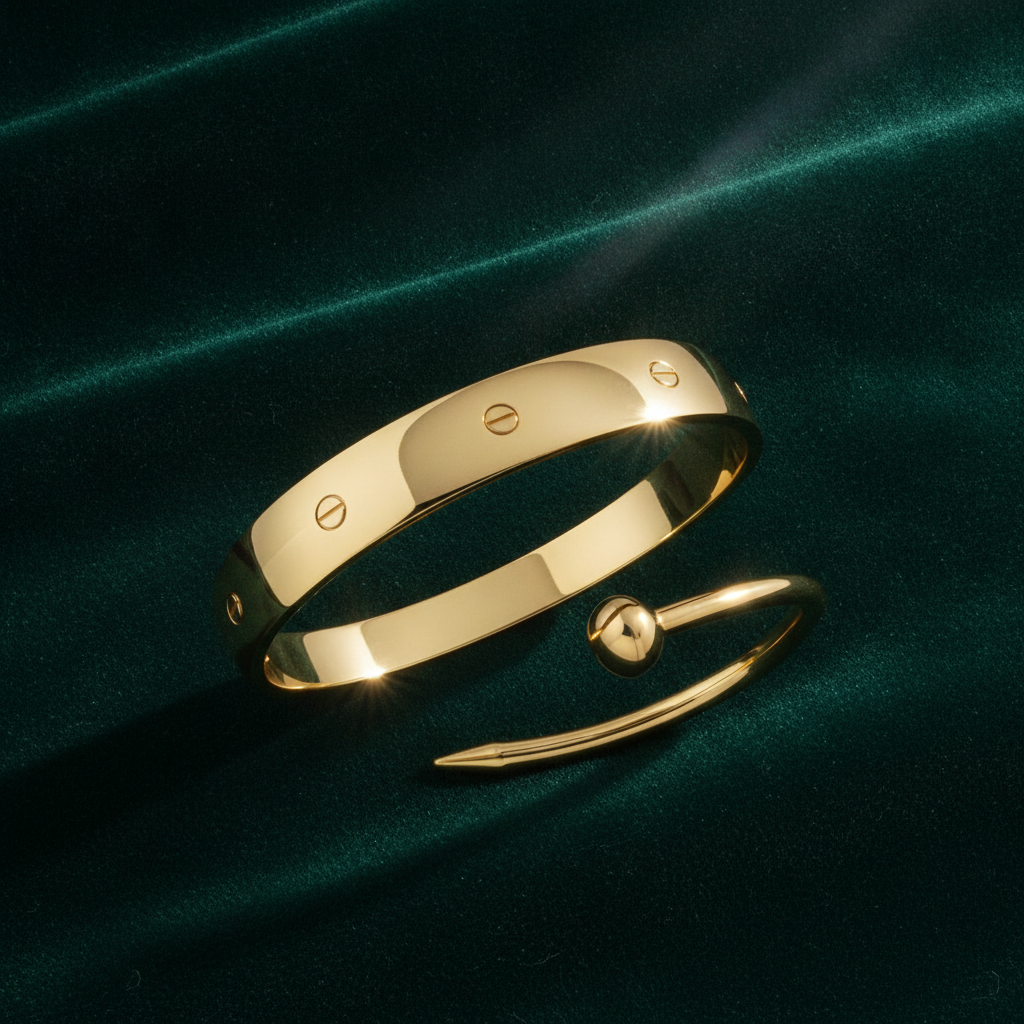
The Love bracelet is the design most people mean by "Cartier bracelet." Aldo Cipullo created it for Cartier in 1969: an oval bangle of polished gold, closed with functional screws, and opened with a matching screwdriver. The idea was a bracelet you do not take off casually. It is made in yellow, white, and rose gold, in classic and small models, and in plain, partly diamond-set, and full pavé versions. Size is numbered, and weight changes with size, metal, and stones. A Love bracelet that cannot be sized, weighed, or described by model is not identified yet.
Juste un Clou, also by Cipullo and introduced in 1971, is a nail bent into a bracelet. The head and tip of the nail are the design. It comes as a smooth gold bangle and as diamond-set versions, in more than one size. People confuse it with generic nail bracelets from fashion brands. On a genuine piece the nail geometry, the way the tip tucks, and the finish of the head are consistent; cheap copies often look thick, asymmetrical, or cast in one lumpy piece.
The Panthère is a different category, and it helps to separate two things that share the name. High-jewelry panther bracelets are flexible, sculptural animals, often with diamond pavé, onyx spots, and emerald or onyx eyes, associated with Jeanne Toussaint's decades of pushing the motif inside Cartier. The broader Panthère de Cartier line also includes more wearable gold bracelets and the well-known panther watch. A diamond panther that articulates is not priced or authenticated like a plain gold bangle. If a listing uses "Panthère" without saying which object it is, ask for measurements and a clear photo of the clasp and any animal head.
The Trinity bracelet carries three interlocking bands of yellow, white, and rose gold, the same three-color idea as the Trinity ring of 1924. Other Cartier bracelets you will see in resale include the Ecrou nut-and-bolt design, the Agrafe, and the C de Cartier. Each has its own clasp, proportions, and hallmark placement. Identifying the model first keeps you from applying Love-bracelet tests to a piece that was never supposed to have screws.
Hallmarks, Serial Numbers, and Screws
Authentic Cartier bracelets are signed, but the exact marks depend on when and where the piece was made or sold. On a Love bracelet the engraving is inside the oval, usually readable when the bracelet is open: the Cartier name, a gold fineness mark such as 750 for 18k, a unique serial number, and often a reference or size mark. Pieces assayed in France may also show French hallmarks, including the eagle's head used on 18k gold. A bracelet sold through New York, London, or another market can carry different assay marks, or rely more heavily on Cartier's own signature and serial. A missing French eagle is not, by itself, proof of a fake.
Read the engraving under magnification and at a raking angle so you can see depth. Genuine lettering is crisp, correctly spelled, and evenly seated in the metal. Fuzzy, shallow, or crowded stamps, a wobbly "Cartier," or letters that look acid-etched rather than engraved are warning signs. Worn stamps on a bracelet that has been polished for decades are a different story: age can soften a real mark. Compare wear on the stamp with wear on the rest of the gold. A mirror-polished surface with a freshly cut, messy signature is not a comforting combination.
Serial numbers deserve the same caution you would use on any luxury serial. Cartier formats have changed across decades and workshops, so a number that does not match a template from a blog is not automatically false, and a number that looks "correct" is not automatically true. What does matter is uniqueness. If the identical serial appears on several unrelated listings, you are looking at a copied engraving. There is no public consumer database that lets you type a serial into a Cartier page and receive a yes. A boutique may examine a piece in person under its own policies; that is not the same as a screenshot of a serial proving anything.
Love bracelet screws are part of the hallmark story. On a genuine bracelet the screws are functional, sit flush with the outer surface when closed, and match one another in size, spacing, and slot shape. They are turned with Cartier's screwdriver, not with a Phillips driver. Counterfeits often give themselves away here: screw heads that protrude, slots that differ from screw to screw, Phillips or hex heads, or a bracelet that does not actually open. Vintage Love bracelets can differ in small details from current production, so judge the screws together with the inner signature, weight, and oval shape rather than against a single photo of a new boutique piece.
Photograph every mark straight on and at an angle, plus each screw head. That set is what a specialist will ask for first, and it is one of the most useful groups of images to run through JewelValue before you pay for an in-person opinion. Our jewelry appraisal guide explains how this photo file fits into a formal appraisal when you need insurance or resale paperwork.
Construction Details That Separate Genuine From Fake
After the stamps, construction is where Cartier bracelets separate from plated copies. A Love bracelet is a heavy, smoothly finished oval of solid gold, with a hinge and opening that meet without a step, gap, or rough solder line. The gold color should be consistent inside and out. Greenish edges, worn corners that show a different metal, or a hollow sound are signs of plating over a base metal. An 18k piece has a dense feel in the hand. Exact weight depends on the reference and size — a small model is lighter than a classic, and pavé changes the number — so compare the bracelet with Cartier's specification for that model rather than with a single gram figure copied from a forum. A seller who will not provide size and weight is asking you to skip the easiest check you have.
The oval itself should be even. Twisted shapes, a lopsided opening, or screws drilled on a wandering line are casting and finishing problems that do not survive Cartier's bench. The inner surface, where the signature lives, is finished cleanly, not left with file marks and pits. When the bracelet is closed, the seam at the opening is tight. A loose, rattling hinge is a reason to pause, whether the cause is damage on a genuine piece or poor manufacture on a copy. Damage is not the same as fraud, but it does change value, and a seller should disclose it.
Juste un Clou copies fail in proportion. The nail head, shaft, and point should look like one deliberate object, with a high polish and a point that seats cleanly against the band. Blobby tips, porous casting, and a head that looks glued on are fashion-jewelry traits. Panthère and other motif bracelets fail in the details that are expensive to fake well: stone setting that is even, articulated links that move without binding, eyes and spots that are cut stones rather than paint or enamel printed to look like onyx, and a clasp that closes with a positive click. Glue visible around stones, crooked pavé, or a panther face that changes shape from the product photo to the underside photo are reasons to walk away.
A magnet test is only a screen. Solid gold is not magnetic. A strong pull toward a magnet means the piece contains steel or another ferrous metal and is not a solid gold Cartier bracelet. No pull does not prove authenticity, because many fakes use brass or other non-magnetic metals under gold plating. Use the magnet to reject the obvious cases, then go back to weight, finish, and marks. For a closer look at metal testing in general, our gold jewelry identification guide covers what you can and cannot conclude outside a workshop.
What Cartier Bracelets Cost: Retail and Resale
Cartier pricing sits in the fine-jewelry tier and moves with gold, diamonds, and the brand's own adjustments, so any number in an article will go stale. As an orientation in US dollars: a plain 18k Love bracelet in a common adult size typically retails in the mid-to-high four figures to around five figures, depending on size and metal color. Diamond and full pavé Love bracelets cost substantially more. A plain Juste un Clou is generally in a similar band and is often a step below a comparable Love, while diamond nail bracelets jump with the stone weight. Small models cost less than classic models and should not be priced as if they were the larger piece. High-jewelry panther bracelets are a different market and can reach well into five and six figures. Always confirm the current price for the exact reference at a Cartier boutique or an authorized retailer before you decide a resale deal is "half off."
On the secondary market, plain gold Love bracelets usually trade below the current boutique price. The gap depends on condition, whether the screwdriver, box, and papers are present, and how close the size is to what buyers want. Complete, unworn, or recently serviced pieces narrow that gap. Missing papers do not make a bracelet fake, but they do reduce what careful buyers will pay, because papers are part of how the next owner will defend the purchase. Discontinued sizes and desirable diamond configurations can be stronger. A price that is a small fraction of retail is not a bargain until the piece survives authentication. It is the most common shape of a counterfeit listing.
Condition moves the number as much as the model does. Deep scratches can be polished, but repeated polishing softens edges, can weaken fine engraving, and on pavé pieces risks the stones. A Love bracelet with a bent oval, a replaced screw of the wrong type, or a hinge that no longer closes flush needs a repair estimate before you treat the asking price as the real cost. Panthère pieces with chipped onyx, missing stones, or a tired clasp can cost more to restore than a buyer expects. For how branded jewelry behaves as a category, see our luxury jewelry guide.
If you are selling, documentation is the practical advantage. Record the inner signature, serial, size, weight, and honest photos of flaws. A structured material read from JewelValue gives you a clear first description — metal color, construction, and whether the piece even belongs in a Cartier conversation — before you write a listing or request a formal appraisal. Buyers of this brand pay for organized evidence, not for adjectives.
Buying Pre-Owned Safely
Most Cartier bracelet transactions outside a boutique happen pre-owned, and the process matters more than the seller's tone. Authorized Cartier retailers and the boutiques themselves are the straightforward path when you want a new piece and a full receipt. On the secondary market, prefer sellers who authenticate in house and offer a real return window: established resale houses, auction houses, and jewelers who will put their name on the invoice. Private sales can be fairly priced, and they put the entire verification burden on you.
Ask for photographs the seller took of the actual bracelet, not campaign images. You want the inner engraving, each screw or the nail tip, the clasp or hinge in motion if they can shoot a short video, the size and weight in grams, and any receipt, certificate, or service paper. A refusal to show the signature, or a listing that only shows the bracelet closed from one flattering angle, is a reason to stop. Video of the piece turning in the hand shows color, proportions, and whether screws sit flush better than a single retouched photo.
Provenance helps and does not settle the question. Original receipts, boutique service records, and prior invoices from a known reseller support a genuine piece. Paperwork is also forged, and a real bracelet can be separated from its box. Treat papers as one layer: coherent documents, plus correct construction, plus correct marks, plus a sensible price. For a purchase at real Cartier prices, plan an in-person review by a jeweler who regularly handles the brand, or a boutique service appointment where that is available, either before you pay or inside a return window. Use the photo checks in this guide, and JewelValue, to drop obvious fakes early so you are not paying a specialist to tell you a Phillips-head screw is wrong.
Compare the habit with other heavily copied designer bracelets. Our Van Cleef bracelet guide walks through the same idea for the Alhambra: model first, then marks, then construction, then price. The motifs differ. The discipline does not.
Care, Wear, and Long-Term Value
A Love bracelet is built to be worn continuously, which is both the point of the design and the source of its typical wear. Screws should stay seated. If a screw backs out, have it checked rather than forcing a hardware-store driver into the slot, which can damage a genuine head. Perfume, lotion, and chlorinated water will not dissolve 18k gold, but they dull the polish and are a bad idea for pieces set with stones or for any bracelet that might not be solid gold. Put jewelry on after cosmetics when you can. When you do remove the bracelet, keep the screwdriver with it. A Love bracelet without its screwdriver is harder to live with and slightly harder to sell.
Juste un Clou and Trinity bracelets scratch the way all polished gold scratches. Store them separately so diamonds and other bracelets do not grind the surface. Panthère and other stone-set pieces need a softer standard: onyx, emerald, and enamel are vulnerable to knocks and to household chemicals. Do not assume a flexible animal bracelet can go into an ultrasonic cleaner because a plain gold bangle can.
If you own a piece you believe is genuine, a Cartier boutique can advise on servicing — polishing, screw replacement, clasp work — under its own rules for what it will accept. Service paperwork becomes part of the provenance that supports the next sale or an insurance claim. Keep your own record in the meantime: clear photos of the signature, serial, and overall condition, stored with any receipt. Update the photos after a repair or a noticeable knock. That file is what you will wish you had if the bracelet is lost, divided in an estate, or questioned by a buyer.
How JewelValue Fits Into Cartier Identification
No photograph, and no app, can issue a Cartier certificate. A photo-based tool also should not pretend to. What Jewelry Identifier: JewelValue can do is make the first pass faster and more consistent. You photograph the bracelet, and the app helps you sort metal appearance, construction category, and likely materials, and it frames a sensible value context from what is actually visible. That is the right job for software: triage, not a final ruling on a five-figure object.
Three situations justify the scan. An estate box may hold one possible Love bracelet among fashion bangles; a structured read tells you which piece gets the loupe and which pieces do not. A marketplace listing may look right in the hero photo and wrong in the screw close-up; running the full set through the app forces you to look at the same details a specialist will ask about. A seller preparing a listing can pair the app's notes with size, weight, and honest flaw photos so the buyer is not negotiating from a vague "signed Cartier." Our jewelry identifier app guide explains the boundary between a photo identification and a formal authentication across brands.
Use the output beside the checks in this guide. If the marks, screws or motif, weight, and price disagree with each other, stop. If they agree, and the money is real, book the in-person review. The collectors who avoid counterfeit Cartier bracelets are not the ones with a secret trick. They are the ones who refuse to let any single photo, serial, or story carry the whole decision.
Frequently Asked Questions
How can I tell if a Cartier bracelet is real?
Identify the model first, then build a case: crisp inner signature and fineness mark, a serial number that is not copied across other listings, flush and consistent screws on a Love bracelet, solid weight for the stated size, even finish, and a price in range of the real secondary market. Assay marks vary by country, so a missing French hallmark is not enough to condemn a piece. No single test is conclusive. Use JewelValue for a structured photo review, then have any high-value purchase examined in person.
How much does a Cartier Love bracelet cost?
A plain 18k Love bracelet in a common adult size generally retails in the mid-to-high four figures to around five figures in US dollars, depending on size and metal. Pavé and diamond versions cost substantially more, and small models cost less than classic ones. Boutique prices change, so check the current figure for that exact reference. Pre-owned plain gold examples usually sell below current retail, with box, papers, and condition narrowing or widening the gap.
Where are the hallmarks on a Cartier bracelet?
On a Love bracelet they are engraved on the inner surface, where you can read them when the bracelet is open: the Cartier name, a gold fineness stamp such as 750, a serial number, and often a size or reference mark. Other models carry marks near the clasp, hinge, or inner band. French assay marks appear on many pieces hallmarked in France and are not universal on every Cartier bracelet sold worldwide. Engraving should be clean and correctly spelled.
Do Cartier Love bracelets hold their value?
They hold value better than most fashion jewelry, and a careful pre-owned example remains a liquid object in the resale market. They do not automatically sell at or above the current boutique price. Plain gold Love bracelets commonly trade at a discount to new retail. Completeness, condition, size, and diamond setting decide how small that discount is. A price that looks dramatically cheap is a reason to authenticate before you celebrate.
Can JewelValue authenticate a Cartier bracelet?
No. JewelValue does not replace Cartier or a qualified jeweler. It analyzes photos to assess metal appearance, construction, likely materials, and value context, which helps you filter obvious fakes, decide which estate pieces deserve a specialist, and document a bracelet you already own. For a purchase or sale at genuine Cartier prices, pair that first pass with in-person examination.
Download Jewelry Identifier: JewelValue Today
A Cartier-style bracelet should be identified before it is priced, insured, or sold. Jewelry Identifier: JewelValue reads metals, stones, and construction from your photos, estimates a market value range, and makes it obvious when a piece needs a professional opinion. Photograph the signature, the screws or motif, and the full bracelet, then scan the set before you buy, list, or lock it in a drawer.
Download Jewelry Identifier: JewelValue on the App Store and turn photographs into informed jewelry decisions.