Choosing an engagement ring is equal parts emotion, design preference, and material verification. Beyond the romance of a proposal sits a practical challenge: selecting a style that fits a lifestyle, a setting that protects the stone, a metal that matches skin tone and durability needs, and a budget that does not create long-term stress. Whether you are buying new, shopping pre-owned, or verifying an inherited bridal set, this engagement rings guide covers styles, settings, budgets, metal choices, and how Jewelry Identifier: JewelValue helps you confirm what a ring is made of from photographs. For diamond-specific quality factors (the Four Cs), pairing this article with our diamond engagement rings guide gives you a complete foundation.
Engagement rings are also one of the most counterfeited and misdescribed jewelry categories online. Listings may call a moissanite a diamond, describe plated fashion rings as solid gold, or omit treatments on colored center stones. Photo identification will not replace a jeweler's loupe or a laboratory report for a five-figure purchase, but it is an outstanding early filter—especially for estate finds, marketplace messages, and family jewelry boxes with missing paperwork.
Engagement Ring Styles Beyond the Classic Solitaire
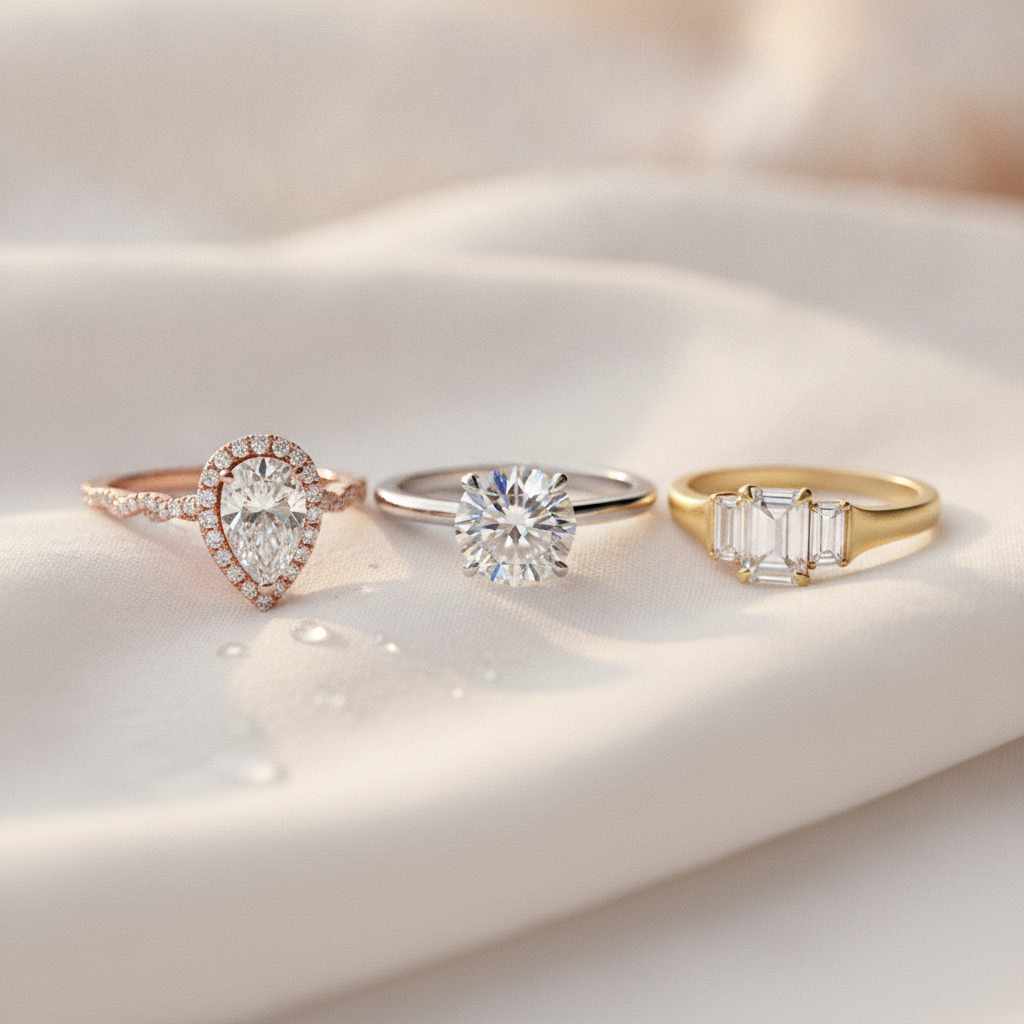
The classic solitaire remains popular because it puts maximum attention on the center stone. Yet modern shoppers increasingly explore styles that express personality. Vintage-inspired rings use milgrain, filigree, and Old European or Old Mine cut stones for romantic character. Nature-inspired mounts incorporate leaf motifs, organic textured bands, and asymmetrical stone arrangements. Minimalist bands with bezel-set stones favor low profiles for nurses, climbers, and anyone who works with their hands.
Toi et moi rings place two companion stones side by side—often different species or shapes, such as a pear diamond beside an oval sapphire—to represent two people. Three-stone rings expand that symbolism across past, present, and future. Cluster designs build a larger face-up look from smaller stones, which can stretch a budget while creating antique-inspired presence. Hidden-halo designs place accent stones beneath the center for sparkle visible mainly in profile, appealing to buyers who want subtlety from the top view.
Colored center stones deserve a full style conversation of their own. Sapphire engagement rings (especially blue, but also fancy colors), ruby, emerald, morganite, aquamarine, and salt-and-pepper diamonds all shift the aesthetic away from traditional colorless brilliance. Each stone has hardness and care implications: emerald requires more cautious wear than sapphire; morganite's softness relative to diamond means protective settings matter. Photo identification helps identify likely stone species from photos so you do not confuse lookalikes when evaluating pre-owned colored engagement rings.
Lab-grown diamond centers have also changed style shopping. Visually, many lab-grown diamonds are indistinguishable from natural diamonds without advanced testing. Disclosure and documentation matter for ethics and resale expectations. Photo ID can suggest diamond versus common simulants like CZ, while laboratory origin determination for natural versus lab-grown typically needs professional instrumentation. Keep paperwork with any lab-grown purchase and photograph report numbers into your personal jewelry notes.
Settings Explained: Protection, Sparkle, and Lifestyle Fit
Settings are engineering as much as fashion. Prong settings (usually four or six) minimize metal around the stone, maximizing light return and making the center appear larger. Six prongs add insurance against stone loss if one prong wears thin. Prongs need periodic inspection; worn claws are a leading cause of lost center stones. When identifying rings by photo, a side profile shot shows prong tips clearly for any jeweler you consult later.
Bezel settings wrap a metal rim around the stone's girdle. Full bezels offer excellent protection for active lifestyles and for vulnerable stones. Partial or semi-bezels expose more of the stone while retaining some reinforcement. Bezel rings often sit lower and snag less on clothing. Trade-offs include slightly reduced brilliance perception for some diamonds and a bolder metal presence that changes the ring's visual balance.
Halo settings surround the center with a ring of smaller accents, boosting perceived size and sparkle. Double halos and cushion-shaped halos create different outlines. Halo rings can make a modest center look more substantial—useful in budget planning—but they also introduce many small stones that may need tightening over years. Photograph both center and halo region so accent stones are not misread as part of the center.
Pavé, micro-pavé, and channel-set shoulders add band sparkle. Pavé uses tiny beads of metal to secure many small diamonds; channels hold stones between two walls. These designs elevate bridal glam and cost. They also complicate resizing and repair. If you foresee significant weight changes or frequent resizing needs, discuss simpler band options with your jeweler before committing.
Cathedral, tension, and contemporary architectural settings alter how the stone sits above the finger. Cathedral arches raise the center elegantly and can allow a wedding band to tuck closer. Tension settings create a floating look with metal compressing the stone; they require precise engineering and careful impact avoidance. Whatever you choose, lifestyle fit beats trend alone—an engagement ring worn daily must survive your actual routine.
Budgets: Planning Without Mythology
Budget advice for engagement rings is crowded with outdated rules of thumb. A practical approach starts with total wedding and savings priorities, then allocates a jewelry number that leaves emergency funds intact. Within that number, decide how to split spend across center stone, setting craftsmanship, metal, and future wedding band. A beautifully made setting with a slightly smaller stone often wears better than a larger stone in a flimsy mount.
Pre-owned and estate engagement rings can unlock higher quality for the same budget because you avoid full retail margins. The trade-off is diligence: verify metal stamps, stone identity, and condition of prongs. Marketplace photos are often optimized for romance, not hallmarks. Ask sellers for interior band photos and run them through JewelValue before wiring funds to strangers. Our identify jewelry by photo guide shows how to request and shoot useful evaluation images.
Budget also includes long-term costs: resizing, prong retipping, rhodium replating for white gold, insurance premiums, and eventual anniversary upgrades. Factoring these reduces sticker shock later. If you are comparing mall jeweler bridal sets against independent designers or custom work, remember that sticker prices embed different service models. Valuation after purchase usually follows materials and diamond market realities more than the romance of the original boutique experience—context covered broadly in our jewelry appraisal guide.
Financing can make a ring attainable, but interest erodes value. If financing is necessary, compare total payback amounts and avoid stretching payments so far that stress shadows the engagement. Some couples prioritize a modest starter ring with a written plan to upgrade later; sentimental continuity matters more than maximizing carat headlines.
Colored stones and alternative centers can realign budgets dramatically. A sapphire of impressive size may cost less than a diamond of similar face-up area, depending on quality. Moissanite offers diamond-like brilliance at lower prices for couples who prefer that aesthetic and ethics profile. Whatever the center, disclosure and verification remain non-negotiable.
Metal Choices for Engagement Rings
Platinum is dense, durable, and naturally white, prized for secure prongs that wear into a soft patina rather than thinning to sharp failure as quickly as some white gold prongs. It is typically stamped PLAT or PT950. Platinum costs more by weight and feels heavier on the hand. It is a strong choice for daily wear diamond rings when budget allows.
White gold usually means 14K or 18K gold alloyed for a pale tone, then often plated with rhodium for a bright white finish. Rhodium wears with friction; periodic replating restores brightness. People who want low maintenance sometimes prefer platinum instead. Yellow gold offers warm classic color that never needs whitening baths, and it pairs beautifully with yellow diamonds or vintage styles. Rose gold mixes copper into gold alloy for pink tones popular in modern romantic designs; some wearers with metal sensitivities should confirm alloy details with their jeweler.
Palladium and mixed-metal designs (yellow gold interiors with platinum or white gold exteriors, for example) expand options. Mixed metals can complicate resizing and repair pricing—ask about service implications up front. For gold purity marks and plating distinctions, learn karat stamps before assuming a white metal ring is platinum.
Fashion or costume "engagement style" rings may use stainless, brass, or plated alloys. These can be meaningful placeholder rings or fashion statements, but they should be priced and insured accordingly. Photo analysis that suggests plated or fashion metal protects buyers from paying fine-jewelry prices for temporary materials.
Metal allergies influence choice. Nickel in some white gold alloys can irritate sensitive skin; platinum and carefully selected palladium or nickel-free alloys are alternatives. Comfortable daily wear is part of "quality," not an afterthought.
Verifying Materials and Stones with Photo Identification
Verification is the engagement ring skill that saves the most money and heartache. Start with paperwork: diamond grading reports, appraisals, and retail receipts. Then independently check whether the physical ring matches those documents. Photograph the report beside the ring. Confirm that laser inscriptions (when present) match with a loupe. Compare described measurements to the mounted appearance.
When paperwork is missing—common with inherited rings—build evidence from the jewelry itself. Capture face-up optics of the center stone, profile of the setting, hallmarks inside the shank, and any maker's marks. Submit those images to Jewelry Identifier: JewelValue for a preliminary read on metal category and stone candidates. If results suggest moissanite or CZ while a seller insisted on diamond, pause the purchase and insist on professional testing.
Lighting matters. North-facing daylight or bright open shade reveals color better than yellow indoor bulbs. Avoid beauty filters that boost sparkle artificially. Multiple angles defeat single-photo illusions from strategic glare. The Jewelry Identifier app guide explains how collection history preserves these verification images for later insurance or resale.
Understand the limits. Photo ID cannot assign certified GIA grades, cannot weigh a mounted stone precisely, and cannot always separate natural from lab-grown diamonds. It can, however, separate clearly implausible claims from plausible ones and educate you on which questions to ask a jeweler. Use it as stage one in a smart workflow: photo identification triage, jeweler inspection, laboratory report for significant unset or high-value centers, then formal appraisal when insurance requires one.
Colored engagement stones need similar caution. Blue glass can mimic aquamarine; treated topaz can stand in for sapphire in misleading retail contexts; doublet stones exist in some low-quality markets. Ranked possibilities encourage healthy skepticism without demanding you become a full gemologist overnight.
Matching Wedding Bands and Long-Term Wear Planning
An engagement ring rarely lives alone forever. Wedding band planning should influence engagement ring choice early. Contoured or chevron bands nest under raised solitaires. Straight bands may leave a gap under cathedral or claw-heavy settings. Some couples prefer stacked fashion bands instead of a single traditional wedding ring—design that intentionally. Trying rings on together prevents awkward gaps and finger crowding after the wedding.
Comfort fits, knife edges, and European shanks change how width feels during all-day wear. Wider bands fit differently than the same finger size in a narrow ring; size both styles if possible. Future resizing constraints (full eternity accents, tension mounts, alternative metals) should be discussed before customization locks you in.
Maintenance calendar thinking helps. Schedule prong checks annually, especially for rings worn during workouts or manual work—or remove the ring for those activities. Keep a backup fashion band for travel if you worry about loss. Photograph your engagement ring after major repairs so your digital inventory stays current.
Insurance and appraisal updates matter after significant diamond price shifts, major remounts, or upgrades. Fresh photos paired with updated appraisals create a robust ownership record. See the jewelry appraisal guide for when documents need refreshing.
Shopping Checklist: New, Custom, and Pre-Owned
For new retail purchases, compare setting craftsmanship under magnification, request metal stamps confirmation, and ask how accents are secured. Get any diamond or gem reports before final payment. For custom design, insist on written specs for metal purity, stone parameters, and revision rounds. For pre-owned, prioritize sellers who provide hallmark photos, returns, and independent inspection periods.
Wherever you shop, keep emotion and verification in parallel. The right ring should feel meaningful and also survive a sober materials check. Jewelry Identifier: JewelValue makes that sober check available anywhere you can take a photograph—jewelry stores, living rooms, and estate sales included.
If you are still deciding on diamond quality trade-offs, open the diamond engagement rings guide next; then return to setting and budget decisions here. Style without material truth is incomplete, and material truth without style leaves you with a ring you will not love wearing. The best engagement rings balance both.
Frequently Asked Questions
How do I choose the right engagement ring style?
Start with lifestyle (prong height, snag risk), preferred aesthetic (minimal, vintage, bold), and whether a wedding band must nest flush. Try multiple settings on the hand rather than judging only from photos. Confirm materials with hallmarks and, when buying pre-owned, with photo identification before you commit.
What setting is best for everyday wear?
Low-profile bezels and sturdy six-prong heads tend to survive active daily wear well. High, thin claws and delicate tension styles need more caution. Match setting security to your hobbies and work, then schedule regular prong inspections regardless of style.
How much should I budget for an engagement ring?
Set a number that protects savings and emergency funds, then allocate across stone, metal, and craftsmanship. Ignore rigid salary rules of thumb. Pre-owned rings and non-diamond centers can expand options within the same budget if verification is thorough.
Can JewelValue tell if an engagement ring diamond is real?
JewelValue provides preliminary photo-based identification that can distinguish many diamond lookalikes and flag inconsistencies, but it does not replace laboratory grading or professional gemological testing. Use the app as a first filter, then verify important purchases with a jeweler or lab—especially when paperwork is missing. Support your process with techniques from the identify jewelry by photo guide.
Should engagement rings be professionally appraised?
Yes when you need insurance scheduling, estate documentation, or a formal value opinion after a significant purchase or inheritance. Pair appraisals with clear photographs so visual identity travels with the paperwork. Details live in our jewelry appraisal guide.
Download Jewelry Identifier: JewelValue Today
An engagement ring should tell a love story and still stand up to material facts. Jewelry Identifier: JewelValue helps you verify metals and stones from a photo, compare styles with clearer eyes, and keep a private record of one of life's most meaningful jewels.
Shop smarter, inherit wiser, and wear your ring knowing what it actually is.
Download Jewelry Identifier: JewelValue on the App Store and start identifying your jewelry today.