Kay Jewelers, often searched as "kays jewelry" or "Kay's jewelry," is one of the best-known mall jewelry retailers in the United States. For decades, shoppers have walked into Kay stores for engagement rings, anniversary gifts, diamond tennis bracelets, and everyday gold pieces. Whether you inherited a Kay ring without paperwork, found a piece at a thrift store with a familiar blue box, or are comparing a mall jeweler purchase against secondary-market offerings, understanding how to identify and evaluate Kay-style jewelry matters. This guide explains brand history, popular collections, authenticity clues, valuation tips, and how photo-based AI tools like Jewelry Identifier: JewelValue help you identify pieces from Kay Jewelers and similar retailers. This article is educational and is not affiliated with Kay Jewelers, Signet Jewelers, or any related brands.
Mall jewelry brands occupy a specific place in the American jewelry market. They sit between high-end designer houses and purely fashion or costume jewelry. Kay Jewelers typically sells 10K and 14K gold, diamond and colored gemstone jewelry, and branded packaging that many families associate with major life milestones. Pieces from these stores often hold both sentimental and material value, but resale markets treat them differently from independently designed or estate fine jewelry. Learning what to look for helps you avoid overpaying, undervaluing, or misidentifying a piece that simply looks similar to something from Kay.
Brand Overview: Understanding Kay Jewelers
Kay Jewelers traces its retail roots to the early twentieth century and later grew into a nationwide chain under Signet Jewelers, a large specialty jewelry retailer that also operates related store brands. In practice, "Kay's jewelry" for most shoppers means diamond bridal sets, anniversary bands, gold chains, birthstone pieces, and promotional collections sold through brick-and-mortar mall locations and online channels. Familiarity with this mass-retail model helps when you identify and value a piece years later.
Quality at Kay Jewelers generally reflects mainstream American fine jewelry standards rather than boutique or haut de gamme craftsmanship. Center stones in engagement rings are often accompanied by grading reports from major laboratories for higher-price pieces, while lower-ticket fashion and birthstone lines may use natural or laboratory-grown stones with more modest documentation. Metal choices commonly include 10K and 14K yellow, white, and rose gold, with platinum available on some bridal styles. Sterling silver appears in select fashion lines. These materials are fully legitimate fine jewelry, but purity and brand prestige still shape what a piece is worth on the secondary market.
Packaging and presentation are part of the Kay experience. The trademark blue box, cream or white pouch insert, and branded paperwork create strong brand recognition. Packaging alone is not proof of authenticity—boxes can be replaced, mixed, or reused—but when packaging accompanies a piece with matching style language and metal marks, it supports a plausible origin story. Photographing the jewelry itself remains more important than packaging when paperwork is missing.
Ownership context also matters. Many Kay customers purchased through financing plans, holiday promotions, or upgrade programs. Those retail paths do not change metal purity or gemstone identity, but they do explain why original receipts and appraisal cards sometimes disappear long before the jewelry does. Building a digital photo record of each piece replaces lost documentation with a practical inventory entry you can share with family, insurers, or appraisers.
Popular Kay Jewelers Styles and Collections
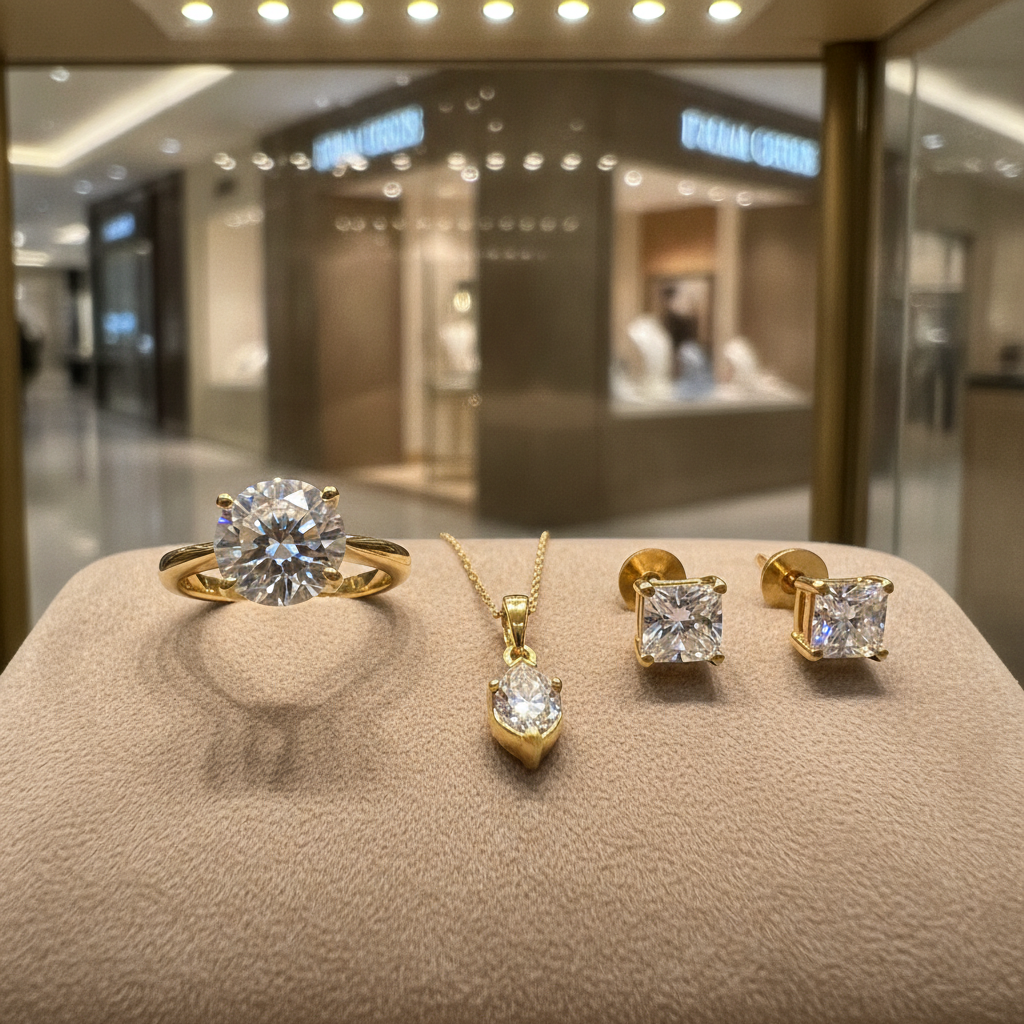
Kay Jewelers bridal jewelry is the category most people associate with the brand. Solitaire and three-stone engagement rings, matching wedding bands, and diamond anniversary rings appear across decades of catalogs. Halo settings, cathedral mounts, and pavé bands have all cycled through popular Kay lines. When you photograph a bridal ring for identification, capture the center stone face-up, the side profile of the setting, and the inside of the shank where hallmarks usually sit. Our diamond engagement rings guide explains how cut, color, clarity, and carat weight shape diamond value independently of which mall jeweler originally sold the ring.
Tennis bracelets and diamond fashion bracelets are another Kay staple. Continuous lines of small round diamonds in channel or prong settings create classic gift jewelry that remains wearable for decades. Identification for these pieces focuses on metal stamps, clasp construction, stone uniformity, and whether diamonds appear natural, lab-grown, or simulants. Uneven color flash, plastic-looking stones, or soft metal that wears through quickly can signal lower-grade or fashion constructions rather than fine diamond jewelry.
Necklaces and pendants from Kay often feature heart motifs, solitaire pendants, initial charms, and birthstone designs. Chains may be cable, rope, or box styles in 10K or 14K gold. Because chain weight drives much of the metal value, a seemingly small pendant necklace can still hold meaningful gold content. Photograph the clasp stamp, the pendant face and reverse, and any solders or repair spots that affect condition.
Earrings, especially diamond studs and drop earrings, circulate widely on resale platforms labeled as "Kay" whether or not that origin is verified. Matched pairs, post length, friction back versus screw back, and metal stamps on posts or backs are key identification clues. If one earring lacks a matching stamp, the set may have been repaired with mismatched findings.
Fashion and promotional collections change more frequently. Holiday gift sets, colored stone lines, and collaboration-style pieces can be harder to pin to a year without packaging. Style language—open metalwork hearts, signature engraving fonts, and specific pendant silhouettes—still helps. Material and construction analysis is especially useful here because it evaluates physical evidence rather than relying only on memory of a collection name.
How to Identify Authentic Kay Jewelers Pieces
Authentic Kay Jewelers jewelry is fine jewelry sold through an authorized Kay retail channel. It is not usually identified by a famous maker's mark the way Cartier or Tiffany pieces are. Instead, authenticity for "Kay's jewelry" is usually a combination of metal hallmarks, gemstone quality consistent with retail price tier, construction typical of mass-produced American bridal and fashion lines, and supporting evidence such as original receipts, appraisal cards, or branded packaging.
Start with hallmarks. Look inside ring bands, on clasp plates, and on earring posts for stamps such as 10K, 14K, 585, PLAT, 950, or 925. These confirm metal claims that Kay and similar retailers routinely make. Absence of a stamp does not automatically mean fake, especially on older or repaired pieces, but unmarked mall-style jewelry deserves extra scrutiny. Combine hallmark photos with face-up and profile shots when you identify jewelry by photo.
Next, compare construction quality to price expectations. Genuine fine jewelry from Kay uses soldered joins, consistent stone seating, and metal thickness appropriate for daily wear. Counterfeit or costume lookalikes may use glue-heavy stone setting, thin plating over base metal, and magnetic findings. A strong magnet that attracts a "gold" Kay-style ring or chain is a clear warning to investigate plating rather than solid gold. Our gold jewelry identification guide covers karat marks, plating wear, and testing methods in more depth.
Gemstone identity is a separate question from retail brand identity. A diamond-looking center stone might be a natural diamond, laboratory-grown diamond, moissanite, cubic zirconia, or white sapphire. Mall jewelers sell natural and lab-grown stones depending on era and product line, while counterfeiters often default to CZ. Photographic clues—fire pattern, doubling of facets under certain lighting for moissanite, and overly perfect glassy appearance for glass or cheap CZ—help narrow possibilities before you seek lab confirmation. An AI jewelry identifier flags likely stone types and similars from clear photographs so you know what to verify next.
Beware of marketplace assumptions. Listings that say "Kay Jewelers ring" may mean the seller remembers buying it there, found the blue box with a generic ring inside, or simply used a popular search term. Packaging without matching jewelry, brand stickers on boxes alone, or engraved messages that could have been added anywhere are weak evidence. Treat brand attribution as a hypothesis until metal, stone, and construction evidence support it.
Hallmarks, Stamps, and Packaging Clues
Metal purity stamps are the most reliable physical marks on Kay-style jewelry. American retail pieces frequently show 10K or 14K; some higher-end bridal pieces use platinum stamps such as PLAT or PT950. European-style numeric fineness marks like 585 can appear on imported components. Photograph these marks macro-style with your phone so you—and later a jeweler—can read them clearly. Smudged, crooked, or unusually deep fake stamps are common on counterfeit gold and plated goods.
Designer or house logos are less central at Kay than at luxury maisons. You may find style numbers on tags, appraisal documents, or residual stickers rather than deeply stamped brand signatures on the metal. Do not expect every authentic Kay piece to carry a bold "Kay" engraving the way some owners hope. Relying only on searching for a logo leads many people to misclassify authentic unmarked Kay jewelry as worthless or to trust fake stampings that never belonged on a genuine piece.
Packaging clues include the well-known blue box, interior cushions, care cards, and sales paperwork. Useful corroboration includes matching SKUs, described stone weights on receipts, and appraisal cards listing metal type and estimated replacement value. Keep digital photos of documents with your jewelry inventory so they travel with the record rather than getting lost in a drawer.
Repair history can alter marks. A resized ring may have had the original stamp partially removed and a new karat mark applied by a local jeweler. A retipped prong may use a slightly different alloy color. These changes do not make the piece fake; they mean authenticity and value assessment must focus on remaining metal content, stone identity, and condition rather than perfect original factory presentation.
When marks conflict—for example, packaging claims 14K but the ring reads "GP" or has no stamp and shows base-metal wear—believe the metal evidence. Prioritize visible material clues so you do not over-weight brand nostalgia when evaluating Kay's jewelry found after many years.
Valuation Tips for Kay Jewelers and Similar Mall Pieces
Valuing Kay Jewelers jewelry means separating retail replacement price from secondary-market reality. Mall jewelers typically sell at retail prices that include store overhead, branding, financing infrastructure, and seasonal promotions. Resale, pawn, and private-sale prices usually track closer to gold content plus a discount to diamond market prices, with limited brand premium compared with luxury houses. Owners who paid several thousand dollars at retail are often surprised when cash offers come in far lower. That gap is normal market behavior, not proof the jewelry is fake.
Begin with metal melt context for gold and platinum pieces, then add gemstone value based on size, quality, and demand. A 14K gold chain with a small diamond accent may be worth mostly its gold weight today. A well-cut center diamond with a grading report retains more independent stone value even if the mounting is generic. Our jewelry appraisal guide explains when photo identification is enough for household sorting versus when a certified appraisal is required for insurance or estate purposes.
Condition is a major lever. Worn prongs, missing accent stones, deep scratches, solder discoloration, and stretched chains reduce what buyers will pay. Clean the piece gently, photograph it in natural light, and note needed repairs before deciding whether to sell as-is or restore first. Restoration can make sense for sentimental bridal jewelry you keep; it may not pay off for low-margin resale items.
Comparable sales matter more than original receipt totals. Look at recently sold listings for similar diamond weight, metal type, and setting style, not active asking prices. Kay packaging can slightly improve listing appeal for some buyers who want the brand story, but comparable diamond and gold metrics still dominate.
For estates and inherited jewelry boxes mixed with Kay pieces, costume jewelry, and unmarked gold, use photo identification as a triage tool. Identify likely precious-metal items first, then group diamond and gemstone candidates that may justify professional grading or appraisal. This workflow prevents families from discarding valuable rings while equally preventing expensive appraisal fees for obviously plated fashion jewelry.
When AI Photo Identification Helps Most
AI photo identification shines when paperwork is gone and you need a fast, independent read on materials and style. Photograph a suspected Kay Jewelers ring, necklace, or bracelet with JewelValue to get preliminary guidance on metal type, gemstone candidates, and jewelry category. That first pass helps you decide whether to pursue acid testing, XRF, a diamond grader, or simply keep the piece for sentimental reasons. The identify jewelry by photo guide walks through lighting, angles, and hallmark close-ups that improve accuracy.
Photo ID is especially useful at thrift stores, estate sales, and online marketplaces where sellers use "Kay" as a keyword. Before you buy, ask for clear photos of hallmarks and the reverse of the piece, then compare those images with what an AI scan suggests. If the seller will not provide stamp photos, treat brand claims cautiously. You can also identify jewelry you already own after receiving mixed lots labeled vaguely as "mall jewelry" or "estate rings."
Limitations are important. No app can replace laboratory spectroscopy or a hands-on jewelry appraisal for insurance riders, equitable distribution in estates, or high-stakes sales. Kay-specific model numbers rarely photograph as uniquely as luxury serials. Photo identification is strongest at material and category analysis—diamond vs simulant, yellow gold vs plated brass, platinum vs white gold tone—plus educational value ranges that frame next steps.
Combine AI results with common-sense checks: magnet test for ferromagnetic base metals, loupe inspection of stamp quality, weight-in-hand relative to size, and wear patterns on shank bottoms and clasp edges. These complementary methods form a practical identification stack for Kay's jewelry and other mid-market bridal pieces.
If you are documenting an entire jewelry drawer, save every scan with notes like "possible Kay bridal set, blue box found separately" or "receipt says Kay 2014, stamp 14K." Over time you build a reliable household inventory even when original retail identity remains only partly proven. The Jewelry Identifier app guide explains collection tracking in more detail.
Choosing Photo ID Over Guesswork for Mall Jeweler Jewelry
Guessing based on memory—"I think Mom bought this at Kay"—is understandable but incomplete. Memory does not measure gold purity, detect CZ centers, or estimate current market ranges. A structured photo workflow removes anxiety from those unknowns. Start with clean jewelry, natural daylight, a neutral background, and multiple angles including hallmarks. Then run a photo identification and record the result next to any packaging photos you still own.
Use that workflow alongside related educational resources on this site. Material deep-dives on gold and diamonds help you interpret identification output knowledgeably. When financial stakes rise, graduate to professional verification rather than arguing with online forum guesses.
Mall jeweler jewelry is neither automatically valuable nor automatically worthless. It is a category that rewards careful material identification. Whether your piece came from Kay Jewelers, a similar national chain, or an unmarked workshop that merely resembles those styles, the physical evidence—stamps, stones, weight, wear, and craftsmanship—tells the real story. JewelValue exists to read that visual evidence quickly so you can make informed personal, insurance, and resale decisions.
Frequently Asked Questions
Is Kay Jewelers jewelry real gold and real diamonds?
Many Kay Jewelers pieces are genuine fine jewelry made from 10K or 14K gold and set with natural or laboratory-grown diamonds, depending on the product. Fashion and promotional lines can include sterling silver or lower-cost stones. Always verify metal stamps and stone characteristics rather than assuming every item in a blue box is high-value fine jewelry. Photo identification helps with preliminary checks when paperwork is missing.
How can I tell if my ring is authentic Kay's jewelry?
Look for consistent metal hallmarks, construction quality typical of American mall bridal jewelry, and any supporting receipts or branded packaging. Kay pieces are not always deeply stamped with a brand logo, so packaging alone or a seller's claim is weak evidence. Photograph hallmarks and the setting, then confirm significant pieces with a jeweler or appraiser if needed.
Does Kay Jewelers jewelry hold its value?
Resale value for Kay Jewelers jewelry generally follows gold content and diamond market factors more closely than retail purchase price. Brand premium is usually modest compared with luxury houses. Sentimental value may far exceed cash offers. Use photo identification and, when appropriate, a professional appraisal to set realistic expectations before selling or insuring.
Can JewelValue identify jewelry bought at Kay Jewelers?
Yes. Jewelry Identifier: JewelValue analyzes materials, gemstones, and style characteristics from photos. It does not need a Kay receipt to assess whether a piece appears to be gold, platinum, diamond, or a simulant. Brand attribution may remain uncertain without documentation, but material identification still guides valuation and next steps.
Should I get a professional appraisal for Kay jewelry?
Consider a professional appraisal for insurance, estate settlements, or potential high-value diamonds and platinum bridal sets. For sorting mixed inherited jewelry or deciding whether a thrift-store find is worth buying, start with photo identification and escalate only when results suggest significant material value. See our jewelry appraisal guide for thresholds and documentation tips.
Download Jewelry Identifier: JewelValue Today
Whether your piece came from a Kay Jewelers counter, a similar mall retailer, or an unmarked estate box that simply looks the part, Jewelry Identifier: JewelValue gives you a clear starting point. Snap photos of rings, necklaces, bracelets, and earrings to learn likely metals, stones, and style categories in seconds—then save results as a personal inventory.
Use photo identification before you list, insure, or discard jewelry tied to family milestones. Material truth matters more than nostalgia-driven guesswork, and a fast scan keeps that truth close at hand.
Download Jewelry Identifier: JewelValue on the App Store and start identifying your jewelry today.