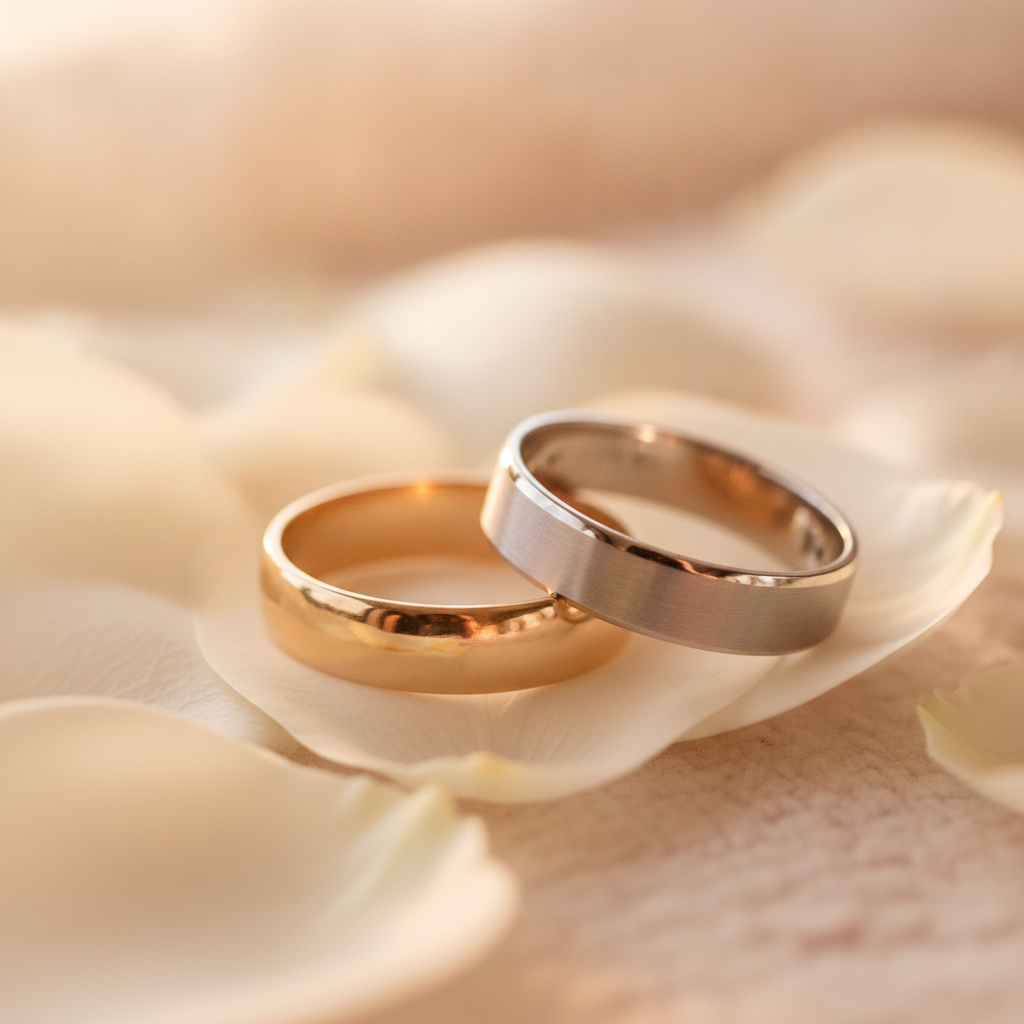
A wedding ring is the piece of jewelry you will wear more than any other—through dishes and gym sessions, careers and decades—which makes it both the most practical jewelry purchase you will ever research and the most emotional. It is also a purchase where material knowledge directly saves money: the difference between 14k and 18k gold, between platinum and white gold, or between a natural and lab-grown diamond band can amount to thousands of dollars for differences you should choose deliberately rather than absorb blindly. This guide covers wedding ring metals, styles, sizing, budgeting, and long-term value—plus how Jewelry Identifier: JewelValue helps you verify what you are buying, document what you own, and evaluate inherited bands from a photograph.
Wedding rings differ from engagement rings in purpose and construction. The engagement ring showcases a center stone; the wedding band is built for permanence—typically a continuous metal circle, sometimes stone-set, engineered to survive daily wear for a lifetime. Couples increasingly buy them together as sets, mix metals deliberately, or skip diamonds entirely, and the market has responded with more material options than any previous generation faced: traditional golds and platinum, contemporary metals like titanium and tungsten, and lab-grown diamond eternity bands at prices natural stones never allowed.
Whether you are buying new, considering a family heirloom band, or evaluating rings on the secondary market, the same identification discipline applies: know the metal marks, understand construction quality, and photograph everything. A quick JewelValue scan of any band—yours, an heirloom, or a marketplace listing—reads the metal appearance, stones, and construction and frames its realistic value before decisions get made.
Wedding Ring Metals Compared
Yellow gold remains the reference standard. 14k (58.5% gold, stamped 585) balances durability and richness and dominates American wedding bands; 18k (75%, stamped 750) is softer, deeper in color, and standard in much of Europe and Asia. Gold's advantages are timelessness, easy resizing and repair, and intrinsic melt value that survives fashion. Its cost scales with weight—a heavy 6mm band contains real money in metal alone.
White gold is yellow gold alloyed pale and almost always rhodium-plated for a bright white finish. The plating wears in one to three years of daily use, revealing a warmer tone beneath, and replating is a routine maintenance cost white gold owners should budget for. Rose gold gets its blush from copper alloy, wears slightly harder than yellow, and needs no plating.
Platinum is the premium choice: naturally white through and through, hypoallergenic, and dense. It develops a soft patina rather than wearing away—metal displaces rather than disappears when scratched—which many owners grow to love. It costs more than gold both from density (the same band weighs more) and fabrication difficulty. Stamps read 950, PLAT, or PT950.
Contemporary metals—titanium, tungsten carbide, cobalt chrome, zirconium—offer extreme scratch resistance (tungsten) or featherweight comfort (titanium) at low prices. Their trade-offs are real: most cannot be resized, tungsten can crack under sharp impact, and none carry meaningful intrinsic or resale value. They are excellent consumable bands and poor heirlooms. Silver, meanwhile, is too soft for a lifetime daily-wear band and tarnishes; it suits commitment rings and placeholders rather than the long haul. Our gold jewelry identification guide covers reading fineness marks across all the precious options.
Band Styles and Profiles: What the Names Mean
Style vocabulary makes shopping and identification faster. Profile describes the band's cross-section: classic court/comfort-fit (rounded inside and out, the most wearable), D-shape (flat inside, domed outside), flat (modern, angular), and beveled edges. Comfort-fit interiors matter more than any other detail for daily wearability—a slightly domed inner surface slides over knuckles and sits comfortably for decades.
Width changes everything about how a band looks and feels: 2–3mm reads delicate and traditional for many women's bands, 4–6mm is the standard men's range, 7mm+ reads bold and costs proportionally more in precious metals. Wider bands also fit tighter at the same size—a sizing fact that trips up online buyers constantly.
Stone-set bands bring their own vocabulary. Channel-set stones sit in a groove between metal walls (secure, snag-free); pavé covers the surface in tiny beaded-in stones (maximum sparkle, occasional stone loss); bezel and flush-set stones sit inside the metal (the most protective); eternity bands run stones the full circumference (beautiful, unresizable, with stones under wear on the palm side), while half-eternity bands stop at the sides and preserve resizability. Milgrain edging, hand engraving, hammered finishes, and mixed-metal two-tone designs round out the common options—each one a detail that helps date and identify inherited bands, as we cover in our vintage jewelry appraisal guide.
Sizing: Getting It Right the First Time
Wedding bands are worn constantly, so sizing tolerances are tighter than any other ring. Get sized in person at day's end when fingers are largest, at normal temperature—fingers shrink in cold and swell in heat, humidity, and pregnancy—and size for the specific band width you are buying, since wide bands need a quarter to half size more than thin ones. The right fit slides on with modest resistance and comes off with deliberate effort over the knuckle.
Some bands cannot be resized, and knowing which before purchase prevents expensive regret: full eternity bands (stones all the way around), tungsten and most titanium bands, and intricately patterned or two-tone bands that resizing would distort. If your weight fluctuates or you are buying young, favor resizable styles—plain and half-set precious metal bands—or retailers with generous exchange policies.
For heirloom bands, resizing is usually straightforward on plain gold and platinum: a jeweler cuts, adds or removes metal, and solders invisibly. Expect visible solder lines only on poor work. Large size jumps (more than two sizes) may warrant shank replacement instead. Before altering any inherited band, photograph it thoroughly—inside stamps especially—and scan it with JewelValue; alterations can affect antique value, and hand engraving inside a band is family history worth recording before a resize removes it.
Budgeting: Where the Money Actually Goes
Wedding band pricing is more transparent than most jewelry once you know the components. For plain precious-metal bands, price is roughly metal weight times metal price plus fabrication and brand margin. A plain 4mm 14k gold band contains grams of gold you can price openly; paying multiples of metal value for an unbranded plain band means the margin is the product. Platinum bands run higher on both metal price and weight. Contemporary metal bands cost little because the materials cost little—$100–400 buys excellent tungsten or titanium.
Stone-set bands add stone cost, and here the lab-grown diamond shift has rewritten budgets: lab-grown eternity and pavé bands now cost a fraction of their natural equivalents with identical appearance, a distinction covered in depth in our diamond engagement rings guide. Whichever you choose, insist on knowing which you are buying—the resale values differ sharply even when the sparkle does not.
Sensible allocation advice: spend on the metal and construction quality of the band you will wear daily for decades, not on brand names engraved where no one looks. Matching "his and hers" sets from big retailers often carry set premiums; pricing the bands separately sometimes beats the bundle. And keep receipts and certificates—documentation is value at insurance time and resale time alike.
Heirloom and Secondhand Bands: Evaluation and Value
The secondary market for wedding bands is large, unsentimental, and full of value for informed buyers. Plain gold and platinum bands typically resell near their metal value regardless of romance, which makes secondhand plain bands one of the best bargains in jewelry—the previous marriage's history does not tarnish the gold. Stone-set and designer bands carry style and brand premiums that vary with demand.
Evaluating any secondhand or inherited band follows a checklist. Read the inside stamps: fineness marks (585, 750, 950), maker's marks, and hallmarks that date and locate manufacture. Check for solder lines indicating past resizing, worn prongs on stone-set bands, thinning shanks on decades-worn rings (a band can wear paper-thin at the palm), and replaced components. Weigh it if possible—weight times fineness sets the metal floor. Then photograph everything and run a JewelValue scan for a structured read on metal, stones, and construction before pricing or purchase.
Inherited bands deserve one extra step: documentation of their story while someone still knows it. Who wore it, when, where it was made—engraved dates and initials inside bands are primary sources. Whether you wear the heirloom, remake its metal into new rings, or preserve it as-is, record it first. For formal insurance scheduling or estate division, our jewelry appraisal guide explains when a professional appraisal is genuinely required.
Care, Insurance, and the Long Game
Daily-wear rings need boring, consistent care. Remove rings for heavy gym work (barbells flatten gold bands), demolition-grade chores, and swimming—chlorine attacks gold alloys over time, and cold water shrinks fingers around pools and oceans that swallow rings every year. Clean bands monthly with warm water, mild dish soap, and a soft brush; stone-set bands collect lotion and skin oils under the stones, dulling them dramatically. Ultrasonic cleaners are fine for plain gold and platinum and most diamond bands, but not for fracture-filled stones or soft gems.
Schedule an annual professional check for stone-set bands—prong tightening costs little; a lost diamond costs a lot. White gold owners should budget for rhodium replating every one to three years. Watch shank thickness on older rings; re-shanking before a band cracks is cheaper than after.
Insure meaningfully valuable rings properly: most homeowners' policies cap unscheduled jewelry at low limits, so bands and engagement rings above roughly a thousand dollars belong on a scheduled rider with documentation. That documentation is exactly what a photo record plus a Jewelry Identifier: JewelValue scan provides—material identification, condition photos, and value context, updated after any repair or resize. Five minutes of documentation now is the difference between a smooth claim and an argument later.
Frequently Asked Questions
What is the best metal for a wedding ring?
For lifetime daily wear with repairability and intrinsic value, 14k gold and platinum are the standards: 14k gold balances durability, cost, and tradition; platinum is naturally white, hypoallergenic, and develops patina rather than wearing away. Titanium and tungsten offer cheap, scratch-resistant alternatives but cannot be resized and carry no resale value. White gold looks like platinum at lower cost but needs periodic rhodium replating.
How much should a wedding band cost?
Plain 14k gold bands commonly run a few hundred dollars depending on width and weight; platinum bands roughly double gold equivalents; contemporary metals run $100–400. Diamond-set bands add stone cost, with lab-grown options far cheaper than natural. A useful discipline: price the metal weight, then judge what the design and brand premium above it is worth to you.
Can all wedding rings be resized?
No. Plain and half-set gold and platinum bands resize easily. Full eternity bands (stones around the entire circumference), tungsten, most titanium, and intricately patterned bands cannot be resized or can only be resized destructively. If future size change is plausible, choose a resizable style or a retailer with exchange policies.
Are secondhand wedding rings worth buying?
Often, yes. Plain precious-metal bands resell near melt value, making secondhand plain bands excellent buys. Verify stamps (585, 750, 950), check for thinning shanks and past repairs, and confirm stone security on set bands. A photo scan with JewelValue plus a jeweler's confirmation for higher-priced pieces covers the risk.
How do I identify an inherited wedding band?
Photograph the inside stamps—fineness marks, maker's marks, hallmarks, and engraved dates—plus the overall band and any stones. Marks date and locate manufacture; construction details and wear patterns tell the rest. JewelValue reads metal appearance, stones, and construction from those photos and frames the value, and a professional appraisal adds formal documentation when insurance or estate division requires it.
Download Jewelry Identifier: JewelValue Today
From verifying a new band's metal to decoding great-grandmother's engraved ring, the answers start with a photo. Jewelry Identifier: JewelValue identifies metals, stones, and construction from your camera, estimates realistic value ranges, and builds the documentation your most-worn jewelry deserves.
Download Jewelry Identifier: JewelValue on the App Store and know your rings—old and new—today.