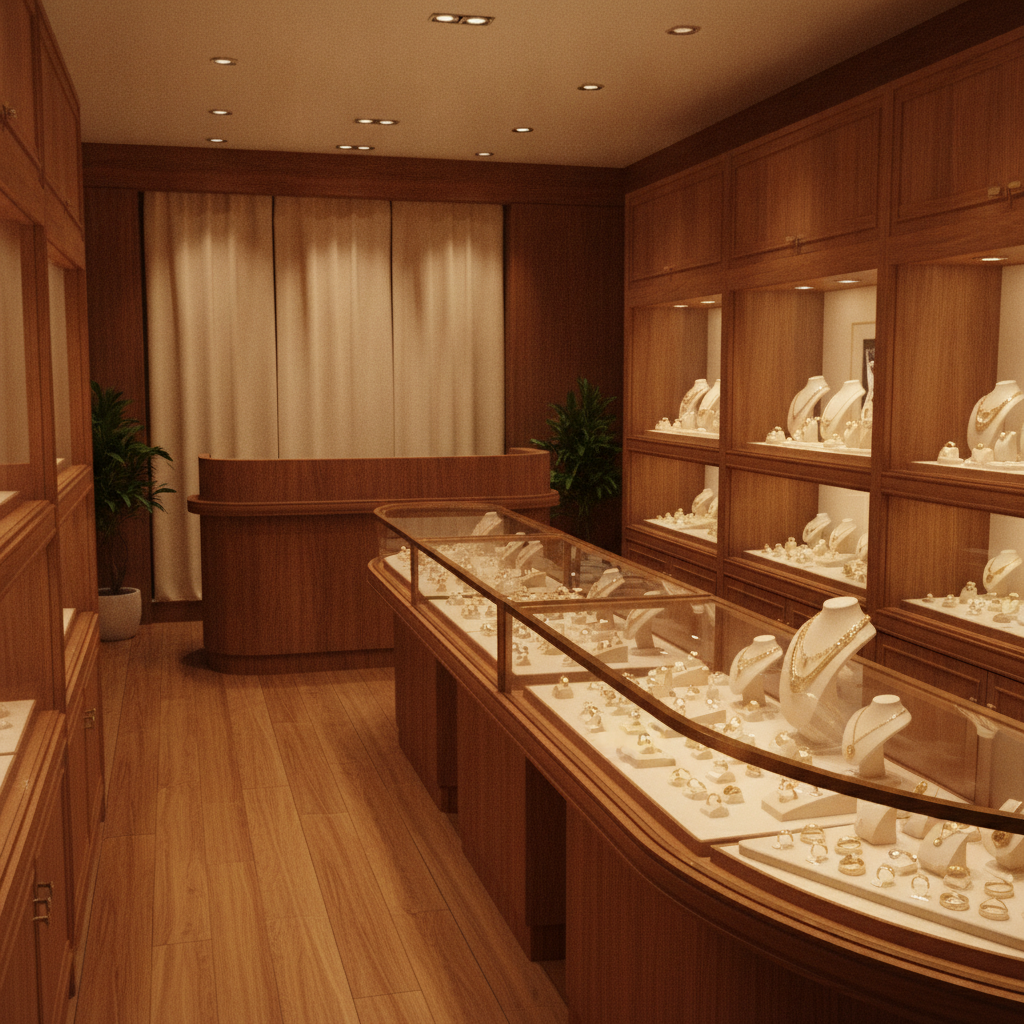
A jewelry store is several different businesses wearing one name. The words cover a goldsmith with a bench in the back, a mall chain running a weekend promotion, a department-store counter leased to a separate company, an estate dealer who buys from families, and a warehouse club that sells graded diamonds a few aisles from the groceries. The chain in the case can match in karat and carat weight and still carry a different price, because rent, commission, return policy, and brand promise are part of the tag. This guide sorts jewelry stores by how they operate, shows where the money in a price comes from, and lists what to inspect before you pay.
Jewelry Identifier: JewelValue belongs in the preparation, ahead of the counter. Photograph a piece you own, or a listing you are comparing, and you arrive with a working idea of the metal family, the stone category, and the questions worth asking out loud. Our guide to choosing a local jeweler covers how to build a shortlist near you. This page is about the store types themselves, and about the habits that travel from one kind of shop to another.
The Main Kinds of Jewelry Stores
Independent full-service jewelers. One owner or a small staff, often with a bench on site or a goldsmith they use every week. Their strength is sizing, retipping, custom work, and a person who answers the phone next year. Their limit is inventory: you will not see forty versions of the same solitaire. Ask whether repairs happen in the building. "We have a jeweler" sometimes means a job shop across town that you could have hired directly.
National chains. Kay, Zales, Jared, Helzberg, and their peers buy in volume, staff counters with commissioned salespeople, and run promotions almost continuously. They are built for engagement rings, bridal sets, and gift jewelry with a written return window and a recognizable warranty card. A large share of the case is made to the chain's specifications. The "compare at" figure on a sale tag is often that chain's own earlier tag. Our Kay's jewelry guide goes through one chain's marks and quality in detail. The same checks apply at the others: read the stamp, ask whether a diamond is natural or lab-grown, and keep the paperwork.
Leased department-store counters. The jewelry case on a department-store floor is frequently operated by a jewelry company that rents the space. Staff may work on commission. The return rules at the case can differ from the store's general clothing policy. Treat the counter as its own retailer. The name you need on the receipt is the jeweler's, along with the department store's.
Warehouse clubs. Clubs such as Costco built a reputation on narrower markups for certified diamonds and plain gold, with a limited style range and a return window that is often more usable than a traditional jeweler's. You will not get a hand-engraved shank or a complicated restoration. For a straightforward solitaire or a plain gold chain, this price comparison is worth making before you pay boutique rent for the same specification.
Designer salons. Houses such as Tiffany, Cartier, and Van Cleef & Arpels sell finishing, service, and a design language along with the metal. The premium is real. It is a premium for the house, the craft standard, and the fact that the salon will service its own work years later. It is separate from karat. Our luxury jewelry guide separates house finishing from metal value. An 18k piece from a salon and an 18k piece from an independent contain the same gold fraction. The salon piece costs more to make and more to brand.
Estate dealers, antique jewelry shops, and pawn counters. These businesses buy from the public. The skill on offer is recognition: period construction, maker's marks, and what the next buyer will pay. Prices are negotiated more often than at a chain. Pawn shops are regulated buyers of metal and collateral. Some of them know period jewelry. Many price a tray as scrap plus a guess. Estate dealers are the better first conversation for inherited pieces you might sell, which is a different job from repair. Our vintage jewelry appraisal guide explains how period value pulls away from melt value.
Custom studios and bench jewelers. Some shops barely keep a retail case. You bring a stone, a sketch, or a worn ring, and they fabricate. The honest price is bench time plus metal and stones. When you want a copy of a family ring, or a bezel a chain will not attempt, this is the store type.
What Each Store Is Built to Do Well
Match the errand to the counter. A cracked shank and a new bridal set do not belong in the same kind of appointment, even when both shops have "jewelry" on the awning.
| Store type | Strongest at | Weakest at | How prices usually behave |
|---|---|---|---|
| Independent full-service | Repair, sizing, custom work | A huge bridal wall | Metal plus labor plus a local margin |
| National chain | Bridal gifts, warranties, returns | Unusual vintage, cash buyouts | Sale price off a high compare-at tag |
| Leased department counter | Convenience and gifts | Estate knowledge, complex repair | Chain-like pricing, plus mall rent |
| Warehouse club | Certified diamonds, plain gold | Custom work and vintage | Lower markup, few styles |
| Designer salon | House designs, later service | Price per gram of gold | Brand premium over material cost |
| Estate or antique dealer | Period pieces, maker's marks | Brand-new fashion bridal | Negotiated; knowledge is the product |
| Pawn counter | Fast cash, scrap gold | Nuanced gem identification | Near melt, with a wide spread |
| Custom bench | One-off fabrication | Ready-to-wear inventory | Quoted labor plus metal and stones |
A plain wedding band that needs a size change belongs with an independent or a bench. Our wedding rings guide covers which bands can be sized at all. A lab-grown solitaire with a firm return deadline can be a chain or a warehouse club, and the specification — cut, carat, color, clarity, and the lab that graded it — matters more than which logo is on the bag. A Victorian locket with a hair compartment belongs with someone who has sold lockets, which is the territory of our antique jewelry identification guide.
How a Price Tag Is Assembled
Jewelry store prices feel personal until you separate the layers. Each layer is checkable. Together they explain why two "similar" rings sit hundreds or thousands of dollars apart.
Metal. Gold, platinum, and silver have public spot prices. A plain 14k chain has a knowable metal value: weight times the karat fraction times spot. If you are selling, a refiner's discount comes off that number. If you are buying, fabrication and the store's margin go on top. A shop that will not weigh a plain chain, or will not state the karat, is hiding the one figure you can verify at home. Our gold jewelry identification guide shows how to read 10k, 14k, 18k, 585, and 750 before you accept a verbal karat.
Stones. Diamond wholesale still orbits trade lists, and retail sits above those lists by a margin that changes with the store. Lab-grown diamonds of similar grades carry much lower wholesale prices than natural diamonds, and a jewelry store should tell you which one is in the setting. Write that answer on the receipt. Colored stones are less standardized. "Blue topaz" and "aquamarine" can sit near each other in a case and belong to different price worlds. Ask for the species, the treatment, and whether the stone is assembled — a doublet, a triplet, or a filled composite — rather than accepting a color nickname.
Labor and design. A handmade head costs more than a cast head of the same metal weight. Milgrain, hand engraving, pavé, and invisible settings are labor. You can ask which parts were cast and which were finished by a setter. The answer belongs on a custom invoice even when the salesperson would rather talk about the story of the design.
Brand and store margin. This is the layer people argue about, and it is a real part of the price. A chain's regular price may exist so the sale price looks generous. An independent's price may include a staffed bench and someone who will retip a prong in March. Compare the same specification across two store types before you decide the margin is worth paying: metal, gram weight, stone type, carat, treatment, and any grading report.
Credit and add-on plans. Store cards with deferred interest, "lifetime" warranty booklets, and free inspection programs are priced somewhere in the transaction. A warranty that covers a manufacturing defect is a different product from insurance against loss or theft. Loss belongs on a jewelry rider, which is the subject of our jewelry appraisal guide. A document written by the seller restates that seller's retail replacement figure. It is useful for the store's own warranty. It is a weak substitute for an independent look at fair market value.
What to Check Before You Pay
Do this with the piece in your hand, under the counter light and then nearer a window if the store will allow it. Case lighting is chosen to flatter.
Find the stamp. New gold should carry a karat or fineness mark. Platinum should read PT, PLAT, or 950. A missing stamp on a new precious-metal piece is a reason to slow down. On an older piece the stamp may be worn smooth, which is a different fact and one to photograph rather than treat as proof of anything.
Look at how the stone is held. Prongs should be even, present, and tipped over the stone. A bezel should meet the girdle without a gap you can catch a nail in. The gallery underneath a finished piece should look finished. A stone that shifts when you touch it, or a prong that stands open, is damage or incomplete setting. On a new piece, either one is the store's job to correct before the sale.
Ask the disclosure questions in ordinary language. Is the center diamond natural or lab-grown? Has the colored stone been heated, oiled, filled, dyed, or stabilized? Is the metal solid or plated? Is the white metal rhodium-plated, and is replating included in any service plan? If the salesperson cannot answer, the person who can should be asked before you pay. Our moissanite identification guide is the reference when a "diamond" shows more fire than the price suggests.
Photograph the piece, the stamp, and the tag before you leave, including pieces you decide against. Those frames are your comparison notes. A JewelValue scan of the same photos gives you a structured read on metal appearance and stone family while the decision is still open. The scan does not replace a grading report on an expensive diamond. It does catch mismatches that are obvious once they are named: plating sold as solid gold, a simulant sold as a gemstone, a construction that does not match the era the tag claims.
Online jewelry stores reward the same checklist, with one extra requirement: a return window long enough to see the piece in daylight on your hand. Our photo identification guide covers how to shoot metal and stones so the details survive the camera, which matters when the only jeweler you have met is a product page.
Repairs, Trade-Ins, and the Work Behind the Counter
Selling and repairing are different trades, even when they share a door. Before you leave a piece, ask who does the work, whether it stays in the building, how long it will be gone, and what happens if a stone is lost during sizing. An in-house bench can introduce you to the jeweler. A job shop can be excellent. You should still know the ring left the premises.
Sizing a plain gold or platinum band is routine work. Sizing a full eternity band, a tungsten band, or a thin Victorian shank is not. If the answer is an immediate yes on a fragile or fully set band, ask how the work will be done. Some stores will honestly refuse and offer a new size instead. That refusal is useful.
Trade-in numbers need a second bid. Chains often apply trade-in credit only toward a new purchase, which inflates the figure relative to cash. Pawn counters and estate buyers pay cash and pay closer to what they can refine or resell. Weigh plain gold while you watch the scale if the store allows it. Karat times weight is the floor under any story about sentimental value or "what we can give you today."
Custom orders should be written down before a deposit: metal and karat, finger size, whether the center stone is yours or theirs, the deposit amount, the timeline, and what happens if you cancel after casting. A sketch you both initial will outlast a conversation on a busy Saturday.
Sale Signs, Compare-At Tags, and the Paper You Leave With
Gold content does not go on sale. The store's margin does. A "70% off" event at a chain is usually a discount from that company's compare-at price, which may never have been the price sensible buyers paid. The useful comparison is the sale price against the same specification elsewhere: gram weight, karat, stone origin, and carat. If a salesperson cannot tell you the gram weight of a plain gold bracelet, the percentage on the sign is doing the work the scale should do.
Bridal events cluster around holidays and quarter-ends. The stone you want may be available next month at a similar out-the-door number without the rush. What does change under pressure is your willingness to skip disclosures. Decide the specification before you walk in, using our engagement rings guide if the purchase is a center-stone ring, and let the event compete for a decision you have already defined.
Leave with paper that would still make sense to a stranger. A useful receipt names the metal and karat, the stone type, natural or lab-grown, carat weight, any treatment you were told about, the price, and the return deadline. If a diamond has a grading report, the report number should be on the invoice and the report should leave with you. Warranty terms that matter — what is covered, what is excluded, whether sizing is included, how long rhodium replating is free — belong in the same packet. Photos of the stamps, stored with that paperwork, are what you will wish you had when a clasp fails three years later.
When to Use a Store and When to Walk Out
Physical jewelry stores earn the trip when you need a finger sized, a clasp soldered this week, or a second person to look at an heirloom before you sell it. They also earn it when someone will say "this is plated" or "this stone is filled" without being cornered. Online stores earn the purchase when the item is a certified diamond or a plain stamped band and the return policy is real enough to inspect at home.
Color-sensitive materials are a poor fit for a thumbnail: turquoise, opal, pearl, and alexandrite among them. The December stones in our birthstones guide are a clear example. Turquoise in particular varies with matrix and treatment in ways a product photo flattens. See that material in person, or buy only from a seller whose return window lets you do the inspection at home.
A store that treats ordinary questions as an insult is telling you how the next repair will go. You do not need a speech. You need the stamp, the species, the treatment, the return window, and a receipt that repeats them. The shops that answer are the ones worth keeping.
Frequently Asked Questions
Are independent jewelry stores more expensive than chains?
They are different, and the winner changes with the product. Independents often charge real money for custom labor and a fair, smaller number for a simple sizing. Chains discount hard off high compare-at tags and can be cheaper on a promotional bridal set, then expensive if you take the undiscounted tag seriously. Compare metal, stone, weight, and paperwork. Ignore the size of the sale sign until those match.
Do department-store jewelry counters use the department store's return policy?
Sometimes the policies align, and often the counter is a leased jewelry business with its own rules. Ask whose name is on the receipt, how many days you have to return the piece, and where repairs are sent. Get the answers before you rely on a sign posted for clothing.
Is a jewelry store appraisal an independent appraisal?
A document prepared by the seller restates a retail replacement figure suited to that store's prices and to insurance at those prices. An independent appraisal comes from someone who is not selling you the piece. Use the store's paperwork for the store's warranty. Use an outside appraiser when you are insuring, dividing an estate, or trying to learn what a willing buyer would pay.
Can you negotiate in jewelry stores?
Estate dealers, pawn counters, and many independents expect a conversation. The price was set by that dealer. At national chains the posted sale price is usually the price, though a manager sometimes has room on a floor sample or a mismatched set. Warehouse clubs generally hold the posted number. Ask once, about a specific piece, and take a no as the answer.
Should jewelry be cleaned before a store visit?
Warm water, a drop of mild dish soap, and a soft brush are enough, followed by a careful dry. Leave ultrasonic cleaners, steam, and abrasive pastes alone until you know the stone. Emeralds, opals, turquoise, and fracture-filled gems can be harmed by the wrong bath. You also want the jeweler to see the piece as it is worn, including any loose stone you might disturb.
Download Jewelry Identifier: JewelValue Today
The useful jewelry store is the one that matches the job in front of you: a repair, a bridal purchase, a custom remake, or a straight answer on an heirloom. Jewelry Identifier: JewelValue reads metals, stones, and construction from a photo, estimates a realistic value range, and gives you a clearer list of questions before you reach the counter.